
Curing is a critical phase in concrete construction that directly impacts the strength and durability of any structure. Ensuring proper curing means maintaining the right moisture and temperature conditions for the concrete to hydrate and gain strength over time. Traditionally, curing control has relied on manual methods (like water spraying, insulating blankets, or guesswork based on weather), which can lead to inconsistencies and even overlooked problems. Today, curing control in concrete is being transformed by new technologies that allow builders to monitor and adjust curing conditions with unprecedented precision. This article will explore four emerging technologies that are making concrete curing more controllable and reliable, using real examples and practical explanations to illustrate how they work in the field.
Table of Contents
4 Emerging Technologies for Curing Control in Concrete Structures
1. Smart Sensors and IoT Monitoring for Concrete Curing
One of the most impactful innovations in curing control is the use of smart sensors and Internet of Things (IoT) connectivity. Smart concrete sensors can be embedded in a concrete pour or attached to formwork to collect real-time data on the curing process. These sensors typically measure factors like temperature, humidity, and even concrete maturity (an estimate of strength based on temperature history). The data is then transmitted wirelessly to a central system – often accessible via smartphones, tablets, or web dashboards – allowing project teams to continuously monitor how the concrete is curing.
-
Temperature Tracking: Sensors measure internal concrete temperatures to ensure the mix stays within the ideal range. Avoiding extreme cold or heat prevents thermal cracking and ensures hydration reactions continue optimally.
-
Humidity and Moisture: Some advanced sensors track internal relative humidity or surface moisture. Maintaining adequate moisture is crucial; if sensors detect drying, crews know to apply water or curing compound to prevent surface cracking.
-
Strength (Maturity) Estimation: By logging temperature over time, sensors can use the maturity method to estimate in-place concrete strength. This helps determine when the concrete has gained enough strength for formwork removal or loading.
-
Alerts and Data Logging: IoT connectivity means the system can send automatic alerts if conditions stray out of spec – for example, if a cold front causes temperatures to drop too low at night. All data is logged for quality control records and analysis.
Real-world example: The renovation of the famous Sagrada Familia in Barcelona utilized embedded concrete sensors during a new construction phase. The sensors monitored concrete strength development and environmental conditions within the massive structure’s fresh concrete. By analyzing temperature and humidity data in real time, engineers were able to ensure the curing control in concrete structures of this historic project was optimal, avoiding any thermal stresses or premature drying that could compromise its longevity.
Another example comes from a bridge construction project in Idaho, where a contractor implemented wireless temperature and strength sensors to manage curing. Over the course of two months, the team shaved about a week off the schedule by using live sensor data instead of waiting on traditional break tests. By knowing exactly when the concrete reached the required strength, they could safely remove forms and open the next construction stage sooner. In fact, the project was completed roughly 10–15% faster than planned because the sensors eliminated unnecessary waiting time while still guaranteeing quality. This kind of time savings demonstrates how IoT-based monitoring not only improves quality but also boosts efficiency.
From these examples, it’s clear that smart sensors empower engineers with actionable insights. Issues that might have gone unnoticed – like a section of concrete cooling too quickly overnight – can be identified and corrected immediately. In essence, IoT monitoring turns the curing phase from a “set it and hope” process into a data-driven science. Field teams become proactive, using continuous feedback to achieve smarter, optimized curing that leads to stronger concrete.
Suggested article to read: How IoT in Construction Monitoring is Transforming Project Management

2. Automated Curing Control Systems
Monitoring alone is valuable, but the next step is using that information to actively control curing conditions. Automated curing systems are emerging solutions that link sensors with control mechanisms to adjust the environment around the concrete automatically. Instead of a worker manually turning heaters or sprinklers on and off, an automated system can maintain the optimal conditions day and night according to preset parameters or algorithmic decisions.
In precast concrete factories, for instance, automation is used to manage curing chambers or heating blankets. Concrete elements may be placed in insulated enclosures where temperature and humidity are regulated by a central computer. If the sensor readings indicate the temperature is dropping below the target range, the system can activate heaters or warm water circulation to raise it. Conversely, if things are too hot (which can cause excessive evaporation or thermal cracks), the system might pause the heat or even turn on fans for cooling. Automated misting or fogging systems can add moisture to the air if internal humidity falls too low, ensuring the concrete surface never dries out too early.
Example – Energy-efficient curing: A Danish precast producer, Contiga, implemented an intelligent heat control system for their concrete curing beds. By integrating IoT sensors with the heating equipment in what they called a “Heat Insight” platform, they were able to add heat only when and where it was needed – and no more. The results were remarkable: Contiga reported saving between 20% and 40% of the energy previously used for curing hollow-core slabs.
Before this system, they kept the heating on a fixed schedule to be safe, which sometimes meant overheating or wasting energy when the concrete had already reached the required strength. After automation, live data from the concrete dictated the heating, and all excess heating was eliminated. Not only did this cut energy costs, but it also ensured more uniform curing, because the concrete was never under- or over-cured due to guesswork. This level of precision curing control also contributes to sustainability by reducing greenhouse emissions from unnecessary heating.
Automated curing control is also finding use on construction sites. For example, imagine a massive bridge deck pour in cold weather: traditionally, crews would cover the concrete with insulating blankets and perhaps run heated enclosures, checking periodically. With an automated system, thermocouples in the concrete could feed data to a controller that modulates portable heaters or heating coils under the insulating blankets. The system could keep the concrete at, say, 20°C consistently, even if the outside temperature plummets overnight, without someone needing to intervene. Similarly, in hot and arid climates, automated sprinkling systems connected to humidity sensors can periodically mist a slab’s surface whenever it starts to dry, maintaining a continuous moist cure and preventing shrinkage cracks.
Key benefits of automated curing systems include:
-
Consistency: By removing human error and manual timing, conditions remain consistent throughout the curing period, which improves concrete quality.
-
Labor Savings: Fewer manual checks and interventions are needed, freeing up staff for other tasks and reducing overnight or weekend monitoring costs.
-
Documentation: These systems often log all actions (e.g., when heat was applied, when water was sprayed) along with sensor data. This creates a reliable record of the curing regimen, which can be important for quality assurance on high-spec projects.
-
Optimized Performance: Perhaps most importantly, automated control can optimize the curing process for performance – ensuring the concrete gains strength as fast as possible without compromising safety. For instance, by precisely controlling temperature, high-early-strength mixes can be pushed to reach target strength quickly and uniformly, which keeps projects on schedule.
In summary, automated curing technologies take the insights from smart sensors a step further by actively managing the curing environment. They exemplify how curing control in concrete structures is evolving from a manual art into a high-tech process, marrying sensors, data analytics, and control systems to yield concrete that is cured just right.
3. Drone and Remote Monitoring Technologies
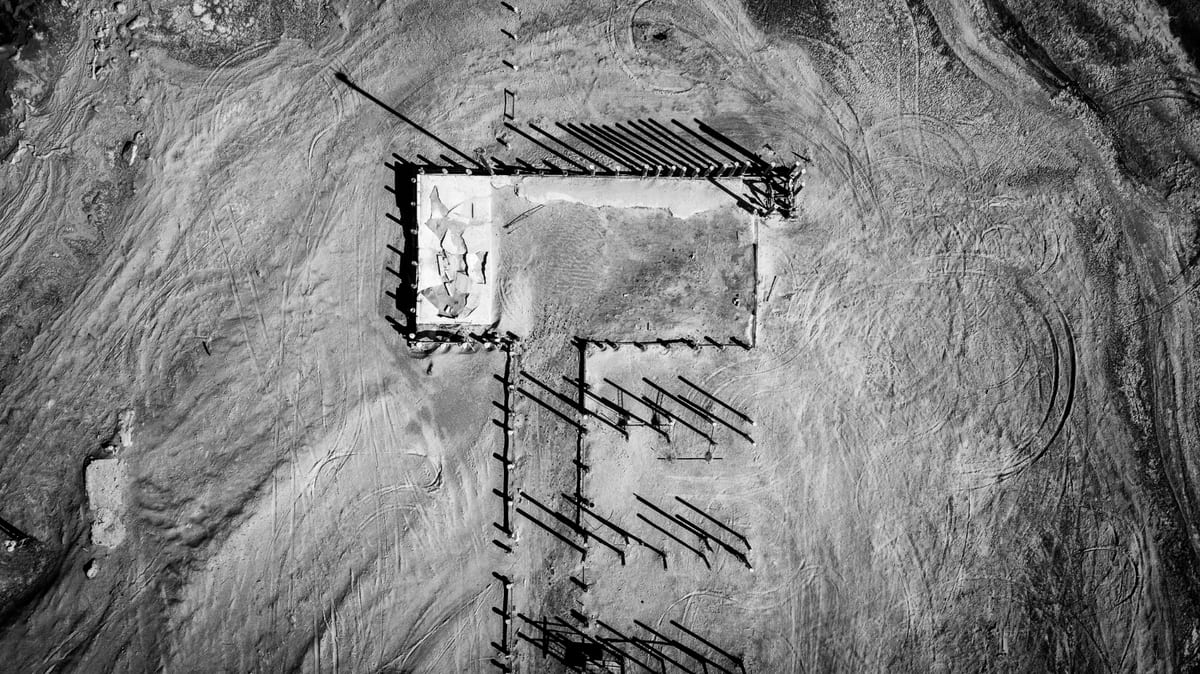
Another emerging trend in curing control is the use of drones and remote sensing to inspect and monitor concrete curing, especially over large areas or hard-to-reach structures. On expansive construction sites – like highway pavements, bridge decks, or large industrial slabs – it’s not practical for a person to continuously walk around checking curing conditions everywhere. Drones offer a way to keep an eye on the curing process efficiently from above.
Aerial inspection for curing: Drones equipped with cameras (visual, infrared, or even ultraviolet) can quickly survey a fresh concrete surface to detect any anomalies in the curing process. For example, a drone with a thermal imaging camera can fly over a newly poured bridge deck at night and reveal temperature variations. Cooler spots might indicate areas where the insulating blankets are thin or lifting off, or where wind is causing excess evaporation.
By catching these cold spots early, the crew can take action (add insulation or adjust covers) before the concrete in those areas is damaged by the cold. Similarly, a thermal drone flight can verify that heating systems are working evenly – any hotspots or cold zones become immediately visible on the infrared imagery.
Ground-penetrating radar on drones: One innovative approach being tested is mounting ground-penetrating radar (GPR) units on drones to assess curing compound coverage on fresh concrete. Curing compounds (the spray-on liquids that form a membrane to seal in moisture) are commonly used on pavements and large slabs. It’s critical that they are applied evenly; otherwise, uncoated spots will dry out too fast. Traditionally, inspectors had to wait until the compound dried and then perform spot checks, or simply visually inspect coverage which can be subjective. With drone-mounted GPR, as soon as the curing compound is applied and starts to set, the drone can autonomously fly over the slab in a programmed pattern.
The GPR can detect the presence and thickness of the curing compound layer across the whole area. If it finds sections with insufficient coverage, it can alert the team immediately. This real-time feedback means crews can re-spray or touch up those areas right away, rather than discovering them much later when the concrete starts showing signs of distress. By using a drone, this process is fast and keeps personnel off the fresh concrete (improving safety and avoiding footprint damage on the surface).
High-rise and remote structure monitoring: For vertical structures or remote sites, drones can similarly assist. Consider a tall building where concrete is placed on upper floors – inspecting wet concrete on upper slabs or walls can be dangerous and time-consuming using scaffolds or lifts. A drone can hover and visually check that curing blankets or formwork remain in place, or even use sensors to measure surface moisture on hard-to-reach areas. In remote dam or tunnel projects, autonomous drone patrols might monitor long stretches of lining or massive placements where human patrol is impractical.
Benefits of using drone and remote monitoring for curing control include:
-
Coverage: A single drone flight can cover a large area in minutes, providing a comprehensive overview that would take an individual much longer to achieve on foot.
-
Speed of Response: Drones can identify curing issues (like uncovered patches or temperature anomalies) almost instantly, enabling rapid corrective action that can save the quality of the concrete.
-
Reduced Labor & Risk: Fewer staff need to physically access potentially hazardous or hard-to-reach zones for inspection. This not only saves labor but also improves safety by keeping people off young concrete and high places.
-
Documentation: Drone imagery and sensor data are automatically recorded. The construction team gets a detailed visual log of the curing process, which can be reviewed later to understand if any problems in the concrete’s performance were related to curing conditions.
It’s worth noting that remote monitoring isn’t limited to drones. Stationary remote sensing stations can also assist in curing control. Weather stations at the jobsite feed live data on ambient temperature, wind, and humidity. Some projects use remote cameras to watch for issues like wind blowing off covers. These tools, combined with drones, form a robust remote oversight system. All of this means that even when concrete curing is spread out over acres or in tricky spots, technology extends the eyes and ears of the site team, ensuring nothing is overlooked in those crucial early hours and days of curing.
4. Internal Curing and Advanced Curing Materials
Not all innovations in curing control come from electronics and gadgets; some are built into the concrete itself. Internal curing is an emerging technology where the concrete mix is designed to cure more effectively from the inside out. The concept is simple but powerful: provide an internal source of water that slowly releases as the concrete needs it, so the interior stays moist even if external conditions are harsh or if external curing is not perfect.
In traditional curing, water is applied to the surface (by spraying or wet coverings) to keep the outside moist. However, the inside of thick concrete sections can still dry out due to self-desiccation – as cement hydrates, it consumes water and can leave pores starved of moisture, leading to shrinkage and cracking. Internal curing tackles this by mixing special materials into the concrete that carry extra water.
The most common method is using pre-wetted lightweight aggregates (such as expanded shale or clay). These porous aggregates soak up water before mixing, and then after placement, they gradually release that water into the surrounding cement paste as it starts to dry. Another method involves super absorbent polymers (SAP), which are crystal or gel-like polymers added to the mix; they absorb water and later expel it during hydration, much like a slow-release reservoir.
The impact of internal curing on curing control in concrete is significant: it effectively curbs the problem of early-age cracking from drying shrinkage. With moisture being fed internally, the concrete experiences less shrinkage stress, which means fewer and narrower cracks. This directly translates to more durable structures because cracks are gateways for aggressive agents (like chlorides causing rebar corrosion).
Real-world success: The New York State Department of Transportation (NYSDOT) has been a pioneer in using internal curing for bridge decks. Over 15 years and about 20 pilot projects, they compared internally cured decks to conventional ones. The results showed about a 70% reduction in crack formation on decks that used internal curing. This is a dramatic improvement – these decks stayed much more intact over time, whereas normal decks would have developed a spiderweb of shrinkage cracks.
Because of outcomes like this, NYSDOT now uses internal curing as a standard practice for multi-span bridge decks. Engineers expect that these internally cured decks will last decades longer than traditional ones before major repairs are needed. In fact, experts project that internal curing can extend a bridge deck’s service life by 25 to 50 years by preventing early deterioration.
Other states and agencies are quickly adopting this technology after seeing such benefits. Even in pavement applications, internal curing has shown positive results. In one Texas highway trial, a section of internally cured concrete pavement had far fewer cracks, with average crack spacing of 30+ feet (versus just a few feet apart in normal concrete) – indicating significantly less shrinkage. This implies lower maintenance needs; in that trial, researchers estimated about a 15% reduction in long-term maintenance costs for the internally cured pavement.

Internal curing is especially helpful for high-performance concretes (which often have low water content and are more prone to self-desiccation) and for any structure where drying shrinkage cracking is a concern (like thick foundation mats, bridge decks, parking structures, and repair patches that use rapid-strength concrete). By designing the concrete mix to take care of its own curing water demand, this method adds a layer of security against human error or environmental challenges. Even if a day of external curing is missed or a heat wave accelerates surface drying, the internal curing agents are still at work, safeguarding the concrete’s hydration internally.
Advanced curing materials also include new types of curing compounds and coatings. Researchers are developing membrane-forming curing compounds that have improved performance – for example, compounds with controlled-release water or reflective properties to regulate temperature. One novel approach has been a curing agent that forms a polymer film and slowly releases moisture onto the concrete surface over several days, reducing the need for repeated water spraying on, say, bridge decks. There are also self-healing additives (like microcapsules and bacteria) being explored, which aren’t exactly curing methods but help seal cracks that do form. These material innovations complement the technological solutions by enhancing the concrete’s ability to cure properly and remain durable.
In practice, the best curing control often uses a combination of methods. For instance, a project might use an internal curing mix and apply smart sensor monitoring to it. The internal curing greatly reduces the chance of internal drying, while the sensors ensure the external conditions are kept in check – together yielding a robust outcome. As these emerging technologies mature, engineers and contractors are learning how to integrate them into everyday construction. The end goal is clear: concrete that achieves its full strength and durability potential, with minimal issues from the curing stage.
FAQs
How do IoT sensors improve curing control in concrete structures?
Answer: IoT sensors give real-time insight into the concrete’s curing conditions (temperature, moisture, etc.), which helps engineers ensure the concrete is neither drying out nor overheating. By monitoring data remotely, teams can quickly correct any issues (like adding insulation or water) and optimize the curing process. This leads to more consistent concrete strength development and can even accelerate construction schedules by removing guesswork.
What is internal curing in concrete and how does it work?
Answer: Internal curing is a technique where special additives (usually pre-wetted lightweight aggregates or absorbent polymers) are mixed into concrete to provide extra water from within. As the concrete hardens and starts to dry, these materials slowly release water, keeping the internal environment moist. This reduces shrinkage and cracking, effectively improving durability without relying solely on external curing methods.
Which new technology is most effective for concrete curing control on site?
Answer: Different technologies serve different needs, but a combination often works best. Smart sensor systems are very effective for on-site curing control because they provide immediate feedback and can be paired with automated heaters or sprinklers. In cold weather, for example, sensors plus automatic heating blankets ensure the concrete stays warm. For large open sites, drones are highly effective at catching curing issues early across wide areas. The “most effective” solution often involves using multiple technologies together for comprehensive control.
Is it true that modern curing techniques can significantly reduce concrete cracking?
Answer: Yes. Modern curing techniques like internal curing and advanced moisture control have been shown to greatly reduce cracking. Internal curing mixes have cut shrinkage cracking by as much as 70% in bridge decks compared to traditional concrete. Likewise, keeping concrete at stable temperatures and humidity (using sensors and automated controls) prevents thermal and drying stresses that cause cracks. By minimizing early-age cracks, these techniques extend the life of concrete structures.
Conclusion
Curing has long been considered a make-or-break phase for concrete performance, and now we have the tools to manage it with far greater certainty. The four emerging technologies discussed – smart IoT sensors, automated curing systems, drone-based monitoring, and internal curing techniques – are each changing the game in different ways. They allow construction teams to actively control and optimize the curing process instead of passively hoping for the best. In real projects, these innovations have already led to faster construction schedules, energy savings, and concrete structures with fewer defects and longer lifespans.
Adopting these technologies does require investment and training, but the payoff is concrete (pun intended): more resilient infrastructure and buildings that stand the test of time. By combining sensor data, intelligent control, and innovative materials, the industry is moving toward curing practices that ensure every pour reaches its full potential. As these methods become more accessible, we can expect curing control in concrete structures to become a standard part of quality assurance, much like mix design or strength testing. The result will be safer structures, more efficient projects, and a new level of confidence in the foundation of our built environment – the concrete itself.
Resources:
-
National Concrete Pavement Technology Center. (2024). Toward Performance-Engineered Curing (NC² MAP Brief, Winter 2024).
-
CompanionLink Blog, Brown, C. (2025). The Role of Technology in Monitoring and Controlling Concrete Curing Temperature. March 27, 2025.
-
Maturix. (2023). Contiga saves 40% energy for hollow-core production (Case Study).
-
Federal Highway Administration. (2023). Internally Curing Concrete Produces EPIC² Results. Innovator Magazine, Issue 98.
-
Giatec Scientific Inc. (2020). Case Study: C.L. Heilman Bridge Project – Accelerating Construction with SmartRock Sensors.
For all the pictures: Freepik
Suggested article for reading:
6 Benefits of Smart Tool Tracking for Construction Safety and Productivity
8 Sensor‑Enabled Solutions for Real‑Time Tool Tracking on Job Sites
Top 9 Essential Features of Construction Tool Tracking Platform
3 Edge‑Ready Tool Tracking Technologies for Unreliable Connectivity Zones
4 Ways AI and Telematics Are Powering Predictive Maintenance for Construction Tools