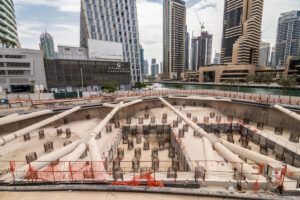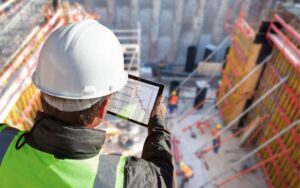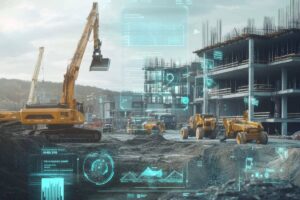

Concrete is the literal foundation of modern cities, and how we monitor it is transforming urban infrastructure. Concrete monitoring refers to using sensors and data systems to track the condition and performance of concrete structures in real time. From bridges with built-in stress gauges to skyscrapers that report their own strength, cities are getting smarter about maintaining safety and efficiency. This technical article explores eight real-world examples of concrete monitoring in action, showing how these innovations are building smarter cities with safer buildings, more reliable infrastructure, and more efficient construction processes. Each example is presented with practical details and outcomes, providing a didactic look at how concrete monitoring technology is applied on the ground.
Table of Contents
Concrete Monitoring in Building Construction
Modern building projects are leveraging concrete monitoring to speed up construction and enhance safety. By embedding sensors in concrete during construction, engineers can get immediate feedback on strength development and structural behavior. This allows critical decisions—like when to remove formwork or apply loads—to be based on data rather than guesswork. The following examples illustrate how concrete monitoring makes high-rise construction smarter and more efficient:
Example 1: One World Trade Center (New York City) – RFID Sensors for Curing Optimization
One World Trade Center in New York, the 1,776-foot “Freedom Tower,” showcased concrete monitoring on a grand scale during its construction. Thousands of wireless RFID sensor tags with built-in temperature sensors were embedded in the tower’s massive concrete foundation and core. These rugged sensors continuously logged the internal temperature of curing concrete, which correlates with strength gain. Engineers could wirelessly read each tag’s data from a handheld device or remotely via readers, allowing them to track concrete maturity in real time.
By knowing exactly when the high-strength concrete reached the required strength, the construction team could safely remove formwork and stress the structure without unnecessary delays. This precision eliminated guesswork and large safety margins, helping keep the project on schedule despite the complex design and high-strength mixes. The RFID-based concrete maturity monitoring system also reduced labor (no wires to retrieve or break) and ensured that each pour was properly cured before proceeding. This example demonstrates how smart monitoring of concrete curing in a landmark skyscraper improved construction efficiency and structural reliability, setting a precedent for data-driven building practices in smart cities.
Suggested article to read: Construction Monitoring Solutions: Your Complete Guide
Example 2: Karla Tower (Gothenburg, Sweden) – Real-Time Curing Data for a 73-Story Skyscraper
The Karla Tower, poised to be Scandinavia’s tallest building at 245 m, is another prime example of concrete monitoring in construction. Faced with tight deadlines of one floor per week, the builders employed a wireless in-situ monitoring system to stay on schedule. During each concrete pour (from deep 2-meter diameter foundation piles up to the core walls and slabs), thermocouple sensors were cast into the concrete and connected to small transmitters. These devices sent continuous temperature readings to a cloud platform that automatically calculated concrete maturity and strength gain for each structural element.
Project managers could check the real-time curing status on any device, visualizing the strength development across different parts of each floor. This insight meant they always knew exactly when a floor’s concrete had gained enough strength to support loads or allow formwork removal, eliminating the usual “pad time” waiting in doubt. As a result, the Karla Tower team confidently struck formwork and proceeded with construction without delays, meeting the ambitious weekly floor cycle. Beyond schedule benefits, this monitoring ensured quality and safety – if any section cured more slowly due to weather or mix issues, the team would catch it immediately and adjust plans. Key outcomes included:
-
Maintaining schedule: Keeping the rapid floor-per-week timeline by removing guesswork from curing times.
-
Ensuring structural safety: Data confirmed the concrete reached required strength before proceeding, enhancing safety in the tall structure.
-
Automated documentation: All temperature and strength data were logged automatically, creating a digital record of the concrete quality for each part of the building.
By integrating concrete monitoring, the Karla Tower’s builders turned a daunting timeline into a manageable process, demonstrating how high-rise construction can be smarter and more transparent with real-time data.

Concrete Monitoring in Bridges and Viaducts
Bridges are lifelines of a city, and they bear constant loads and environmental stress. Concrete monitoring technologies in bridges help ensure these critical structures remain safe over decades of service. Smart bridges use arrays of sensors (for strain, vibration, temperature, etc.) embedded in the concrete or attached to key components. These sensors feed data to engineers and maintenance teams, enabling continuous structural health monitoring. Issues like crack formation, unusual vibrations, or thermal expansion can be detected early, allowing for preventive maintenance rather than reactive repairs. The following bridge projects highlight how concrete monitoring makes city infrastructure more resilient and intelligent:
Example 3: I-35W St. Anthony Falls Bridge (Minneapolis, USA) – A “Smart Bridge” with Embedded Sensors
After the tragic 2007 collapse of the old I-35W bridge, its replacement became one of the first smart bridges in the United States. Opened in 2008, the new I-35W St. Anthony Falls Bridge was built with over 500 embedded sensors throughout its concrete structure. These sensors measure strain in key girders, vibrations from traffic, concrete temperature and moisture, and even the corrosion potential in the rebar. From day one, the bridge began streaming data about how it behaves under real traffic and environmental conditions. University researchers and DOT engineers have been analyzing this information to verify that the bridge’s real performance matches the design assumptions.
For instance, they loaded the bridge with heavy trucks and used sensor data to refine computer models of the structure. The continuous monitoring has yielded several benefits: it confirmed that bridge deflections and stresses remain within safe limits as the designers intended, and it revealed that temperature effects (seasonal expansion/contraction) were more significant on the concrete spans than previously thought, guiding better designs for temperature control. Additionally, the bridge’s health monitoring system triggers automated maintenance features; for example, if roadway surface sensors detect icing conditions, an automatic de-icing system activates to keep the bridge safe.
Overall, this smart bridge example shows how embedding sensors in concrete can turn a static piece of infrastructure into an active source of knowledge. Minneapolis now has a living dataset on bridge health, allowing engineers to schedule maintenance based on actual wear and to design future bridges with insights gained. The I-35W bridge’s success has since influenced many new bridge projects to include health monitoring as a standard feature for smarter cities.
Example 4: Genoa San Giorgio Bridge (Genoa, Italy) – High-Tech Monitoring and Robotic Inspections
In 2018, Genoa’s Morandi Bridge collapsed, prompting a state-of-the-art replacement designed with safety and intelligence in mind. The new Genoa San Giorgio Bridge, opened in 2020, is equipped with a comprehensive concrete monitoring and maintenance system that sets it apart. Embedded throughout the pre-stressed concrete and steel structure are around 250 sensors, including strain gauges to measure structural loads, accelerometers to monitor vibrations and seismic activity, and environmental sensors for wind and temperature.
These sensors feed into a centralized data system that continuously checks the bridge’s “vital signs.” The bridge goes a step further by employing four custom robots that live on the structure: two “robot inspectors” roam along rails on the underside of the deck, taking high-resolution photographs and laser scans of the concrete surface, while two “robot wash” units clean the solar panels and glass barriers. The inspection robots take 25,000 photos every eight hours, automatically comparing them to previous images to spot any emerging cracks or anomalies in the concrete. Meanwhile, an internal dehumidification system keeps the air inside the box-girder dry, preventing corrosion in the tension cables – and sensors verify that humidity levels remain low.
All this information (sensor readings, robot inspection data, etc.) is collected in a central database for engineers to analyze. In practice, the San Giorgio Bridge operates like a self-checking organism: it can flag any signs of stress or damage in real time, often before they would be visible to human inspectors. Maintenance can thus be planned proactively; for example, if sensors detect unusual strain on a segment, engineers can inspect and reinforce that area long before it poses a safety issue.
By dramatically reducing manual inspection needs (and associated risks), and by ensuring the structure’s concrete and steel are continuously watched, this bridge represents how smart city infrastructure can be maintained to the highest safety standards. Genoa’s new bridge is not just a static replacement but a living, monitored system—an inspiring model for future urban viaducts.

Example 5: Žeželj Bridge (Novi Sad, Serbia) – Long-Term Performance Tracking with Hundreds of Sensors
The Žeželj Bridge in Novi Sad provides another illuminating example of heavy concrete monitoring in a bridge rebuild. The original 1961 arch bridge (notable for its innovative pre-stressed concrete design by engineer Branko Žeželj) was destroyed in 1999. Its modern replacement, completed in 2018, was outfitted with an extensive sensor network to ensure longevity and instill public confidence. In total, 472 sensors were installed throughout the new twin-arch bridge, making it one of the most instrumented bridges in Europe.
These include hundreds of vibrating wire strain gauges embedded in the concrete arches and deck to measure how the structure carries train and vehicle loads, displacement sensors at support bearings to detect any slow movements or settlements, inclinometers inside the arches to track slight tilting or deflection, accelerometers to log vibrations and dynamic responses, and temperature sensors spread across the concrete to monitor thermal effects. The data acquisition system continuously collects readings from all these sensors and transmits them to a monitoring center. Engineers set baseline “fingerprints” for how the bridge behaves under normal conditions and then watch for deviations.
For instance, if one of the arches begins to strain more than usual under similar loads, it could indicate crack development or cable relaxation, prompting an inspection. By having this long-term performance log, the bridge’s owners can manage maintenance based on actual structural behavior rather than fixed intervals. Even years after opening, the sensor data is invaluable: it helps optimize traffic loads (authorities could restrict heavy loads if needed during heatwaves when concrete expands), and it provides immediate alerts if anything out of the ordinary occurs (such as unusual vibration patterns during an earthquake or a hard impact).
The Žeželj Bridge’s comprehensive monitoring illustrates how cities can protect critical infrastructure with data. It’s essentially a “black box” for the bridge’s health, fostering safer operation of both road and rail traffic and extending the service life of the structure through informed maintenance.
Example 6: Hong Kong–Zhuhai–Macao Bridge (China) – Monitoring a Record-Span Sea Bridge for Impacts and Stress
Spanning 55 kilometers across the Pearl River Delta, the Hong Kong–Zhuhai–Macao Bridge (HZMB) is the world’s longest sea-crossing bridge-tunnel system – and a triumph of civil engineering. To manage the unique challenges of a structure this vast (exposed to typhoons, heavy traffic, and even ship collisions), an advanced structural health monitoring system was implemented. In the bridge’s longest spans and critical sections, engineers installed around 200 high-precision accelerometer sensors and strain gauges.
These sensors are clustered into multiple subsystems along the bridge’s length, all synchronized via a high-speed network. The system continuously measures vibrations and movements of the bridge deck and piers. One key purpose is to detect the occurrence of ship impacts: if a vessel strikes one of the bridge piers, the shock and vibration pattern are picked up instantly by the sensors, triggering an alert so authorities can inspect for damage and potentially close the bridge if needed. Even in normal operation, the sensors help by capturing the bridge’s dynamic characteristics – how it flexes under heavy traffic, thermal expansion, and strong winds.
Data streams back to a central control center, where it is stored and analyzed. With this information, the operators of HZMB have a real-time pulse on structural conditions across the entire 50+ km link. For example, during a typhoon, they can see measured oscillations and stresses, ensuring they stay within safe ranges or decide on closures if necessary. The monitoring system also aids in maintenance: it can indicate which sections of the concrete structure experience the highest fatigue stress over time, so those areas can get extra attention during inspections or be reinforced proactively.
In short, the HZMB’s concrete monitoring network acts like a nervous system for this colossal infrastructure, making a massive bridge smarter and safer. By integrating fiber-optic communications and remote sensing, even a bridge stretching over an ocean can be closely watched, which is a hallmark of smarter cities leveraging technology to oversee critical assets.
Concrete Monitoring in Roads and Highways
City roads and highways face constant wear from traffic and weather. Concrete monitoring in pavements can improve road durability and traffic management by providing timely data on concrete conditions. New smart city initiatives embed sensors in road concrete to measure factors like temperature, strength development, vehicle loads, and even vehicle identification. This leads to smarter maintenance (e.g. knowing exactly when a repaired section is ready for cars, or detecting when a crack forms under the surface) and smarter traffic systems (roads that detect accidents or communicate with autonomous vehicles). Here are two examples where concrete monitoring is paving the way for intelligent highways:
Example 7: Indiana Smart Highways – Sensors for Optimal Road Reopening and Longevity
In Indiana, a forward-looking project is using concrete-embedded sensors to make highway maintenance more efficient. Researchers at Purdue University partnered with the Indiana Department of Transportation (INDOT) to embed novel concrete sensors into several highway stretches, including parts of Interstate 465 and I-70. These sensors directly measure the internal properties of new concrete pavement as it cures and gains strength. One practical application is after repairs or new slab installations: normally, engineers estimate cure times or use standard cure periods before reopening the road to traffic, often erring on the side of caution (or sometimes opening too early, which can cause premature cracking).
With embedded monitoring, INDOT officials can watch the strength development in real time and determine the exact optimal time to reopen a lane after fresh concrete is poured. In 2019, sensors placed in three Indiana highways provided continuous data to recommend when heavy traffic could safely be allowed back on, preventing the common problem of cracks caused by trucks driving on concrete that is not fully hardened. By avoiding both overly conservative wait times and dangerously early openings, these smart highways reduce traffic disruption and extend pavement life. The same sensors continue to live in the pavement and can track concrete performance over seasons, noting things like freeze-thaw impacts or gradual development of internal stresses.
This allows maintenance teams to identify sections of road that might need preventive treatment (for example, if one area isn’t curing properly or shows abnormal strain under loads, it can be fixed before a pothole forms). Essentially, Indiana’s pilot demonstrates how turning road concrete into a source of data leads to proactive infrastructure management. Drivers experience fewer closures and smoother rides, while the DOT gets more mileage out of each repair, embodying the smarter city approach of nipping problems in the bud through monitoring.
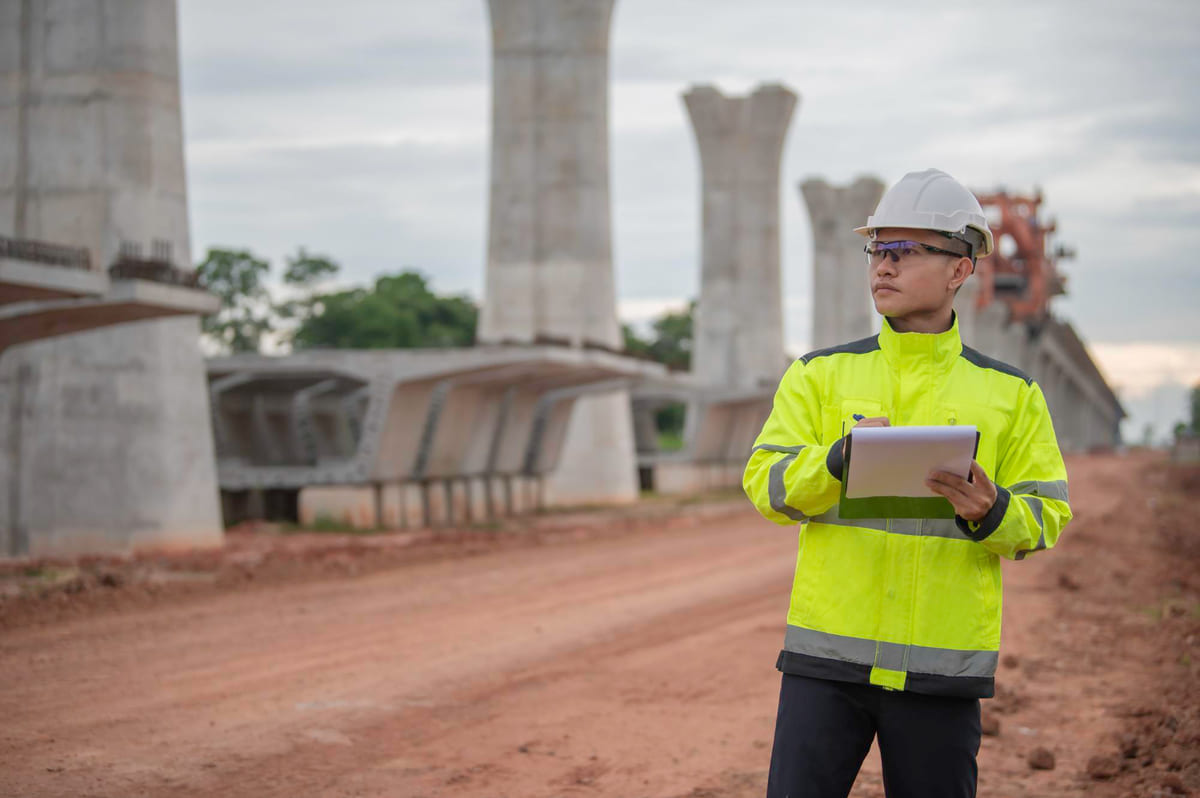
Example 8: Smart Pavement Pilot in Colorado (USA) – Connected Precast Concrete Slabs for Traffic Intelligence
Colorado is testing a revolutionary concept called “smart pavement,” which transforms ordinary road segments into intelligent digital platforms. In a pilot on a section of US Highway 285, the state installed precast concrete slabs embedded with a network of sensors and fiber-optic technology. Unlike typical concrete pavement, these factory-made slabs come with built-in electronics: pressure sensors and strain gauges to detect vehicle presence and weight, a fiber-optic mesh that acts like a touchpad tracking vehicles’ positions, and integrated antennas and communication nodes.
Once laid into the highway, this smart concrete section can sense every vehicle that drives over it – its location, speed, and even approximate size or model. The slabs relay this information to roadside data centers in real time. This offers numerous smart city benefits. For traffic management, the road itself can detect accidents or run-off-road incidents the instant they happen (for example, if a vehicle leaves the travel lane abruptly or a sudden halt is detected, the system flags it, enabling faster emergency response).
It can also provide live traffic counts and flow data far more detailed than traditional roadside sensors, helping the DOT manage congestion or optimize signal timings. Looking toward autonomous cars, the pavement could even communicate directly with vehicles, offering navigation cues or safety warnings from the road.
From an infrastructure standpoint, the smart slabs monitor the concrete’s health too. They measure strain and temperature, so engineers know if the pavement is under unusual stress or needs maintenance due to heavy use or weather. Importantly, these slabs are modular – they are easily replaceable and upgradable, much like pieces of a digital system, which is a break from the past where road repairs are laborious.
The Colorado pilot, run in partnership with a tech startup and the DOT’s innovative RoadX program, is showing that even pavement can be a part of the Internet of Things. By embedding intelligence in concrete roads, cities can gain safer highways (with early incident detection), more efficient traffic flow, and a new stream of infrastructure data to guide decisions. It’s a bold example of concrete monitoring merging with telecommunications to literally lay the groundwork for smarter cities.
FAQs
How does concrete monitoring make cities smarter?
Concrete monitoring makes cities smarter by embedding intelligence into infrastructure. Sensors in concrete structures provide real-time data on strength, stress, temperature, and vibrations. City engineers and managers can use this data to detect problems early (like a crack forming or an overloaded bridge), schedule maintenance exactly when needed, and optimize construction timelines. The result is safer buildings and bridges, less downtime for repairs, and more efficient use of resources – all of which contribute to a city that operates more intelligently and reliably.
What technologies are used to monitor concrete structures?
A variety of technologies are used for concrete monitoring. Common examples include embedded sensors like strain gauges, thermocouples, and accelerometers cast into concrete to measure deformation, temperature, and movement. Wireless IoT sensors and RFID tags are used to transmit data without wires, especially for monitoring concrete curing and strength gain. Fiber-optic sensor networks can run through or on concrete to detect cracks or strain over long distances (used in bridges and tunnels). These sensors typically connect to cloud-based platforms or local data loggers, where software analyzes the information and alerts engineers if something is outside normal parameters.
Which types of structures benefit most from concrete monitoring?
Critical infrastructure and large concrete structures benefit greatly from monitoring. Bridges and overpasses are prime candidates – they carry heavy loads and face environmental stress, so continuous health monitoring improves safety. High-rise buildings and large commercial structures often use concrete monitoring during construction to ensure quality and speed, and some have long-term sensors for structural health (especially in earthquake-prone regions).
Highways and roads benefit through smart pavement sensors that monitor traffic loads and pavement conditions. Additionally, infrastructure like dams, tunnels, and parking garages can use concrete monitoring to track structural integrity over time. Essentially, any concrete structure where failure would pose risks or where optimizing performance is valuable can benefit from monitoring technology.
Is it true that concrete can heal itself or monitor itself?
It may sound futuristic, but research is making self-monitoring and self-healing concrete a reality. Self-monitoring concrete refers to concrete mixed with special materials (like carbon fibers or nanotubes) that make it conductive, allowing it to act as its own sensor by changing electrical resistance when it’s stressed or cracked. This means the concrete can “tell” us about its condition without external gauges.
Self-healing concrete involves adding capsules or fibers containing healing agents (like micro bacteria or polymers) that automatically seal cracks when they occur. While these technologies are still emerging, pilot projects have shown concrete that can sense damage and even mend small cracks on its own. In the future, such smart materials could reduce the need for external sensors and manual repairs, further enhancing how concrete structures maintain themselves as part of a smart city.
Conclusion
Across these eight examples – from skyscrapers and highways to long-span bridges – concrete monitoring emerges as a powerful tool in building smarter cities. Each case shows how adding sensors and data analysis to concrete structures leads to tangible improvements in safety, efficiency, and sustainability. With real-time insights, construction teams can build faster and better, as seen in high-rises that stay on schedule by knowing when concrete is strong enough. City engineers can maintain infrastructure proactively, using continuous health data from bridges and roads to fix issues before they become hazards.
And the public benefits through fewer disruptions, longer-lasting roads and buildings, and enhanced safety margins that come from not having to rely on visual inspections alone. Concrete monitoring turns the most ubiquitous material in our cities into a source of smart data. As these technologies become more affordable and widely adopted, we can expect even more structures to “talk” to us – from self-reporting bridges to roads that detect and perhaps even repair their own cracks. In sum, smarter concrete leads to more resilient and responsive cities. The real-world examples presented here serve as practical lessons in how embracing monitoring technology can elevate urban infrastructure from passive to truly intelligent.
Resources:
European Agency for Safety and Health at Work. (2022). Improving compliance with occupational safety and health regulations.
Modern Contractor Solutions. (2014). RFID Benefits Freedom Tower at WTC – Using wireless sensors to monitor concrete curing.
Maturix (2021). Karla Tower Case Study – Wireless Concrete Monitoring for Scandinavia’s Tallest Building.
University of Minnesota, College of Science and Engineering. (2012). “Smart bridge” technology helps monitor I-35W bridge behavior.
Webuild Group. (2020). Genova San Giorgio Bridge: robots at work, 25,000 photographs every eight hours (Press Release).
For all the pictures: Freepik
Suggested article for reading:
6 Benefits of Smart Tool Tracking for Construction Safety and Productivity
8 Sensor‑Enabled Solutions for Real‑Time Tool Tracking on Job Sites
Top 9 Essential Features of Construction Tool Tracking Platform
3 Edge‑Ready Tool Tracking Technologies for Unreliable Connectivity Zones
4 Ways AI and Telematics Are Powering Predictive Maintenance for Construction Tools