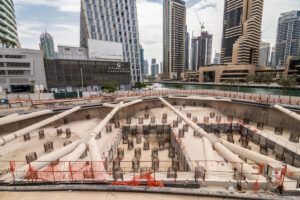
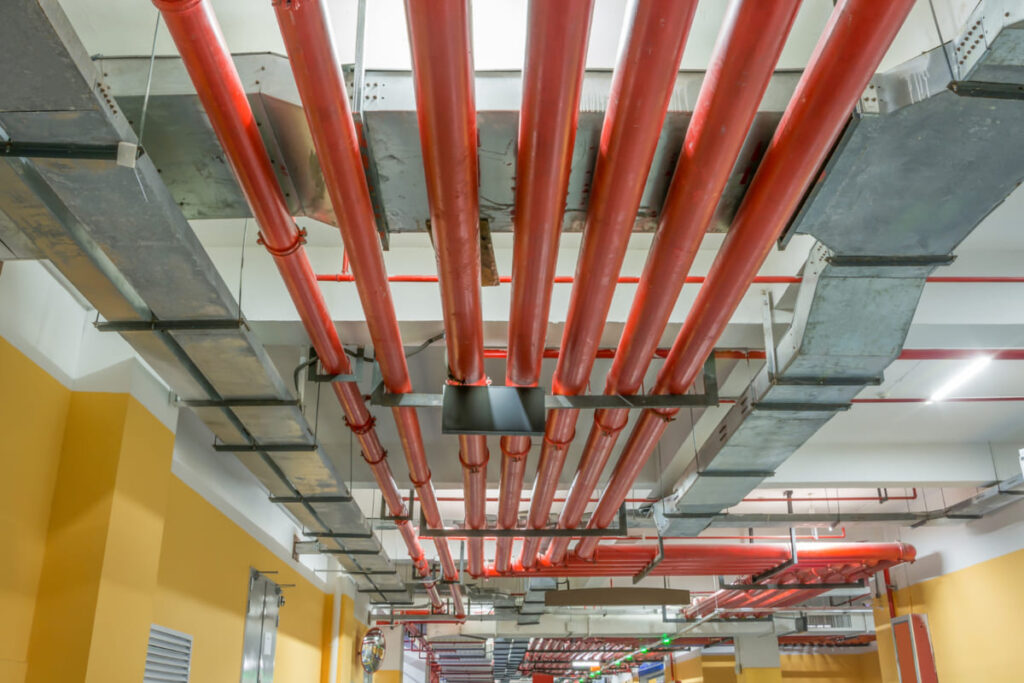
Smart leak-detection systems have become critical tools on modern construction sites. Water damage from undetected leaks is one of the costliest risks during building projects, and even a small leak can halt work, damage materials, or create safety hazards. In 2025, construction companies are increasingly investing in advanced technologies to catch leaks early and prevent these issues. By implementing the following seven systems, projects are avoiding costly delays and ensuring safer, more efficient construction.
Table of Contents
7 Smart Leak-Detection Systems Construction Sites Are Adopting in 2025
1. IoT Wireless Water Leak Sensors
IoT (Internet of Things) water leak sensors are compact, battery-powered devices that detect the presence of water in sensitive areas. These wireless devices can be placed wherever a leak might occur – under pipes, around valves, beneath water heaters, or near any plumbing fixture – forming a network that monitors the site in real time. When a sensor detects water (for example, a puddle starting to form), it immediately sends an alert via the network to the site management system or directly to supervisors’ phones.
For instance, a contractor can deploy these sensors on each floor near new plumbing installations; if a pipe joint begins leaking, the nearest sensor will pick it up and notify the team within seconds, allowing them to fix the issue before it grows.
Key Benefits:
-
Instant Alerts, Minimal Damage: Sensors catch leaks at the source and immediately notify staff, so water can be shut off before a minor drip turns into a major flood.
-
Simple Wireless Setup: The battery-powered units require no hard wiring. They can be quickly placed or relocated as needed, protecting all high-risk areas across the site without complicated installation.
-
Targeted Notifications: The system pinpoints the leak location and sends alerts (text, email, or call), enabling a rapid response exactly where the issue is, even if it’s after hours.
2. Smart Water Flow Monitoring Systems
Not all leaks are obvious; some cause unusual water usage rather than immediate puddles. Smart water flow monitoring systems track the flow rate and volume in a building’s pipes and detect anomalies. They typically use an IoT-enabled water meter or flow sensor installed on the main supply line (and sometimes on major branch lines). The system learns the normal water consumption patterns on site and sets thresholds. If it detects unexpected continuous flow when there should be none – for example, water running during the middle of the night when the site is inactive – it flags a potential leak and sends an alert to managers.
This proactive monitoring can catch hidden problems that might otherwise go unnoticed. Even if a pipe bursts behind a wall or underground, the sudden surge in flow will trigger an alarm. For instance, during a pressure test of new plumbing, a smart flow sensor would immediately detect the sustained flow from a burst pipe and alert the crew to shut off the water. By catching such issues early, flow monitoring systems prevent extensive water damage and also help avoid wasting water on site.
Suggested article to read: The Ultimate Guide to IoT Sensors in Construction (2025)
3. Automatic Water Shut-Off Valves
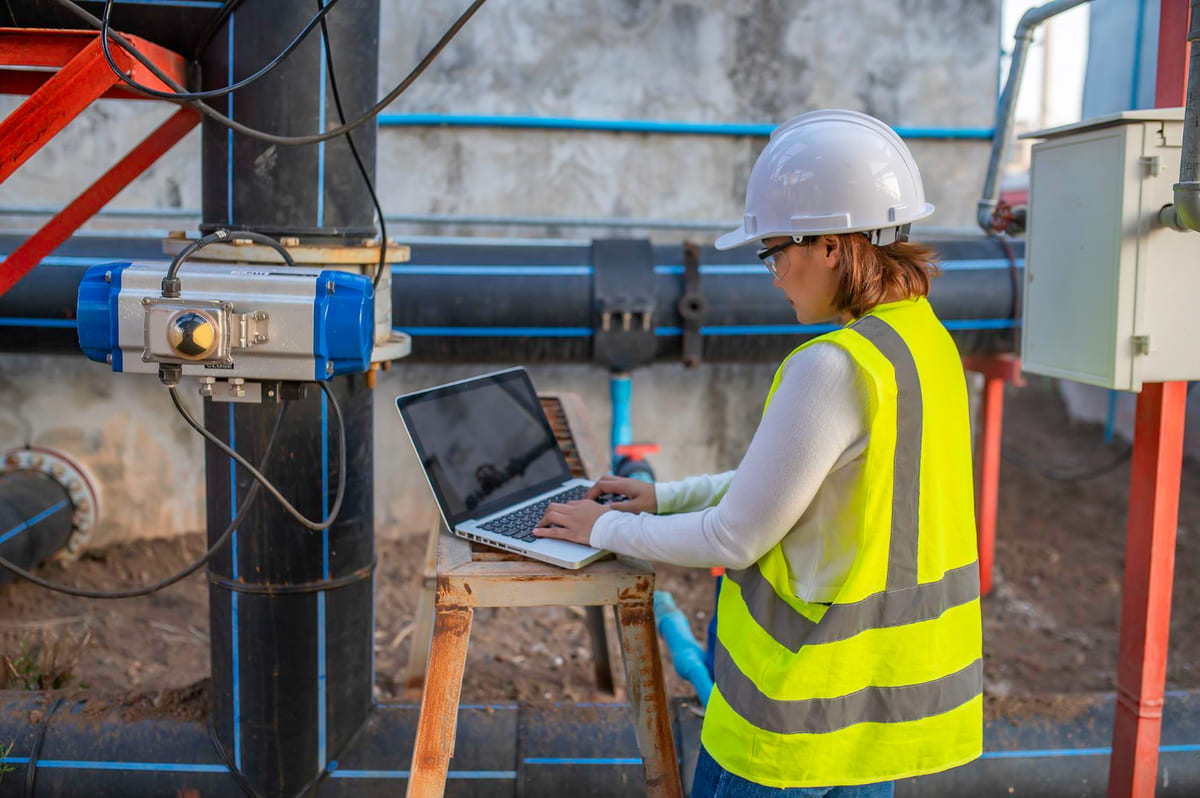
Detecting a leak is only half the battle – the water flow needs to be stopped quickly to limit damage. Automatic shut-off valves are smart valves installed on the water supply lines that can close the water line as soon as a leak is detected. These motorized valves are usually integrated with the leak sensors or flow monitors on site. If a linked sensor triggers an alarm (indicating a burst pipe or major leak), the shut-off valve immediately cuts off the water supply to that section or the entire building. This intervention can be done autonomously by the system’s controller or remotely by a manager through a smartphone app.
Consider a practical scenario: late at night, a pipe bursts on an upper floor of a building under construction. In a normal situation, water might gush out for hours until someone arrives in the morning, flooding multiple floors. With an automatic shut-off system in place, the excessive flow is detected within minutes and the main valve closes right away. Only a small volume of water escapes instead of tens of thousands of liters. The system also sends an alert about the shutdown. By the next day, the crew finds just a minor puddle to clean up, instead of a massive flood. This example shows why smart shut-off valves are increasingly becoming standard equipment to protect projects from water damage.
4. AI-Based Leak Detection Platforms and Analytics
Artificial intelligence (AI) is adding an extra layer of protection to leak detection. AI-based platforms aggregate data from all the site’s leak sensors and use machine learning algorithms to recognize patterns and anomalies. Over time, the system “learns” the normal water usage behavior of the project. This allows it to detect subtle warning signs that simple thresholds might miss – for example, a very small continuous leak or a combination of conditions that together indicate a pending problem. An AI-driven leak detection platform can also reduce false alarms by understanding typical variations, and it can even predict potential failures so that contractors can fix issues proactively (before a pipe actually fails).
One real-world example highlights the impact of these smart analytics. On a high-rise construction project, an AI-driven monitoring system detected a sudden water release in an upper-floor mechanical room and automatically alerted the site foreman by phone. A pipe had burst in that unattended area. Thanks to the instant alert, the team responded within minutes and shut off the water supply. Because that floor would have otherwise remained empty for hours or days, this quick action avoided catastrophic flooding. In fact, the rapid response averted an estimated $6 million in water damage. Incidents like this demonstrate how AI platforms can safeguard construction sites from major losses by catching leaks at the earliest moment.

5. Acoustic and Ultrasonic Leak Detection Devices
Another smart approach uses sound to find leaks. When pressurized water escapes from a pipe through a crack or hole, it emits a distinct noise (often a high-frequency hiss) in the pipe or surrounding soil. Acoustic leak detection devices use sensitive microphones or sensors attached to the pipes to listen for these telltale sounds. Modern acoustic systems can filter out background construction noise and focus on the unique frequencies generated by water escaping under pressure.
In practice, these devices help verify and monitor the integrity of pipelines during construction. Contractors can temporarily clamp acoustic sensors onto water lines and have them continuously listen. If a leak begins, the system identifies the sound and can even triangulate the location by comparing signals from multiple sensors. For example, during the commissioning of a municipal water main, an AI-assisted acoustic monitor picked up a faint leak noise from a defective weld. Crews were alerted and fixed the tiny pinhole leak before it turned into a major break. By using automated “ears” on their pipes, construction teams can catch small leaks that visual inspections would miss.
6. Fiber-Optic Leak Detection Cables
Fiber-optic leak detection is an innovative technology especially suited for large-scale pipelines and high-risk installations. It involves laying a fiber-optic cable alongside (or even within) the pipeline to act as a continuous sensor along its entire length. The system works by detecting changes in temperature, vibration, or strain that occur when a leak happens. For instance, if water starts leaking out of a buried pipe, the escaping water might cool the surrounding soil or create vibrations – the fiber-optic cable senses these subtle changes and instantly pinpoints the leak’s location.
These fiber-optic monitoring systems are valued for their ability to cover long distances comprehensively. They can detect a leak at any point along kilometers of pipe and report the exact location to operators within seconds. Because the fiber cable itself has no electrical current, it’s safe to use in hazardous environments (like around fuel lines) where electronic sensors might be risky. By 2025, some building codes and environmental regulations encourage fiber-optic leak detection on critical pipelines to ensure that even the smallest leaks are caught early. For example, in one recent project, a fiber system alerted engineers to a minor water leak in a remote section of pipeline, allowing a quick repair before the issue escalated.
7. Smart Gas Leak Detection Systems
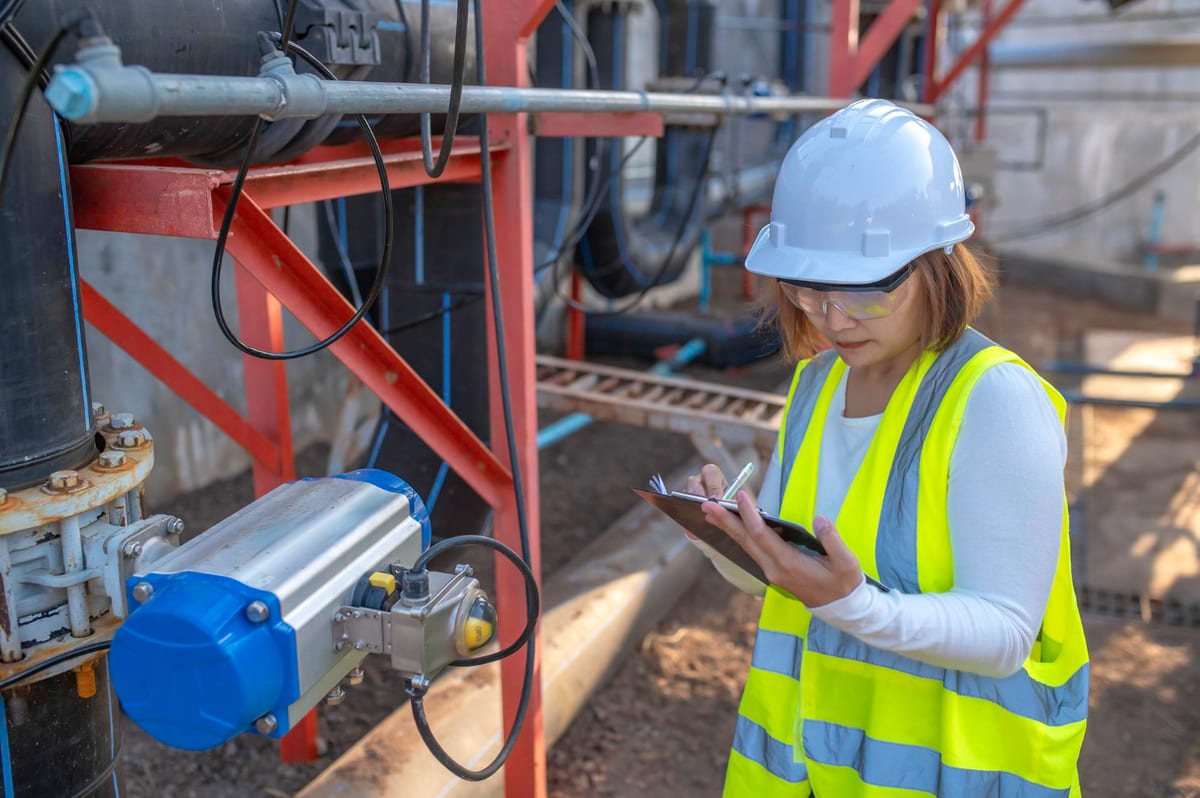
Construction sites that involve gas lines or fuel storage also employ smart leak detection for gases. These systems use a network of electronic gas sensors to continuously monitor the air for dangerous gases such as natural gas (methane) or propane. As soon as a sensor detects a concentration of gas above safe levels, it triggers an alarm and can automatically activate safety responses – for example, sending alerts to phones, turning on ventilation fans, or closing an automated gas shut-off valve. The sensors themselves are often wireless and battery-powered (similar to the water leak sensors) and are placed near equipment like boilers, gas pipes, or fuel tanks as they are installed.
The benefit is immediate hazard detection. For instance, during the pressure testing of a new gas line in an apartment building, a smart detector picked up a slight methane leak from an improperly sealed fitting. It instantly sounded an alarm and signaled the main gas valve to shut off, averting a potential explosion. Workers evacuated briefly and fixed the issue before any harm was done. In general, these gas detection systems significantly improve safety by catching leaks that could lead to fire or asphyxiation. They operate 24/7, so even if a gas leak happens after hours, the system will alert authorities and prevent disaster.
FAQs
How do smart leak-detection systems work on construction sites?
They use connected sensors to continuously watch for water leaks or gas leaks. If any sensor detects a problem – for example, water where it shouldn’t be or an unexpected surge in flow – the system instantly sends alerts to the team. Many systems can also automatically shut off water or gas to stop the leak right away.
What are the benefits of using a smart leak-detection system during construction?
It largely prevents expensive damage and delays. By catching leaks early, you avoid soaked materials, structural repairs, and work stoppages. Smart leak-detection also improves safety (by preventing hazards like hidden mold growth or gas buildup) and can lower insurance costs. Overall, it protects the project’s timeline and budget.
Which leak-detection technologies are most effective for large projects?
Large projects typically use a combination of methods for full coverage. For example, a smart flow meter on the main line can detect major pipe bursts, while multiple wireless moisture sensors cover individual rooms or equipment. These work together with automatic shutoff valves to immediately stop water when a leak is detected. By layering these technologies, even a small leak won’t go unnoticed.
Is it true that insurance companies require smart leak-detection systems for new construction?
Yes. Many insurance companies now strongly recommend or require active leak detection measures (such as automatic water shut-off systems) on new construction projects – especially for high-value builds. Water damage has caused huge claims, so insurers want builders to use these systems to reduce risk. In some cases, having a smart leak-detection system is necessary to get coverage or to qualify for lower premiums.
Conclusion
Smart leak-detection systems are transforming risk management on construction sites. By adopting these seven technologies – from wireless sensors to AI analytics and automatic shutoffs – the construction industry in 2025 is preventing countless incidents and protecting valuable projects. These tools provide round-the-clock vigilance, catching small leaks and warning signs that human eyes might miss. The result is significant cost savings (from avoiding damage and delays) and a safer work environment. Going forward, integrating a smart leak-detection system into every project is becoming standard practice – a proactive step that ensures quality, safety, and peace of mind during construction and beyond.
Resources:
Alert Labs Inc. (2021). Construction Company Avoids $6,000,000 in Water Damage with AlertAQ.
PHCP Pros Magazine. Postlethwaite, B. (2021). Yes, You Should Spec Leak Detection for Your Next Project.
WINT Water Intelligence. (2024). WINT urges construction industry to tighten up water management processes amid UK JCoP regulation. Press release, PR Newswire (Oct 29, 2024).
Munich Re / HSB Engineering Insurance. (2025). Water damage on construction sites – Guide to loss prevention.
Cognitive Market Research. (2024). Smart Water Leak Detector Market Trends and Future Opportunities.
The Korea Post. Lee, K. (2023). Arkadag smart city to be built in Ahal region, Turkmenistan.
Fine Homebuilding. (2025). A Closer Look at Smart Water-Leak Detection Systems.
For all the pictures: Freepik
Suggested article for reading:
4 Emerging Technologies for Curing Control in Concrete Structures
Top 8 Benefits of Smart Concrete Monitoring for Quality and Sustainability
3 Case Studies Where Smart Sensor Monitoring Accelerated Concrete Projects
5 Use Cases of IoT‑Enabled Concrete Monitoring in Commercial Construction
How Concrete Monitoring Is Building Smarter Cities: 8 Real-World Examples