
Concrete structures are built to last for decades, but excessive moisture can undermine their longevity and performance. An embedded moisture sensor provides a window into the concrete’s internal conditions, allowing engineers to catch problems early. High moisture inside concrete can lead to serious issues, from weak curing and delayed strength gain to corrosion of steel reinforcement and flooring adhesive failures. In fact, moisture-related problems in concrete floors alone cost North American property owners an estimated $2.4 billion in repairs each year, plus another $1.2 billion in prevention measures like sealers and coatings. By monitoring moisture within the concrete, these failures can often be avoided through timely intervention and informed decision-making during construction and maintenance.
Embedded moisture sensors come in various forms – some are wireless devices cast into fresh concrete, while others are probes installed into hardened slabs. All serve the same purpose: continuous monitoring of internal moisture or relative humidity (RH). Unlike surface measurements, embedded sensors capture what’s happening deep inside the concrete mass, where moisture may be trapped and slow to dissipate. Below we explore five innovative embedded moisture sensor solutions and demonstrate how each one helps prevent concrete failures through real use cases and practical examples.
Table of Contents
5 Embedded Moisture Sensors That Prevent Concrete Failures — Real Use Cases
1. Wireless In-Situ Concrete Humidity Sensors for Flooring
One critical application of moisture sensors is in concrete floor slabs that will receive finishes like hardwood, tile, or resilient flooring. Installing flooring over a slab that hasn’t dried sufficiently is a leading cause of flooring failures – moisture from the slab can vaporize and damage adhesives or cause warping and mold under floor coverings. Traditional moisture tests (like surface meters or plastic sheet methods) only gauge conditions at the surface, missing the moisture deeper in the slab. This is where wireless embedded humidity sensors shine.
Modern RH sensors, such as Giatec’s BlueRock™, can be tied to rebar and cast directly into the concrete when the slab is poured. These small battery-powered devices continuously log the internal relative humidity and temperature at the embedded depth. Construction teams can read the data remotely in real time via a smartphone app, eliminating the need to drill holes for periodic tests. By getting continuous moisture readings, project managers know exactly when the slab’s internal RH has dropped to safe levels (often around 75% RH or below, depending on flooring specs) before installing floor finishes.
Real use case: On a large commercial office project, contractors embedded wireless RH sensors across a 20,000 sq. ft. concrete slab to determine drying progress. The sensors revealed that while most areas dried to 75% RH within two months, a few zones remained above 85% RH due to thicker sections. Armed with this insight, the team avoided installing flooring prematurely in wet spots.
They directed dehumidifiers and extended the curing time for those sections by an additional three weeks. As a result, the flooring installation proceeded only when all parts of the slab met the moisture criteria, preventing what could have been costly failures like adhesive delamination or bubbling of floor materials. Continuous monitoring not only averted damage but also optimized the construction schedule, as contractors could confidently fast-track flooring in dry areas while focusing mitigation efforts where needed.
How it prevents failures: Embedded humidity sensors for flooring give an objective, real-time measure of slab moisture that takes the guesswork out of the equation. They help ensure floor coverings are only applied when the concrete is truly ready, thereby avoiding the classic trap of trapped moisture vapor causing floor finish failures.
In the long run, this proactive approach can save building owners from expensive floor repairs, mold remediation, and downtime due to moisture issues. The investment in sensors is minor compared to the potential losses – considering one study noted that neglecting moisture conditions can halve a concrete floor’s expected life. By catching high internal RH early, wireless in-situ sensors have become a standard quality assurance tool to prevent flooring fiascos.
Suggested article to read: 10 Tips For Quality Control in Construction
2. IoT-Enabled Sensor Networks for Curing Large Concrete Pours
Mass concrete structures like foundations, mat slabs, and bridge piers present a different moisture challenge: they can develop internal cracking and weaknesses if curing is not closely controlled. IoT-enabled embedded sensor networks are tackling this by tracking moisture, temperature, and other parameters throughout large pours. Companies like AOMS Technologies have developed multi-sensor systems (e.g. the AOMS LumiCon platform) that are placed in concrete pours to relay data wirelessly to the cloud. These systems combine multiple readings – internal temperature, concrete relative humidity, and even calculated metrics like evaporation rate or maturity – to give a holistic view of how the concrete is curing and drying over time.
These embedded sensors are typically rugged units with long battery life, capable of withstanding the harsh alkaline environment of young concrete. They transmit data via gateways (using technologies like LoRaWAN or cellular) so that engineers can monitor curing remotely, even off-site. The sensors help ensure proper moisture retention during curing (to achieve designed strength) and also indicate when concrete has dried enough for next construction steps or load application.

Real use case: A high-rise construction project in Toronto utilized a network of 50 wireless sensors embedded in a massive raft foundation pour. Over the first week, the sensors captured temperature and humidity gradients within the 6-foot-thick slab. The data showed that the core was heating up and drying faster than the surface, prompting the engineers to adjust the curing regimen – they extended the wet curing blankets on the surface by a few extra days to keep it moist and prevent differential drying.
The sensor network also alerted the team to an unintended overnight drop in humidity in one corner of the slab (due to a heater left on too high), allowing them to quickly remedy the situation by re-wetting that area. Thanks to these interventions guided by sensor data, the entire foundation cured evenly without cracking. Additionally, the sensors confirmed when the concrete reached the required maturity and moisture level, helping the project team determine the earliest safe time to start constructing the superstructure. This avoided unnecessary delays while ensuring structural integrity – a balance that would have been hard to achieve without real-time embedded monitoring.
How it prevents failures: By using IoT sensor networks in big concrete pours, contractors can prevent early-age cracking and ensure uniform curing. Moisture sensors embedded at various depths provide insight into whether the interior is staying sufficiently wet (to avoid shrinkage cracks) and whether the surface is drying too fast. The result is improved structural performance and durability.
These systems also enhance safety and efficiency – for example, knowing precisely when a massive pour has adequately set and dried can prevent premature loading that might cause failure. Overall, IoT-enabled moisture and temperature sensors help avoid the hidden dangers in mass concrete construction, such as internal thermal stresses or drying shrinkage, which if left unchecked could lead to severe structural deficiencies down the line.
3. Long-Term Moisture Monitoring in Critical Infrastructure
Not all moisture issues occur during initial construction; many develop slowly over the lifespan of the structure. Embedded long-term moisture sensors are increasingly used in critical infrastructure (like dams, tunnels, and nuclear containment structures) to track the internal water content of concrete over years and decades. The goal is to detect trends such as gradual drying or ingress of external moisture, which can affect structural behavior. For instance, as concrete in a nuclear reactor containment ages, it can lose moisture and shrink, potentially relaxing the tension in prestressed cables or creating microcracks. Continuous humidity and moisture content measurements inside the walls help engineers verify that the containment is performing as expected and predict long-term creep and shrinkage more accurately.
These long-term sensors often use robust designs such as capacitance-based probes, resistivity arrays, or fiber optic gauges. They are placed at various depths within thick concrete sections. Data may be collected via wired connections to data loggers or newer wireless systems if retrofitted. The sensor readings feed into structural health models, allowing owners to schedule preventative maintenance or adjust conditions (like internal humidity) to preserve the structure.
Real use case: Électricité de France (EDF) implemented an embedded moisture monitoring system in one of its nuclear power plant’s prestressed concrete containment domes. Sensors installed at multiple depths in the 1.2-meter-thick concrete measure the relative humidity and moisture content over time. After 30 years of operation, the data indicated that about 20% of the initial pore water had gradually dried out of the concrete in certain areas. This drying was within expected ranges, but the trends helped engineers refine their creep and prestress loss models for the structure. By knowing the actual internal moisture profile, they could better predict how much the containment might shrink and ensure it stayed within safe limits.
In one instance, when sensors in a section of the wall showed an anomalous rise in moisture during a rainy season, it alerted maintenance teams to inspect the exterior waterproofing. They discovered and sealed a minor concrete joint leak, preventing water from penetrating further and potentially causing corrosion or freeze-thaw damage. Here, the embedded sensors acted like a long-term early warning system, guiding targeted maintenance to prevent gradual moisture-related degradation that could compromise the containment’s reliability.
How it prevents failures: Long-term moisture monitoring in concrete infrastructure helps catch subtle changes that, over years, could lead to big problems. By keeping tabs on internal humidity, owners of structures like bridges, power plants, and tunnels can identify areas where water is infiltrating or the concrete is drying excessively. Timely repairs can then be made before cracks propagate or reinforcement corrodes.
In essence, these sensors extend the concept of preventive healthcare to concrete structures – they continuously “check the vitals” (moisture levels being a key vital sign) to ensure the structure remains healthy. This can prevent failures such as unexpected excessive cracking, loss of structural preload, or reduced load capacity. Moreover, having concrete moisture data improves the accuracy of durability forecasting, meaning rehabilitation can be scheduled at the right time rather than after a failure occurs.
4. Corrosion Prevention Sensors in Reinforced Concrete
Reinforced concrete is susceptible to failure when moisture and chlorides penetrate to the steel rebar, causing corrosion. Corroding rebar expands and cracks the surrounding concrete, leading to spalling and loss of structural capacity. Embedded corrosion monitoring sensors often include moisture sensing as part of their functionality to guard against this mode of failure. One common approach is to embed a sensor probe near the reinforcement that measures concrete electrical resistivity or conductivity – since concrete’s resistivity drops when its moisture content rises or when chlorides increase. By tracking resistivity, engineers infer the moisture level and ionic contamination at the steel level, which are precursors to corrosion.
Advanced corrosion sensors, such as the Embeddable Corrosion Instrument (ECI) developed in Virginia, go further by integrating multiple elements: a small piece of steel that acts like “sacrificial rebar” to directly measure corrosion rate, a reference electrode to gauge corrosion potential, a temperature sensor, and a moisture content (conductivity) sensor. These devices are cast into concrete near critical rebar. They can be wired or connected to wireless nodes to send data periodically. The data alerts infrastructure owners to corrosive conditions long before visible damage appears.
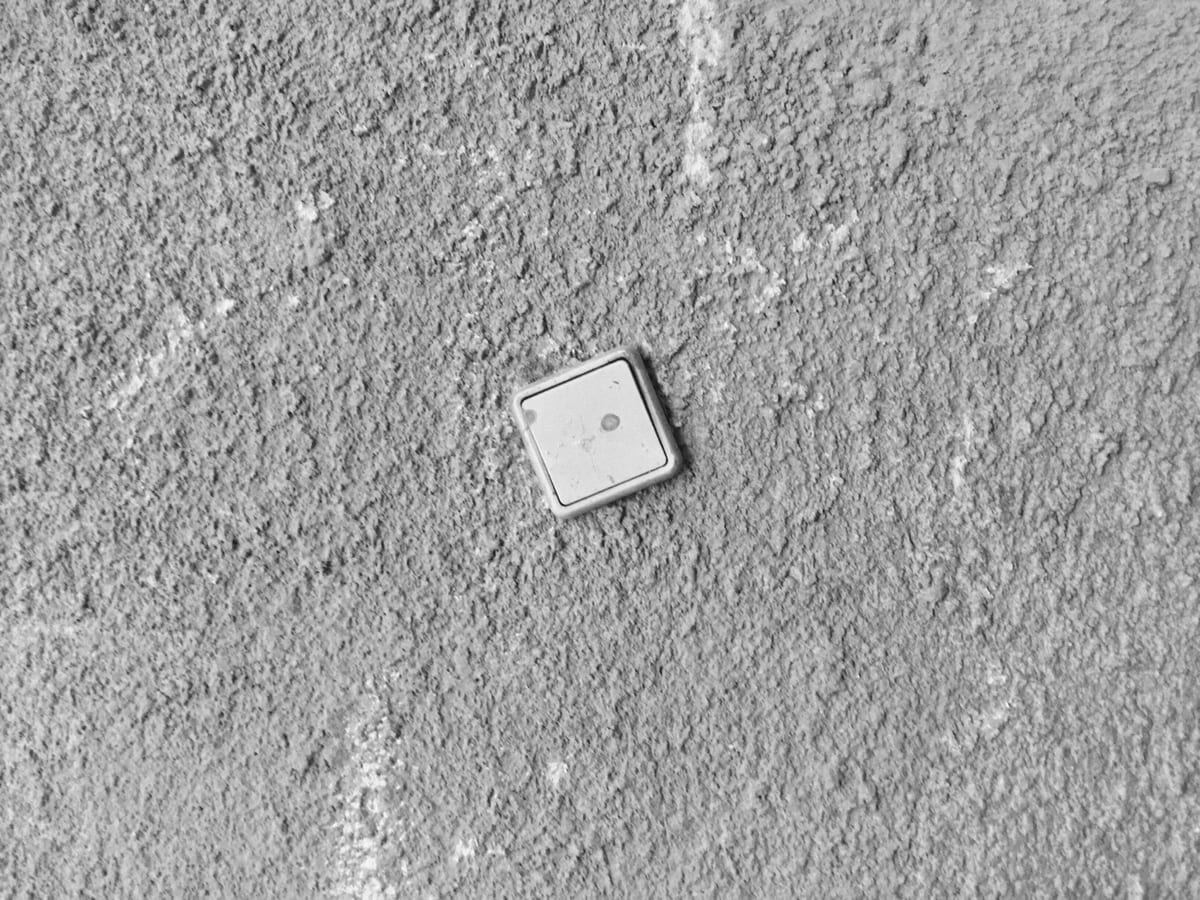
Real use case: The Virginia Department of Transportation installed prototype embedded corrosion sensors in a highway bridge deck on the I-29/I-460 interchange. Four sensor units were embedded near the top steel mat during a bridge rehabilitation in 2002. Over the following years, these sensors continuously monitored the internal concrete moisture, temperature, and chloride-induced corrosion activity.
Early on, the sensors showed that after heavy salting in winter, the concrete’s electrical resistivity dropped significantly (indicating higher moisture and salt content), and the corrosion potential readings on the steel probe became more negative – a warning sign of active corrosion starting. With this information, maintenance crews were able to intervene by improving the deck’s waterproofing and applying a topical corrosion inhibitor the next summer.
By reducing further water and salt ingress, they effectively slowed the corrosion process. In the long term, this meant the bridge deck stayed sound far beyond its expected repair timeline; the agency estimated that the sensor-guided preventive actions extended the deck’s service life by at least 5–10 years. Without the embedded sensors, the initial corrosion might have gone unnoticed until cracks and rust stains appeared on the surface, by which point much more costly repairs or even partial reconstruction would be needed.
How it prevents failures: Embedded moisture and corrosion sensors in reinforced concrete act as a safeguard for the steel skeleton of structures. By detecting the presence of moisture at the rebar level and the onset of electrochemical corrosion, these sensors enable proactive maintenance of bridges, parking garages, marine structures, and other steel-reinforced concrete components.
Preventing corrosion is absolutely critical to avoiding structural failures – many concrete collapses or expensive restorations stem from unchecked rebar rust over time. With continuous data, engineers can, for example, schedule cathodic protection, sealants, or grout injections to areas getting too wet, well before the rebar loses significant cross-section. This targeted approach keeps structures safe and extends their lifespan, all made possible by the constant watchful eye of embedded sensors inside the concrete.
5. Leak Detection Sensors in Concrete Roofs and Walls
Sometimes preventing concrete failure is about catching water infiltration quickly. Buildings with concrete roofs, podium decks, or walls can suffer hidden leaks that saturate the concrete and lead to damage. Embedded leak detection moisture sensors are a practical solution used in modern construction to safeguard against such failures. These typically consist of sensor grids or wires installed just below waterproof membranes or within concrete layers that can sense the presence of water. If a membrane or barrier is breached, water reaching the sensor triggers an alert. Early detection means the leak can be repaired before water spreads, preventing deterioration of the concrete (through freeze-thaw cycles or rebar corrosion) and avoiding damage to interiors.
Some systems, like SMT Research’s FutureCast, integrate moisture sensors in green roof assemblies or slab assemblies and connect to an alarm system. In normal dry conditions the sensors show no change, but if moisture ingress occurs, the system pinpoints the location of the leak. This approach turns what could be an undetected slow leak into a manageable maintenance issue – long before structural weakening or collapse occurs.
Real use case: At the Burrard Place development in Vancouver, an upscale 13-story office building, the designers included an embedded moisture detection system under the rooftop garden. The concrete roof slab is covered by waterproofing and a lush green roof. SMT’s FutureCast sensors were placed in a grid pattern above the slab but below the soil and planting layer.
A year after completion, the system alerted facilities management to moisture presence in one sector of the roof. Upon investigation, they found a small puncture in the waterproof membrane around a drain detail. Because the leak was caught early (the sensors highlighted the exact quadrant), the repair was minor – contractors accessed that section, peeled back a bit of the green roof, and patched the membrane before any significant water had penetrated the concrete slab.
The concrete structure remained dry and undamaged, and interior offices below were unaffected. The alternative scenario without leak detection could have been water seeping into the slab and down through ceiling finishes, possibly corroding rebar or causing concrete spalling over time. By installing these moisture sensors, the building owners effectively gained continuous roof insurance – the ability to fix leaks before they become failures.

How it prevents failures: Embedded leak detection sensors tackle moisture problems at the earliest stage: water entry. For concrete elements that must remain watertight (roofs, balconies, foundations), this technology provides peace of mind and tangible protection. It prevents the cycle of undetected leaks leading to progressive structural damage, such as rusting reinforcement, concrete softening, or frost-induced cracking.
Additionally, it helps maintain the intended performance of the structure (for example, a parking garage deck stays structurally sound and safe from falling concrete chunks). In summary, leak detection sensors are a straightforward yet powerful tool: they turn the amorphous threat of water damage into a monitored variable, ensuring that even if waterproofing fails in spots, the concrete itself does not suffer unchecked deterioration.
FAQs
How do embedded moisture sensors in concrete work?
Answer: Embedded moisture sensors typically use electrical or electronic methods to measure moisture inside concrete. Some use relative humidity probes sealed in the concrete to measure the internal air’s humidity, while others use resistive or capacitive sensors that change output based on the concrete’s water content. They are placed within the concrete (often at critical depths) and connected to a reading device or wireless transmitter. By converting moisture levels into electrical signals, these sensors allow engineers to monitor the internal moisture condition of the concrete in real time without damaging the structure.
What types of concrete failures can moisture sensors prevent?
Answer: Moisture sensors can help prevent a range of concrete failures related to water. This includes flooring failures (like adhesive delamination, bubbles, or mold under floor coverings) by ensuring slabs are dry before installation. They prevent cracking and surface defects from poor curing or shrinkage in new concrete. In the long term, they help avoid structural damage from rebar corrosion (by flagging high moisture and salt presence near steel) and freeze-thaw cracking (by detecting water intrusion in cold climates). By catching leaks or excessive moisture early, these sensors avert progressive deterioration that could lead to major structural repairs or failures.
Which embedded moisture sensor is best for monitoring concrete moisture?
Answer: There are several types, and the “best” choice depends on the application. For construction drying and flooring decisions, embedded RH sensors (either wired probes or newer wireless sensors) are highly effective and standardized. For structural health monitoring, resistivity-based sensors or multi-parameter corrosion probes that include moisture measurement are common; these are best for long-term durability monitoring. In leak detection scenarios (roofs, containment), grid-type moisture detection sensors are ideal. Many modern systems integrate IoT connectivity for real-time data. Ultimately, the best sensor is one that is durable in concrete’s environment and matches the needed measurement (humidity, moisture content, or electrical conductivity) for your specific prevention goal.
Is it true that moisture sensors are only useful during construction?
Answer: No, that’s not true. While moisture sensors are extremely useful during construction (for example, to decide when concrete is dry enough for the next step), they are also valuable throughout a structure’s life. During service, concrete can be affected by changing moisture conditions – rain penetration, groundwater, humidity changes, or leaks. Embedded sensors continue to provide insight into these conditions long after construction. They can alert owners to developing issues like increasing moisture that could cause corrosion or degradation. In fact, many infrastructure managers use permanent moisture and humidity sensors in bridges, tunnels, and buildings to continuously monitor and manage structural health over decades.
Conclusion
Moisture may be invisible inside concrete, but its effects are very real – and without monitoring, small issues can escalate into major failures. The five embedded moisture sensor solutions highlighted above each play a role in making concrete structures safer and more durable. From construction-phase sensors that ensure proper curing and timely flooring installation, to long-term monitoring devices that keep tabs on aging infrastructure, these technologies empower engineers and owners with actionable data. Real-world use cases have shown that embedded sensors can catch problems like excessive internal humidity, leaks, or corrosive conditions before they cause damage, enabling preventative measures that save money and enhance safety.
In an industry traditionally reliant on periodic inspections and guesswork, the continuous feedback from moisture sensors represents a shift toward proactive management of concrete health. By incorporating embedded moisture sensors into projects, stakeholders can significantly reduce the risk of concrete failures, whether it’s preventing a floor from debonding or extending the life of a bridge by a decade. In essence, these sensors serve as the concrete’s voice – providing warnings and insights so that we can respond and keep our structures robust for generations.
Resources:
European Agency for Safety and Health at Work. (2022). Improving compliance with occupational safety and health regulations.
Interiors + Sources. Nieminen, R. (2023). Epic Fail: The Problem of Moisture and Flooring.
MultiTech. (2025). Advancements in Concrete: Utilizing IoT to Monitor Concrete Quality in Large Scale Construction Projects.
MDPI. Ikumi, T., Cairó, I., Groeneveld, J., & Aguado, A. (2024). Embedded wireless sensor for in situ concrete internal relative humidity monitoring. Sensors, 24(6), 1756.
SMT Research. (2021). Project Profile: Burrard Place – Moisture Detection Sensors for Roof Leak Monitoring.
For all the pictures: Freepik
Suggested article for reading:
4 Emerging Technologies for Curing Control in Concrete Structures
Top 8 Benefits of Smart Concrete Monitoring for Quality and Sustainability
3 Case Studies Where Smart Sensor Monitoring Accelerated Concrete Projects
5 Use Cases of IoT‑Enabled Concrete Monitoring in Commercial Construction
How Concrete Monitoring Is Building Smarter Cities: 8 Real-World Examples