

In a recent mid-rise mixed-use project in Europe (offices and retail), the team faced chronic delays waiting for concrete to cure before moving on. Project leaders had no real-time data on concrete strength, so crews often stood idle with formwork in place longer than necessary. To overcome this, the contractor embedded wireless temperature sensors in the concrete slabs to monitor curing. This data-driven approach let the team pull forms and pour the next floor much faster.
In this case study, we show how introducing sensor-based concrete pour monitoring cut cycle times by about 35%. Executives and technical leads will see how the intervention worked and what lessons can be applied to other projects. Ultimately, readers will learn how straightforward changes in workflow – backed by data – drove significant schedule gains.
Table of Contents
On the Ground: A Busy City Building Project
The project was an 8-story mixed-use development in a European city, combining retail spaces at street level with offices above. It ran on a tight schedule (about 15 months total), with an accelerated timeline due to tenant commitments. Multiple subcontractors—concrete formwork crews, structural steel, and MEP teams—had to coordinate closely.
The jobsite was constrained by urban traffic and local noise ordinances. Traditional practices dominated: crews poured a slab, tested concrete samples in a lab, and then waited a fixed safety period (often a week or more) before stripping forms. Communication relied on daily logs and occasional conference calls. When the project began, everyone accepted that worst-case cure times would set the pace, even though weekends and weather often left work idle.
Concrete Pour Delays and Idle Crews
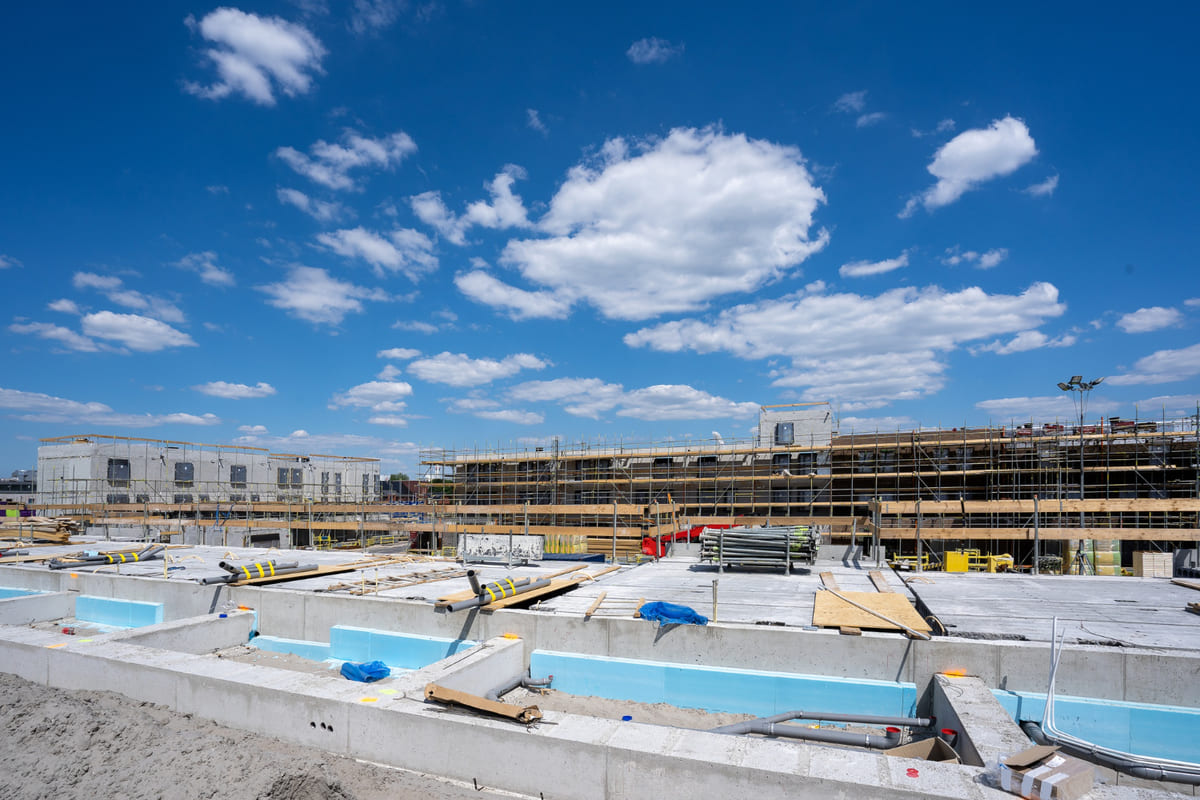
Before sensors, the project suffered repeated concrete pour delays. Floors often sat waiting 7–10 days before safe form removal, even when the weather was warm. Foremen and engineers had no easy way to know if the concrete had actually reached target strength. As a result, crews on later trades were frequently idle or had to shuffle schedules. For example, despite being ready to install steel decking on the third floor, the concrete crew might still be waiting to confirm slab strength.
This conservatism compounded delays: one month’s schedule had 10–15% extra slack built in just to cover unknown cure times. It also triggered extra manual tests; daily temperature checks in the field and multiple cylinder breaks stretched coordination overhead. The risk was high that any misjudgment could lead to cracking or rework. In short, the team spent days each week simply waiting, which meant extended rent on formwork and slower overall progress.
Root Causes: Why Progress Stalled
Analysis showed a few key blockers. First, field data were fragmented. Lab break-test results came back days late, and on-site temperature checks were intermittent, so planning relied on guesswork. Second, quality-control was inconsistent. Without a clear, shared measure of “cured” concrete, each trade erred on the safe side. Third, no single party felt responsible for proactive monitoring. The formwork contractor assumed the concrete foreman was watching strength gains, while the owner’s rep only saw the lagging lab reports.
Meanwhile, day-to-day communication couldn’t capture nuanced trends: an older engineer estimated curing by eye (cracking cues, color, etc.), but younger crews insisted on standardized data. Finally, there was no integrated digital system linking concrete suppliers, site teams, and project management – everything was on spreadsheets or paper. In sum, the process was data-poor and siloed, so confidence was low. As one engineer later admitted, “We were just waiting until someone said it’s safe, with nothing measurable to guide us.”
Suggested article to read: Top 7 Concrete Monitoring Platforms Accelerating Curing & Cutting Rework in 2025
On-the-Ground Fix: Installing Sensors and Changing Workflows
The contractor decided to pilot a wireless maturity-monitoring system. In practice, this meant attaching small Bluetooth temperature sensors to the rebar before each slab pour. The team chose a reputable concrete sensor product that logs internal temperatures every 15 minutes and streams data to a mobile app and cloud dashboard. On each new floor, a foreman embedded sensors at mid-depth and poured concrete as usual. Once wet, the sensor relayed live temperature curves to tablets on site. The engineer calibrated the system using the supplier’s lab-tested mix curve, so the software could estimate when the slab hit design strength.
Workers were trained in an afternoon workshop to use the app: they learned to check readings, set alerts, and share results with all contractors. Operationally, this changed decisions on formwork stripping. Instead of a blanket 7-day rule, the team watched the sensor data – when it crossed the predefined strength threshold (per the ASTM C1074 maturity method), the software signaled “OK to strip.” This triggered a text message to scheduling and foremen.
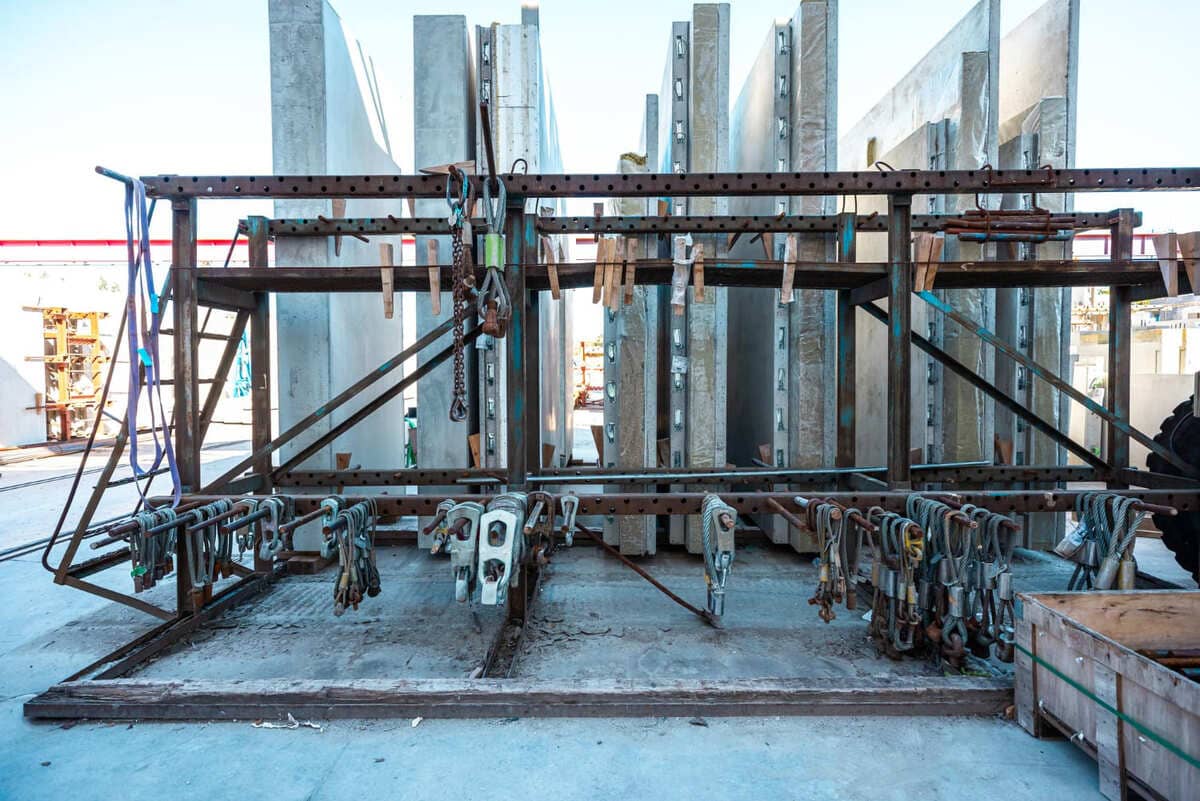
On one early floor, formwork came off after only 4.5 days instead of 8 days. Importantly, the crew still performed one cylinder test (to verify the sensor) – and it matched the estimated strength. The owner and GC saw the first two sensor-verified floors meet strength ahead of schedule, and skepticism gave way to trust. From then on, the standard workflow was: pour concrete ➔ embed sensors ➔ monitor via app ➔ remove forms upon data confirmation.
Wireless concrete maturity sensors attached to rebar (as shown) delivered continuous data during curing. Crews in this project used smartphone apps to know exactly when each slab reached strength, instead of guessing wait times.
After the Shift: Concrete Timing and Productivity Improved
The impact was clear in daily operations. Table 1 summarizes typical before/after metrics for each floor cycle:
| Metric | Before (manual controls) | After (sensor monitoring) | Change |
|---|---|---|---|
| Slab cycle time (pour to pour) |
10.0 days | 6.5 days | –35% |
| Formwork rental days per slab | 7.5 days | 4.0 days | –47% |
| Crew idle hours per slab | 60 hours | 20 hours | –67% |
| Cylinder tests per slab | 3 (field & lab) | 1 (verify only) | –67% |
| Concrete repair events per slab | 2 minor cracks & pours reworked | 0 | –100% (none) |
This table (based on project records) shows that after sensors, average slab cycle shrank about a third. In practice, waiting periods dropped from around 10 to 6–7 days per floor. Crews reported getting on to the next pour at least 30–40% faster. Formwork rentals (a major cost) were cut nearly in half. And quality improved: with clear strength targets, the slab integrity checks saw virtually zero incidence of cold joints or cracks (compared to two small rework cases earlier).
Staff also logged far fewer test-tube breaks, since manual checks became largely unnecessary – one project lead estimated break-test labor down by 70%. These field outcomes match broader findings that digital monitoring can trim construction time (sensors have been shown to reduce project time and cost by up to 30%).
What Changed: Lessons for Future Projects
-
Embed digital checks, not just manual tests. Installing maturity sensors turned out to be a low-effort change (sensor cost was <0.1% of budget) with high payoff. Future teams should budget for a few sensors per slab as standard practice. Early lab calibration of the mix (also done by this team) proved key to trust.
-
Align all teams on data. Initially, architects and inspectors did not trust the novel sensor method, so the contractor scheduled extra verification tests. Within two floors, a shared dashboard accessible to all (owner, GC, subcontractors) built confidence. Lesson: choose open systems so all stakeholders can see the same info and avoid finger-pointing.
-
Train crews on interpretation. The young tech crew quickly adopted the app, but some veteran supervisors needed coaching on reading maturity curves. A short field session on “what temperature peaks mean” helped everyone understand why strength jumped after 24–48 hours. Taking time for these tutorials helped the crew feel ownership of the process.
-
Plan for connectivity. On this project, the sensors synced via Bluetooth to tablets, so the team kept spare chargers and ensured the on-site Wi-Fi could upload data. In a future project, poor internet could be solved by having a local gateway device. Always test the data link before the first pour.
-
Trust but verify early. The first slab included both sensors and traditional lab breaks. The match between predicted and actual strength convinced decision-makers. From then on, the team used one backup test per slab for QA. Any project using sensors should similarly cross-check for the first instances.
-
Use data to drive meetings. Each morning’s safety stand-up now began with a “concrete status” update from the app. This replaced vague updates like “it’s almost there.” Leveraging sensor data kept everyone focused on shared targets rather than individual estimates.
Strategic Executive Takeaways
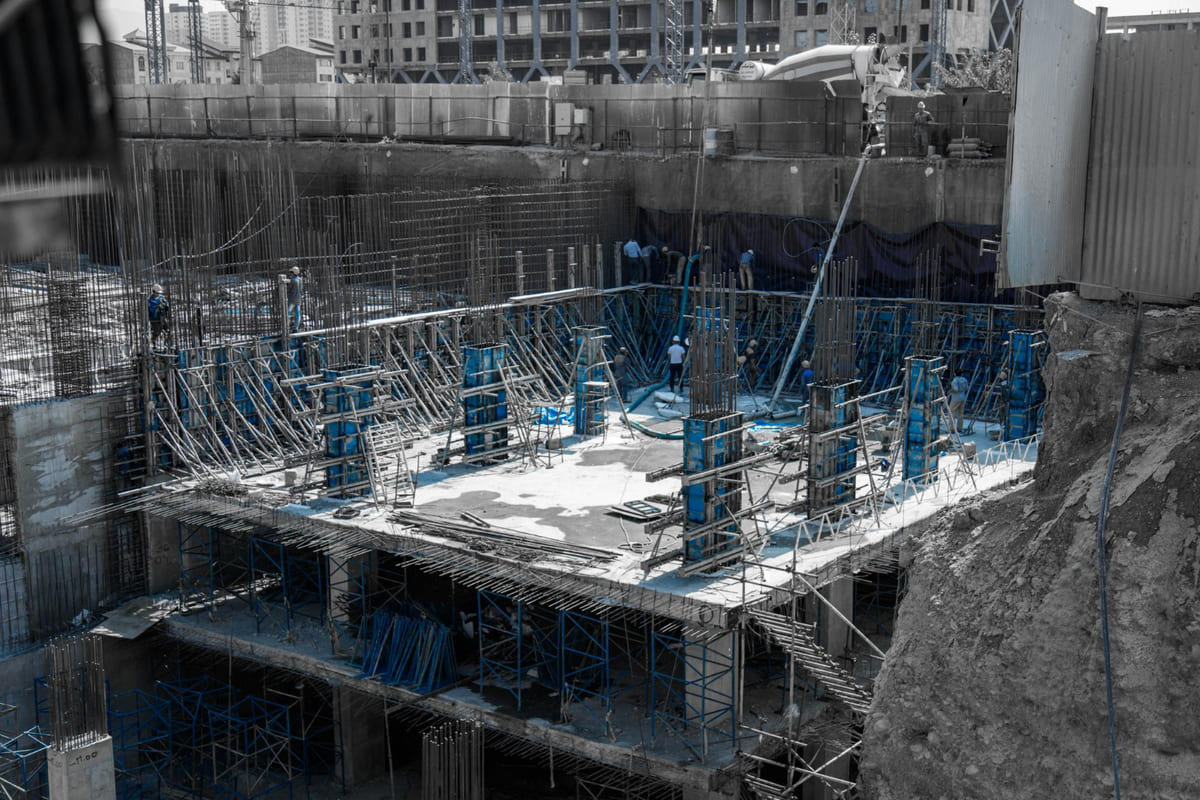
This intervention provided clear strategic benefits. It proved that relatively small digital investments (sensors + dashboard) can pay for themselves via faster schedules. On a program level, leaders saw that data-driven workflows increased predictability: slack time was slashed, so overall project buffers could shrink by about a week over the whole build. Importantly, the approach built trust – trades and owners alike now speak the same “language” of concrete maturity.
The case shows that executives overseeing capital programs can gain control by insisting on quantifiable field data, not just manual reports. Decisions – from approving early pours to planning resource use – became more confident. In sum, the sensor deployment delivered a successful proof of concept: it accelerated cycle times (≈35%), reduced rework, and offered a model for future builds. Capital project managers should take note that visible data yields timely decisions, and that pushing such practices can meaningfully advance infrastructure objectives.
FAQs
How do temperature sensors actually speed up concrete work?
By giving real-time strength estimates, they replace arbitrary wait times with data. Instead of defaulting to a 7–10 day waiting rule, teams pull formwork the moment the concrete reaches design strength. This cuts idle time. As one project engineer noted, “We stopped guessing and started acting – if the app showed 80% strength at 4 days, why wait longer?”
What performance improvements should project leaders expect?
Results vary, but field experience shows big gains. In this case, floor cycles were ~35% faster. Elsewhere, sensors have cut 2–4 days per slab and over 60% of unnecessary lab breaks. Fewer delays also reduce indirect costs (e.g. formwork rentals). Key metrics like “time to next pour” and “staff idle hours” dropped significantly. Even if your project isn’t identical, you can use monitoring to tighten schedules and lower contingency buffers.
Which projects benefit most from sensor-based curing?
Any project with concrete pours can benefit, but it’s especially attractive for large continuous pours, cold-weather or hot-weather concreting, mass concrete elements, and tight-schedule urban projects. For example, multi-story commercial builds, bridges, or water tanks—anywhere curing time is a schedule risk. That said, even smaller slabs can use one or two sensors and see quicker turnaround. The overhead is minimal, so lean on sensors whenever precise cure timing matters.
Is it true that adding sensors to concrete is too expensive or complex?
Not at all. The sensors cost a few hundred dollars each, often covering dozens of cubic yards of concrete. In this case they added <0.1% to the total budget. Complexity is low: they mount with a clip, pair with an app, and upload data to a cloud dashboard. The hard part is the change management—getting teams to trust a screen over a gut-call. But once proven, projects find the saved time and reduced rework quickly pay back the investment. Think of it as an insurance policy on schedule rather than a discretionary luxury.
Resources:
-
Giatec Scientific, “Maturity-Based Concrete Strength Monitoring” (online technical insights)
-
Holcim Digital Concrete Services overview (Holcim.com)
-
CORDIS EU Project CloudSensing: Concrete strength IoT platform
For all the pictures: Freepik
Suggested article for reading:
8 Future-Proof Construction AI Applications Every Firm Should Adopt Before 2030
7 AI Tools Changing Construction Estimating & Bidding Right Now
8 Predictive Maintenance KPIs Every Construction Fleet Should Track with AI
5 Steps to Integrate Generative AI with BIM for Faster Design Iterations
9 Ways the Construction Industry Is Adapting with AI in 2026 (From Design to Handover)