
The construction industry is increasingly adapting with AI to improve efficiency, safety, and outcomes at every project stage. From the initial design phase to the final handover of a building, AI-driven tools are helping construction professionals make better decisions and streamline their work. Below, we explore nine key ways in which construction is embracing AI in 2026, with real examples and practical explanations of each.
Table of Contents
9 Ways the Construction Industry Is Adapting with AI in 2026
1. AI-Powered Generative Design in Architecture
Design teams are using AI-driven generative design software to create and evaluate thousands of architectural options in a fraction of the time. These tools take goals and constraints (like site conditions, budget, and energy efficiency) and automatically produce optimized design alternatives. Architects can then refine the suggestions, combining human creativity with AI’s ability to crunch complex parameters. For example, an architecture firm might input requirements for a new office building – floor space, number of rooms, daylight needs, structural strength – and the AI will generate numerous layouts and structural configurations that meet those criteria.
This process helped one design team discover a building layout that reduced material use by 15% while improving natural light for occupants. By adapting with AI in the design phase, firms catch problems early and explore innovative solutions that a human designer might not consider under time pressure. The result is more efficient and creative architectural designs, achieved faster. Architects still guide the final decisions, but AI serves as a powerful assistant, rapidly providing data-backed options and ensuring designs are optimized for sustainability, cost, and performance from the outset.
2. Intelligent Planning and Scheduling
Project planning has always been complex, and now AI is helping construction managers create smarter schedules and anticipate issues before they happen. AI-driven scheduling systems can analyze historical project data and real-time conditions to optimize the construction sequence. Planners can input a project’s tasks, labor resources, and constraints, and the AI will produce a schedule that minimizes conflicts and downtime. These tools continuously adjust plans as conditions change. For instance, if bad weather is forecasted or a delivery is delayed, an AI scheduling assistant can resequence activities proactively to avoid a standstill on site.
One major contractor piloted an AI scheduling platform on a hospital project: the system evaluated millions of possible task sequences and found an approach that cut the overall project duration by several weeks. During construction, it monitored progress and alerted the team when certain tasks started slipping, allowing managers to intervene early. By adapting with AI in project scheduling, construction teams improve timeline reliability. The AI acts like a vigilant project analyst, spotting potential delays (such as overbooked crews or sequencing clashes) and suggesting adjustments. This leads to more predictable project delivery and less overtime or last-minute firefighting, keeping projects on track and on budget.
3. AI in Cost Estimation and Budget Control
Accurate estimating is critical for successful projects, and AI is giving estimators a powerful boost. Companies are using AI-driven estimating software to analyze past project data, market prices, and the details of new designs to produce more precise cost estimates. These tools learn from historical outcomes – for example, knowing that certain types of projects tended to run over budget on electrical work – and flag similar risk areas in new bids.
AI can also automate quantity takeoffs by scanning digital blueprints or BIM (Building Information Modeling) data to count items like doors, windows, or concrete volume, reducing tedious manual work. The result is faster estimates with fewer errors. In practice, an estimator might upload plans for a new school building into an AI-based system.
The AI quickly calculates material quantities, applies up-to-date pricing, and even highlights that the proposed design has an unusually high HVAC cost compared to similar past projects. This insight allows the team to investigate alternatives or ensure the budget accounts for that complexity.
Some contractors report that AI-assisted estimating has cut their bid preparation time by over 50%, freeing estimators to focus on vendor quotes and value engineering. Moreover, by catching potential overruns early (say, noticing that past projects of a certain design went 10% over in structural steel costs), AI helps teams build more realistic budgets and avoid nasty surprises later. Integrating AI into cost estimation is one way the industry is adapting with AI to improve financial outcomes and bid more confidently.
4. Predictive Procurement and Supply Chain Optimization
Managing materials and equipment across global supply chains is another challenge where AI is making a difference. Construction firms are leveraging AI-driven procurement platforms to forecast material needs, lead times, and prices. By analyzing data like market trends, supplier performance, and even geopolitical factors, AI can advise when to purchase key materials or suggest alternate suppliers to avoid delays. For example, if an AI system notices that the price of steel is likely to rise in the next quarter due to global supply constraints, it might recommend ordering steel for an upcoming project earlier than usual or locking in prices with a supplier now.
Similarly, AI can track inventory on site and predict when a critical item (like concrete or rebar) will run low, automatically triggering a reorder to prevent work stoppages. Contractors have begun using these tools to minimize idle time waiting for materials and to negotiate better prices. One construction company’s procurement team uses an AI assistant that consolidates all their supplier data and project schedules.
Every week, it provides a report like: “Based on current burn rates, Project X will need 20% more electrical cable in two weeks. Supplier Y’s average delivery time is 10 days; recommend ordering by end of this week.” This kind of insight helps avoid last-minute scrambles and keeps projects moving. It also reduces waste and excess inventory by aligning orders with actual project consumption. By adapting with AI in procurement, the construction industry is reducing supply chain risks and ensuring materials arrive exactly when needed, at optimal cost.
5. Robotics and Autonomous Equipment on Site
On the construction site itself, AI-powered robots and machinery are transforming how work gets done. Companies are deploying autonomous and semi-autonomous equipment to handle repetitive or labor-intensive tasks with precision. In 2026, it’s not unusual to see robots laying bricks, tying rebar, or even 3D-printing components on site. Heavy equipment like bulldozers and excavators can now come with AI-driven autopilot systems that grade terrain or dig trenches guided by digital plans and GPS, needing only minimal human supervision.
One pioneering example is Project HALO by a global construction firm, where robots were used for high-rise construction tasks such as bricklaying and concrete pouring. These AI-driven robots worked tirelessly and accurately, which sped up the project timeline and reduced the physical strain on human workers. The crew reported that the robotic bricklayer could lay bricks several times faster than a person, with near-perfect consistency, freeing up masons to focus on more intricate work and quality checks. Similarly, autonomous drones are being used to carry materials across large sites or to do routine inspections, saving time compared to manual methods.
Embracing robotics is an adaptation born from both technology push and industry need – faced with skilled labor shortages, contractors are adapting with AI and robotics to fill the gap. The benefits include faster construction, reduced errors (as robots follow designs exactly), and improved safety by having machines handle hazardous tasks like working at great heights or handling heavy loads. Human workers aren’t replaced; instead, they work alongside robots, overseeing operations and handling the complex craftsmanship and decision-making that machines can’t do.
6. AI for Progress Tracking and Quality Control
Keeping track of construction progress and ensuring quality standards are met is a huge task on large projects. AI is helping project managers monitor work in real time and catch issues early. One way this is done is through reality capture technologies – things like 360-degree cameras, LiDAR scanners, and drones – combined with AI analytics. Each day or week, the site is scanned and the AI compares the 3D scan or photos to the BIM model or project schedule. This allows the system to automatically determine what percentage of work is complete and whether it’s on track.
For example, on a hospital construction project, the team used drones to take daily images of the site. AI software analyzed these images and could tell which floor slabs were poured and how much framing was installed, then cross-referenced it with the plan. It alerted the team that one area was lagging behind schedule, prompting a reallocation of crews to that zone to prevent a delay. Beyond tracking progress, the same visual data can be used for quality control. AI can detect if something built doesn’t match the specifications – such as a structural beam installed in the wrong spot or a section of wall that’s missing insulation.
In one case, an AI system scanning interior finishes identified a series of incorrectly installed fireproofing boards that human supervisors hadn’t noticed yet. The project team fixed the issue early, avoiding a potential fire safety hazard and rework later on. By using AI in this way, contractors gain almost a real-time x-ray of the project’s status.
Problems that used to go unnoticed for weeks (and then cost a lot to fix) can now be identified within hours. This proactive approach to quality saves money and ensures that by the time of handover, the building has far fewer defects. The industry’s shift to AI-assisted progress monitoring is a clear sign of adapting with AI to achieve higher productivity and quality assurance.

7. Safety Management with Computer Vision and Predictive Analytics
Construction sites are inherently risky environments, but AI is helping make them safer. One major innovation is the use of computer vision – AI algorithms that analyze images and video – to monitor site safety in real time. Cameras around the jobsite can feed live video to an AI system trained to recognize safety hazards or violations. For example, the AI can automatically detect if a worker is missing required protective gear like a hard hat or safety vest, or if someone has entered a restricted zone near heavy equipment. It can also spot unsafe conditions, such as an uncovered hole in the floor or a ladder left in a dangerous position.
When the system flags an issue, it instantly alerts supervisors via dashboard or phone, so they can intervene before an accident happens. In one real-world instance, a contractor installed an AI safety monitoring system that identified an open-edge fall hazard on an upper floor where a guardrail had been temporarily removed. The AI sent an immediate alert, and the site manager was able to halt work and get the guardrail reinstated, potentially preventing a serious fall. Beyond vision, AI is also crunching safety data to predict risks. By analyzing millions of safety observations and even photos from past projects, AI models can generate a “risk score” for each day or week of a project.
For example, an AI might notice that sites tend to have more incidents on Friday afternoons or when doing a particular task like roof waterproofing. If current conditions match those high-risk patterns, the system warns the team to increase safety checks or talks. Large construction firms have reported impressive results from these predictive safety analytics – some have reduced jobsite incidents by double-digit percentages after implementing an AI-driven safety program. By adapting with AI for safety management, the industry is moving from reactive (responding after an injury) to proactive (preventing incidents in the first place). It creates an extra set of eyes that never gets tired, scanning for danger and helping ensure that every worker goes home safe.
8. Digital Twins and Predictive Maintenance for Handover
As projects reach completion, AI continues to add value during handover and beyond. A growing practice in 2026 is to create a digital twin of the building – a detailed digital replica that includes the building’s BIM data, and live information from sensors in the actual building systems. AI can be layered on this digital twin to help facility managers optimize operations once the building is handed over.
For instance, all the HVAC, lighting, and energy meters in a new office tower might feed data into an AI platform that learns how the building behaves. In the first few weeks of operation, the AI might detect that certain floors are being cooled or heated when nobody is there, or that two air handling units are running inefficiently in tandem.
This was exactly the case at one large research campus: after handover, an AI-based energy management system revealed that the building automation settings were misconfigured, causing the facility to heat and cool itself at night when it was vacant. Acting on these insights, the facilities team corrected the schedules and managed to reduce the building’s natural gas usage by about 50% in just two months, without any new equipment – a huge efficiency gain simply from smarter control.
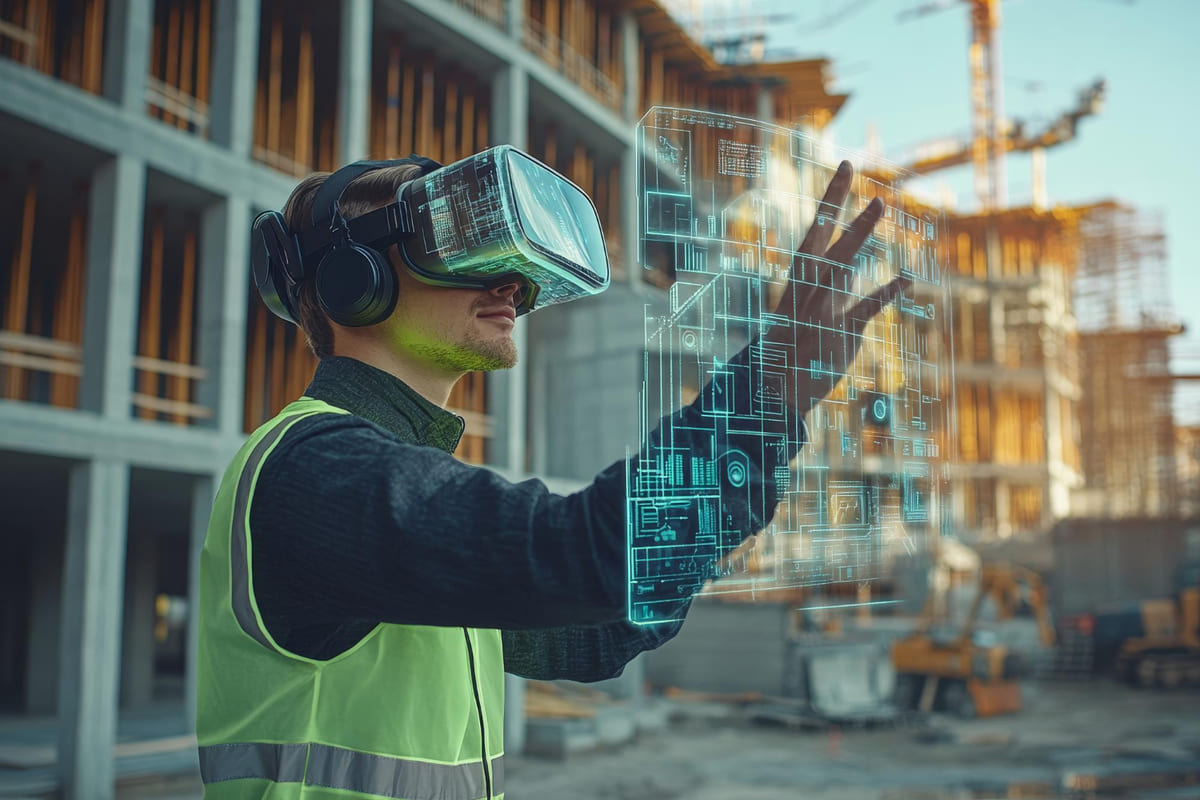
AI-driven building management systems can also predict maintenance needs. Instead of waiting for a pump or generator to break down, the digital twin’s AI watches trends in performance data (like a motor drawing a bit more power than usual) and can alert the maintenance team to check it before it fails.
This predictive maintenance means fewer unexpected outages and a longer lifespan for building equipment. During the handover phase, having such AI insights allows contractors to deliver a building that is already tuned for optimal performance. It’s like handing the keys to a car that has an onboard AI mechanic.
This approach ensures that from day one of occupancy, the building operates efficiently and safely. Owners and facility managers appreciate this forward-looking support, as it cuts operating costs and improves comfort for occupants. By incorporating AI in the commissioning, handover, and operation stages, the construction industry demonstrates that adapting with AI is not just for building things faster, but also for running them better long after the construction crews have left.
FAQs
How is AI being used in construction project design in 2026?
AI is used in design through generative design tools and advanced analysis. These systems can quickly create and evaluate many design options based on specified goals, such as cost, energy efficiency, or structural strength. Architects use AI to optimize building layouts, materials, and systems early in the process.
The AI doesn’t replace the architect; instead, it provides data-driven suggestions (for instance, proposing a structural design that uses less steel but maintains strength). This helps design teams make more informed decisions, resulting in buildings that meet requirements more effectively and sustainably.
What benefits does AI bring to construction project management and scheduling?
AI greatly enhances project management by analyzing complex schedules and resource data to foresee issues that humans might miss. For example, AI scheduling tools can identify potential conflicts in the timeline, optimize the sequence of work, and adjust plans in real time if something changes (like a delay in material delivery or bad weather). The benefit is fewer unexpected delays and better coordination of crews and equipment.
Project managers get proactive alerts from AI (“Task X is likely to slip because of crew shortage”), so they can act before it becomes a problem. Overall, AI makes construction project management more predictive and efficient, helping projects finish on time and within budget.
Which construction tasks can be automated or improved with AI technology?
Several construction tasks can be automated or improved with AI. Repetitive manual tasks like bricklaying, rebar tying, and earthmoving can be handled by AI-powered robots and autonomous machinery, increasing speed and precision. Monitoring tasks are also improved: AI systems automatically track progress by comparing daily site scans to project plans, and they perform quality checks by detecting errors or deviations in the work.
Safety monitoring is enhanced through AI computer vision that keeps an eye on workers and hazards continuously. Even administrative tasks see improvements – for example, AI can sort and classify project documents or help answer routine queries by learning from project data. In summary, AI assists with design optimization, scheduling, estimating, supply chain management, on-site construction work, inspection, and facility management tasks.
Is it true that AI will replace jobs in the construction industry?
It’s not true that AI will wholesale replace jobs in construction, but it is changing the nature of many roles. AI and automation are taking over certain repetitive, laborious, or highly analytical tasks, which means some traditional job activities are shifting. However, rather than eliminating construction jobs, AI is creating new opportunities and augmenting existing roles. For instance, a drone operator or digital model manager is a role that didn’t exist years ago. Field workers are now using AI-powered tools to work more safely and efficiently, and they need training to manage these technologies.
There is still a vital need for human judgment, creativity, and problem-solving on construction projects – AI provides support by crunching numbers and handling routine tasks, so people can focus on higher-level work. The industry will likely see a skills shift: demand is growing for workers who can operate advanced machinery or interpret AI data insights. In short, AI is a tool that helps construction professionals rather than a replacement, and companies that train their workforce to adapt with AI are finding that human expertise combined with AI yields the best outcomes.
Conclusion
The construction industry’s adoption of AI by 2026 spans the entire project lifecycle – truly “from design to handover.” We have seen nine ways the industry is adapting with AI: from generative design algorithms shaping more efficient buildings, to intelligent scheduling that keeps projects on track, all the way to smart building management that optimizes operations after handover. In each case, AI technologies serve as tools to augment human expertise, not replace it. Engineers and managers are using AI to gain insights from data, automate routine tasks, and enhance decision-making on complex projects. The result is construction that is safer, faster, and more cost-effective than before.
Importantly, these AI applications are grounded in real-world practice – they are not science fiction, but practical solutions delivering tangible benefits today. As more firms invest in digital skills and data-driven approaches, the industry continues to evolve. By embracing these innovations in a balanced, thoughtful way (for example, pairing AI analytics with the seasoned judgment of construction professionals), companies can build a more resilient and agile construction process. In summary, adapting to AI in construction is now an essential part of staying competitive and delivering high-quality projects. The examples and practices discussed here illustrate a future where construction is smarter and more efficient at every stage, with AI as a trusted partner in the building process.
Resources:
-
Deloitte. (2025). 2026 Engineering and Construction Industry Outlook.
-
Kanner, J. (2025). What Does Construction’s AI-Powered Future Look Like? Engineering News-Record.
-
Gerardi, J. (2024). How AI and Automation Are Supercharging Construction Estimating. Autodesk Construction Blog.
-
Brown, K. (2019). Top contractors partner with AI firm to prevent jobsite accidents before they happen. Construction Dive.
-
Hanley Frank, B. (2018). Doxel uses robots and AI to keep big construction projects on track. VentureBeat.
-
Rethinking The Future. (2023). Case studies of projects designed using AI-generated solutions.
-
Harvard Business Review. (2016). Smart Cities Start with Smart Buildings.
For all the pictures: Freepik
Suggested article for reading:
7 Essential Environmental Sensors Every Construction Site Needs in 2026 (AQ, Dust, Noise, Vibration)
6 Sensor Data KPIs to Track for Construction-Phase Carbon Reduction
5 Steps to Integrate Environmental Sensors with BIM for Live Site Monitoring
11 Use Cases for Drones + Environmental Sensors on Construction Sites (Dust Mapping, Emissions, Surveying)
11 Environmental Sensor Regulations Construction Firms Must Follow in 2026