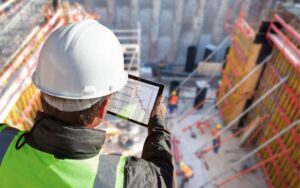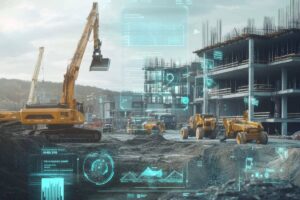

Wearable sensor innovation is transforming construction safety. By integrating tiny sensors into helmets, vests, watches and other gear, new devices gather real-time data on a worker’s health, location and environment. This data can automatically trigger alerts or guide managers to take action. For example, Gilbane Building Company reported that its wearable slip-trip–fall sensors immediately notify site medics when an incident occurs, drastically cutting emergency response time.
In another case, Chevron outfitted field crews with hydration-monitoring patches that measure sweat loss and skin temperature. These smart patches warn workers to rehydrate, which helped cut heat-related illnesses on hot job sites. In each instance, data from wearable sensors let teams identify risks early and adjust work before accidents happen – enhancing safety and keeping crews productive.
Table of Contents
Best 5 Wearable Sensor Innovations
1. Smart Helmets
Modern hard hats now contain multiple sensors and communications gear. They go far beyond protecting against falling debris: smart helmets can monitor the wearer’s motion, vital signs and surroundings. For example, the new Armet Pro “smart” helmet contains multi-axis motion sensors that sample 1,000 times per second to detect falls or impacts. When it senses a serious impact, it analyzes the event and automatically calls for help via a cellular link.
Such helmets may also include MIPS brain-protection layers to lessen rotational forces on impact. Other features can include built-in GPS for worker tracking, LED lights for low-light visibility, and even gas detectors for poor air quality. In practice, a proximity alert feature could warn a worker if heavy equipment gets too close – preventing struck-by accidents. (For instance, hard hats with radar-based proximity sensors can vibrate or sound an alarm when a crane or vehicle enters a danger zone.)
Smart helmets also collect data on worker fatigue and environment. Sensors in the liner can track heart rate or skin temperature, detecting signs of fatigue or heat stress. If a worker shows signs of overheating or exhaustion, the helmet can emit an alert to take a break. In short, these helmets act like on-site guardians, sensing hazards and contacting help.
Key Features of Smart Helmets
-
Fall and Impact Detection: Accelerometers and gyros measure sudden motions. If a fall or blow exceeds a threshold, the helmet analyzes the impact and auto-notifies supervisors or medics.
-
Vital Sign Monitoring: Built-in bands or inserts can track pulse and body temperature. Alerts are issued if readings indicate fatigue or heat stress.
-
Proximity Alerts: Radar or ultrasonic sensors warn if equipment or moving vehicles come too close, preventing collisions.
-
Environmental Sensing: Integrated gas and dust sensors can detect CO, NO₂ or high dust levels, alerting workers to leave a hazardous area.
By giving foremen continuous alerts from these smart helmets, crews spend less time in dangerous zones and more time working efficiently. The instant feedback also means issues are fixed quickly – for example, if one helmet reports high CO levels, crews can relocate or ventilate the area before illness occurs. This real-time information flow is a major example of wearable sensor innovation in practice.

2. Wearable Exoskeletons
Wearable exoskeletons are suit-like devices that offload heavy strain from the body. Designed to augment a worker’s strength and endurance, exoskeletons use mechanical supports (and sometimes powered motors) to help lift heavy loads safely. For example, the IX Back Volton system (by SuitX and Ottobock) is an “intelligent” active exoskeleton that senses a user’s movement pattern and automatically adjusts support through AI-driven actuators. In practical terms, a back-support exoskeleton helps a laborer lift a heavy beam with much less effort, reducing muscular stress. As one study showed, exoskeletons can cut the physical work and fatigue of lifting tasks while improving posture.
These suits have proven safety and productivity benefits. By lessening spine and shoulder load, exoskeletons significantly reduce the risk of common construction injuries like back sprains and shoulder strains. Workers can lift repetitive loads longer without tiring, which speeds work and reduces downtime from soreness. Some exoskeletons incorporate sensors in joints or straps that monitor body position. If a worker bends improperly or reaches a risky angle, the exoskeleton’s feedback (audio or vibration) can cue the worker to correct posture. In this way, smart exoskeletons not only support the load but also teach safer body mechanics over time.
Benefits of Exoskeletons
-
Strength Augmentation: Mechanical supports provide extra force for lifting, enabling workers to carry heavier loads with less effort.
-
Injury Prevention: Sensors and supports help maintain proper posture, greatly reducing stresses on the back, shoulders and knees.
-
Reduced Fatigue: By offloading body strain, these devices cut worker fatigue. One study found exoskeleton wearers had significantly lower muscle exertion and felt less tired during prolonged tasks.
-
Productivity Boost: Less fatigue means workers stay effective longer. Tasks like carrying drywall or drilling in overhead positions can proceed faster when the suit bears most of the weight.
By integrating wearable exoskeletons into routine tasks, construction crews can work more safely and for longer periods. Major contractors report that after fitting crews with exoskeletons, they saw fewer back-related work refusals and accidents, and crews could consistently lift heavy pieces without breaks. In short, exoskeleton suits are a clear example of wearable sensor innovation improving both safety and jobsite productivity.
Suggested article to read: Top 12 Wearable Technology in Construction Industry
3. Augmented Reality Glasses
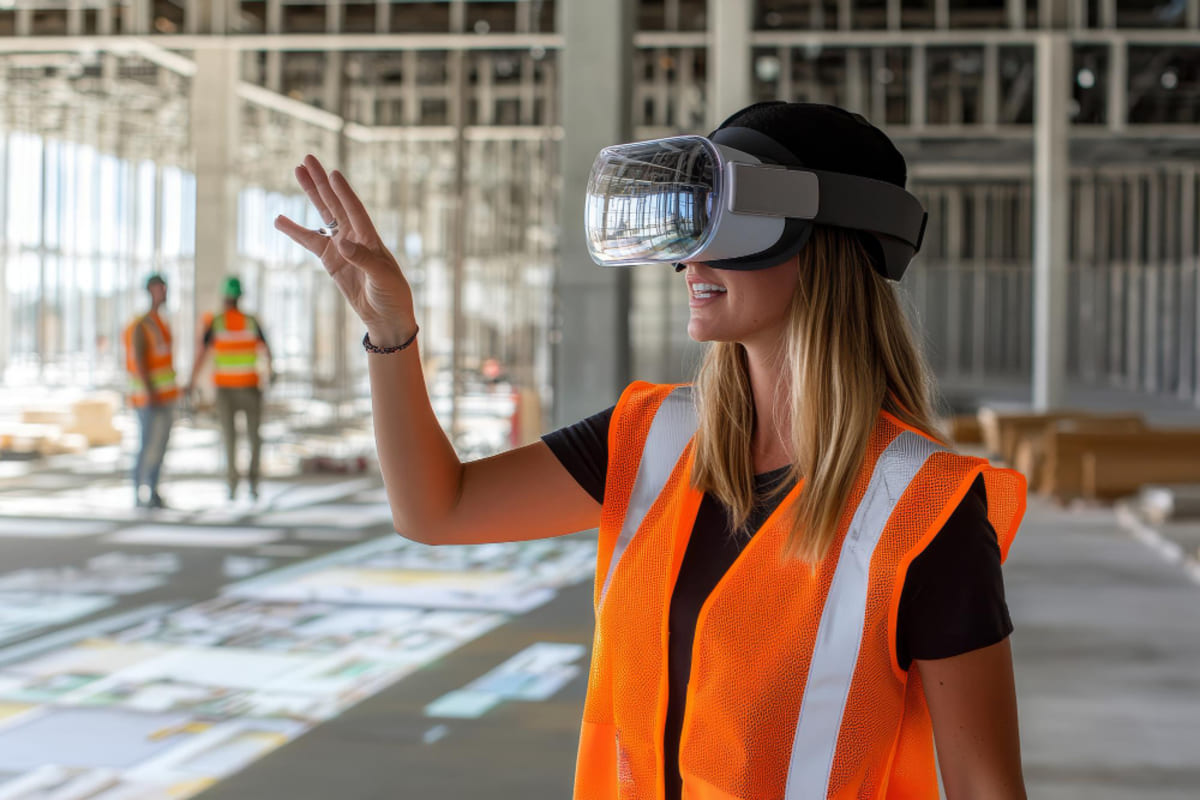
AR-enabled smart glasses (and headsets) overlay digital information onto a worker’s normal field of view. This hands-free access to data is a key wearable sensor innovation for construction. On-site, AR glasses can display building plans, sensor data or instructions directly in front of the wearer’s eyes. For example, Microsoft’s HoloLens and the Vuzix M400 series are being trialed by inspectors and foremen. OSHA inspectors using Vuzix M400 smart glasses have remotely connected with off-site experts via live video, allowing real-time consultation and on-site documentation. This means a technician can see a faulty valve through the headset camera while an engineer a hundred miles away guides repairs – all without scribbling notes or leaving the site.
Beyond communication, AR glasses help workers spot hidden dangers. The glasses’ sensors (camera and depth sensors) can detect nearby edges, drop-offs or power lines. If a worker approaches a ledge without looking, the AR display can highlight the hazard. For example, a prototype AR system can overlay virtual safety cones around a moving crane, alerting ground workers through their glasses to stay clear. In one illustration, AR glasses identified nearby “leading edges” and flashed a warning in the wearer’s view. In summary, AR glasses use wearable sensors to bring contextual safety info into view instantly.
Applications of AR Glasses
-
Real-time Plans & Diagrams: Overlay blueprints or models on the actual structure, so workers see exactly where pipes or wires go. This reduces rework and miscommunication.
-
Remote Expert Assist: Live video feeds from glasses let off-site engineers provide instant guidance, speeding troubleshooting without travel. (OSHA’s use of Vuzix M400 shows how this works on construction sites.)
-
Hazard Warnings: Computer vision in the glasses can recognize dangers (like openings or machinery) and highlight them in the wearer’s view. For example, AR glasses can automatically warn of nearby drop-edges or high-voltage lines.
-
Task Annotations: Voice commands or hand gestures allow the worker to take hands-free photos or log notes onto the building model, improving documentation.
These capabilities make AR glasses valuable for productivity as well. Workers no longer waste time juggling papers or going back to offices for information. Instead, every crew member has an on-site “smart supervisor” in their eyepiece. The result is fewer errors (plan misreads, missed steps) and faster completion of complex tasks. In effect, AR glasses and headsets exemplify how wearable sensor innovation can build safer, more efficient workflows on the site.

4. Smart Safety Clothing and Gear
Traditional safety garments (vests, boots, harnesses) are being “upgraded” with sensors and electronics. Smart vests and boots now contain accelerometers, gyroscopes, and even biometric monitors. A leading example is the Spot-r system from Triax Technologies: each worker wears a Clip sensor on their vest or hard hat, while equipment gets a tag.
These devices form a local mesh network on the site and send data to a cloud dashboard. Gilbane’s construction crews use Spot-r: the system automatically detects slips, trips or falls and alerts site personnel immediately. It also tracks each worker’s real-time location and headcount, so supervisors instantly know if someone is out of position or needs help. This connected safety gear greatly reduces response time when incidents occur.
Smart boots follow a similar principle. They include pressure sensors to notice if a worker collapses or is kicked by machinery. If a fall is detected, the boot can trigger an alarm. Some smart boots also have dead-reckoning location tracking (more accurate than basic GPS), which keeps lone or buried worker’s positions updated. In one demonstration, smart boots alerted a supervisor moments after a worker accidentally stepped into a trench, allowing rescue teams to act within seconds.
Meanwhile, safety vests have become digital. The latest vests might include pulse monitors, heat-stress sensors and two-way radios. In a forest fire zone, for example, vests with built-in temp and humidity sensors have warned crews to move to cooler zones before heat exhaustion set in. Some vests can even command built-in LEDs or speakers to warn nearby workers of danger – essentially broadcasting a “Danger: Explosives!” signal across the crew if needed.
Capabilities of Smart Safety Gear
-
Fall/Trip Alerts: On-body accelerometers detect when a worker drops to the ground unexpectedly. An automated alert (text or siren) notifies medics at once.
-
Location Tracking: GPS or radio beacons in vests/boots report each worker’s position to a site map. This aids rapid rescues and ensures compliance (no one wandering into hazardous zones). Gilbane credits this real-time location data with faster incident response and better workforce management.
-
Biometric Monitoring: Integrated heart-rate and motion sensors flag overexertion. For example, if a worker’s heart rate spikes in a hot zone, the vest can signal for a hydration break.
-
Two-Way Communication: Wearables can include microphones and speakers for instant voice alerts. This way, a sudden hazard can be announced site-wide through the gear itself (e.g. via a “Spot-r EvacTag” device).
By outfitting crews in intelligent clothing, managers gain a “site-wide sensor network” on every worker. Data from these wearables can show if any team member is idle, injured or in danger, and can be linked to project controls. Gilbane reported that after introducing Spot-r wearables, not only did injury alerts go out faster, but the system also saved many work hours by automating attendance and equipment tracking. In sum, smart gear helps maintain continuous operations: fewer hours are lost to missing workers or unnoticed accidents, so projects stay on schedule.
5. Wearable Health & Environmental Sensors
Finally, many innovations focus on monitoring workers’ health and their environment directly. Small patches and wristbands now act like personal weather stations and medical monitors combined. For instance, workers in extremely hot climates often use wearable heat-stress monitors: skin patches or chest straps that record body temperature, sweat rate and movement. When these metrics indicate imminent heat exhaustion, an alert sounds on the device to prompt rest or hydration. Chevron’s field study showed that equipping workers with sweat-sensing patches significantly reduced heat illness by giving timely hydration reminders.
Beyond heat, wearable sensors track air quality on-the-go. Miniature gas detectors can be clipped to a belt or helmet; they continuously sample the air for carbon monoxide, volatile organic compounds, or toxic dust. If dangerous levels are detected, the device emits an alarm. One project used wearable gas badges for workers in underground construction; these badges automatically opened a voice channel to supervisors and marked the location when CO levels rose, evacuating the zone before anyone was sickened.
Similarly, smartwatches and fitness trackers – once popular in sports – are now leveraged on jobsites. These devices collect heart rate, blood oxygen, and motion data. A worker’s wearable can detect a sudden fall or a dangerously low oxygen level (in a confined space), and either call for help or signal the nearby team via an app. Some watches are even programmed to learn a person’s normal exertion and flag anomalies (for example, a much higher heart rate than normal for a light effort could mean heat stress).
Functions of Health Sensors
-
Vital Sign Alerts: Continuous monitoring of heart rate and temperature warns of overexertion. A high heart rate coupled with high ambient heat prompts a “take a break” alert.
-
Fall Detection: Smartwatches or pendants use accelerometers to detect abrupt falls. If the worker is immobile for a set time, emergency contacts are automatically notified.
-
Gas and Dust Monitors: Wearable badges detect harmful vapors (CO, H₂S, solvents) or respirable silica dust. Alarms immediately warn the wearer and the site control center.
-
Chronic Health Tracking: Some systems record cumulative exertion data over days. Managers can review this data to schedule shifts better and prevent chronic strain injuries.
Altogether, these health-focused wearables serve as an early-warning system for medical issues. By catching problems like fatigue, dehydration, or gas exposure before symptoms appear, they prevent incidents that would otherwise shut work down. As the NIOSH research notes, this active monitoring can turn each worker into “a partner in preventing occupational illnesses and injuries”. Ultimately, keeping crews healthy and alert means fewer accidents and higher productivity – and that is the goal of wearable sensor innovation.
FAQs
How do wearable sensors improve safety on construction sites?
Wearable sensors provide real-time monitoring of workers’ health, motion and environment. They can instantly alert crews to hazards like falls, high heat, or toxic gases. For example, smart helmets detect impacts and automatically summon help, while connected vests track worker location to speed up rescue. By giving continuous data and alerts, these devices help prevent accidents before they become serious.
What types of wearable sensors are commonly used in construction?
Common wearable sensors include accelerometers and gyroscopes (for fall detection), heart-rate and temperature monitors (for fatigue/heat stress), gas and dust detectors (for air quality), and proximity sensors (for machinery collisions). These are often integrated into safety gear – for instance, smart helmets, vests or boots. Advanced systems also use IoT connectivity so managers can see all worker data in a central dashboard.
Which emerging technologies enhance wearable safety devices?
Emerging technologies like artificial intelligence (AI), 5G connectivity and augmented reality (AR) greatly boost wearable safety. AI algorithms in exoskeletons adapt support based on user movement. High-speed networks allow instant alerts to on-site teams or control centers. AR glasses overlay digital hazard warnings and instructions right in the user’s view. These advances make wearables smarter and more responsive on the job.
Is it true that wearable devices can also increase productivity?
Yes. Besides safety, wearables often improve efficiency. For example, exoskeletons reduce worker fatigue so tasks finish faster. AR glasses eliminate time spent consulting paper plans or manuals, and allow instant remote collaboration. Real-time location tracking helps manage crews and equipment more efficiently. In effect, by keeping workers healthy and informed, wearables enable crews to work harder and avoid costly delays.
Conclusion
Wearable Sensor innovations are making construction sites both safer and more efficient. Smart helmets, exoskeletons, AR glasses, smart clothing and health monitors all serve the dual purpose of injury prevention and productivity enhancement. In practice, companies see clear benefits: hazards are identified sooner, emergency responders get alerts faster, and workers operate with better information at their fingertips.
For instance, smart safety vests and tags reduced response times at Gilbane projects, while Chevron’s hydration patches helped crews avoid heat illness. These examples show how data from wearables drives better decisions on the job. As with any tool, these technologies must be used wisely – pairing efficiency goals with worker well-being. But when properly deployed, wearable sensors empower crews to work hard while staying safe and healthy.
Resources:
American Institute of Constructors. (2024). Using Wearable Technology in Construction to Reduce Incidents.
CONEXPO-CON/AGG. (2025). 5 Wearable Devices for Modern Construction Sites.
Construction Dive. (2019). We’ve Got Your Back: 8 Construction Exoskeletons You Should Know About.
Digital Construction Today. (2024). World’s first smart construction safety helmet can detect falls and impacts.
National Institute for Occupational Safety and Health (NIOSH). (2019). Wearable Technologies for Improved Safety and Health on Construction Sites.
World Construction Today. (2025). Gilbane Building Company Implements Wearable Safety Technology on Construction Sites.
For all the pictures: Freepik
Suggested article for reading:
5 AI-Powered Sensor Technologies Enhancing Construction Efficiency
6 Digital Fabrication Technologies Reshaping Construction in 2025
5 Major Benefits of 3D Concrete Printing for Affordable Housing
3 Breakthroughs in Hybrid Additive‑Subtractive Fabrication for Custom Components
4 Ways BIM-Driven Digital Fabrication Enhances Construction Precision