Building Information Modeling (BIM) combined with digital fabrication is transforming how construction projects are executed. By linking rich digital building models with automated fabrication techniques, BIM-driven digital fabrication allows construction teams to achieve levels of precision that were previously difficult to attain with traditional methods. In conventional construction, plans often have to be interpreted manually on site, which can lead to measurement errors, misalignments, or costly rework.
Now, architects and engineers can virtually construct every detail in BIM and then directly fabricate components from that exact data. This approach minimizes human error and ensures that the physical construction closely matches the digital design. The result is improved accuracy in everything from the manufacturing of components to the assembly on the job site. In this article, we explore four key ways that BIM-driven digital fabrication enhances construction precision, illustrating each with practical examples and explanations.
Table of Contents
Precision Prefabrication from BIM Models
One of the most impactful ways BIM-driven digital fabrication improves precision is through off-site prefabrication of components directly from BIM models. In a BIM-centric workflow, every structural element, pipe, or panel is defined in detail within a 3D model. These details – dimensions, angles, cut-outs, and connection points – can be exported as precise instructions to computer-controlled fabrication machines.
For example, steel beams and wall panels can be manufactured in a factory using CNC (Computer Numerical Control) machines that read the BIM data. The CNC equipment cuts and drills each piece to exact specifications, down to the millimeter. This level of accuracy is nearly impossible to achieve consistently with hand measurements on site. By fabricating components in a controlled environment, teams eliminate the variability caused by weather or site conditions and use precision tools that ensure every piece matches the digital design.
In practice, this has led to remarkable improvements in construction outcomes. Consider the renovation of the Sydney Opera House: the project involved replacing uniquely shaped glass panels on the façade. Using BIM data and CNC milling, the glass manufacturer cut each curved panel precisely to the complex geometry required, allowing them to fit perfectly into the existing structure.
Because the panels were prefabricated with such accuracy, installation went smoothly with no need for on-site adjustments. In another example, a hospital project used BIM-driven fabrication to produce mechanical system modules (like corridor racks containing ducts and pipes). These modules were assembled in the factory exactly as designed in the BIM model, including every hole and bracket.
When delivered to the site, they fit into the building frame without any cutting or re-drilling, since all the penetrations for pipes and cables were pre-engineered. Such prefabrication not only improves precision but also saves time – workers are no longer modifying parts in the field, they are simply installing components that are already correct. By leveraging BIM models in this way, construction teams ensure that each prefabricated element is manufactured correctly the first time, drastically reducing errors and guaranteeing a high level of quality for the final structure.
Suggested article to read: Prefabrication in Construction; 2024 Reviews
Seamless Assembly Through Clash-Free Design
Another way BIM-driven digital fabrication enhances precision is by enabling seamless assembly of building components through clash-free design and coordination. BIM allows architects, engineers, and contractors to collaboratively build a virtual prototype of the entire project before physical construction begins. In this virtual space, they can detect and resolve clashes or misalignments between different building systems (such as structural elements, piping, ductwork, and electrical conduits). By using BIM to ensure everything fits together digitally, the project team can be confident that the corresponding physical components will also fit together precisely on site.
This virtual coordination translates directly into real-world precision. When components are fabricated from a well-coordinated BIM model, each part arrives on site ready to be assembled without modifications. For instance, on a recent apartment development, exterior wall panels were prefabricated with window openings and cut-outs for MEP services based on the coordinated BIM design. Before BIM, a common issue would be a duct or pipe that doesn’t align with a hole in a wall, forcing contractors to cut or refit materials on site.
In this project, because the wall panels and the mechanical systems were designed together in the model, the prefabricated panels came with perfectly placed openings – when installed, the ducts and pipes passed through exactly as planned. The assembly was seamless: panels joined to the structure and to each other with a snug fit, and plumbing and HVAC connections matched up without forcing or gap-filling. This level of fit and finish greatly improves overall construction precision.
The “build it twice” philosophy (first digitally, then physically) is crucial here. By building the project virtually, BIM uncovers any potential errors in measurements or conflicts in geometry ahead of time. Digital fabrication then uses that error-free model to produce the parts.
The outcome is that onsite assembly becomes more like a controlled installation process rather than unpredictable construction. Every bolt hole aligns, every module interfaces correctly, and the building comes together as the designers intended. This approach also reduces cumulative tolerance issues – in a traditional build, small errors in each step can compound into significant misalignments over large distances.
With BIM-driven coordination, those errors are designed out, enabling tight tolerances to be maintained across the entire project. Ultimately, seamless assembly through clash-free BIM design means construction teams spend less time “fixing” things in the field and more time simply joining accurate components together, resulting in a more precise and reliable final structure.

Automation and Robotics Minimize Human Error
BIM-driven digital fabrication also enhances construction precision by introducing automation and robotics into the building process, thereby minimizing human error and variability. When repetitive or complex construction tasks are performed manually, even skilled workers can produce slightly differing results each time. Factors like fatigue, differing skill levels, or simple mistakes can lead to components that are cut or placed with small deviations. By contrast, automated fabrication machines and robots follow digital instructions from the BIM model with unvarying consistency, ensuring each output is the same high quality and accuracy as the last.
There are several ways automation is employed to improve precision. In off-site manufacturing facilities, robotic arms and automated assembly lines are used to cut, weld, and assemble components strictly according to BIM specifications. For example, a robot might be programmed to weld steel connections at exact coordinates defined in the model, resulting in joints that are far more consistent than those welded by hand.
On construction sites, we are also seeing the rise of robotic construction techniques. One notable case is the DFAB House project in Switzerland, where robots were utilized to build intricate sections of a building. Robots placed bricks and poured concrete in this experimental house guided entirely by digital plans, achieving complex geometries with millimeter-level accuracy.
In more conventional projects, robotic total stations (a kind of automated surveying instrument) are used to lay out critical points (like anchor bolt positions or wall partition lines) on the construction floor by referencing BIM coordinates. This automation ensures that initial placement of elements starts in the correct position, which is key to keeping everything aligned as work progresses.
By reducing reliance on hand measurement and manual work, BIM-integrated automation helps avoid common precision issues. Imagine a scenario of installing hundreds of facade panels on a high-rise: if done by hand, slight misalignments in each panel could result in the top panels being significantly off position by the time you reach the upper floors.
Instead, if a robotic installer or an automated guidance system places each panel exactly where the BIM model dictates, the entire facade will remain true to the design grid from bottom to top. Moreover, automation often allows tasks to be done with finer tolerances than humans can manage. A CNC cutter, for instance, can routinely achieve cuts accurate to a fraction of a millimeter, whereas a person with a handheld saw cannot match that precision consistently.
By deploying these tools, construction projects benefit from components and assemblies that consistently meet high precision standards. In summary, automation and robotics remove much of the guesswork and inconsistency of manual construction, directly translating the accuracy of digital models into the physical world and significantly improving the precision of the final build.
Digital Guidance and Real-Time Quality Control
The fourth way BIM-driven digital fabrication boosts construction precision is through digital guidance on site and real-time quality control feedback. Even with perfectly fabricated components and automated layout, maintaining precision during installation is crucial. BIM provides a powerful platform for guiding construction crews and verifying that work is proceeding within the allowed tolerances. Modern projects increasingly use BIM-linked devices and techniques to check alignment, location, and quality as construction is happening, ensuring any deviations are caught and corrected immediately.
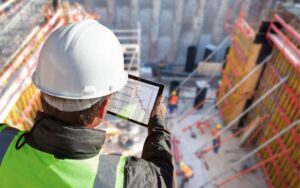
One example of digital guidance is the use of augmented reality (AR) and tablet-based BIM viewers on the job site. With AR, a technician can overlay the BIM model onto the physical environment through a headset or tablet camera. This allows crews to see exactly where an element should be placed, down to precise reference marks.
For instance, before drilling holes for hangers in a ceiling, an installer can use an AR app to visualize the route of pipes or ducts as per the BIM model, ensuring they drill in the correct spots. This prevents errors like misaligned hangers or supports, which, if done incorrectly, could throw off the alignment of an entire pipeline. Similarly, BIM-viewing tools let workers measure distances or verify angles on their screen compared to the model, acting as a digital tape measure that is far more exact and less prone to mistakes.

On the quality control side, technologies like laser scanning and real-time surveying are used to continuously compare the as-built construction to the BIM model. A laser scanner set up on site can capture the position of installed elements (like structural columns or beams) with very high accuracy. These scans can be imported back into the BIM software and automatically compared against the design model. If an installed column is, say, 1.0 cm off its intended position, the software will flag this discrepancy.
Early detection of such a deviation allows the team to decide if it’s within acceptable tolerance or if it needs adjustment before it affects other work. By catching issues in real time, the project avoids compounding errors. Another routine quality check is using total stations linked to BIM for layout verification. After critical components are installed, a quick survey can confirm they match the coordinates in the model. If a variance is found, crews can correct the placement immediately (for example, re-aligning a wall track that was slightly off before the drywall goes up).
This continuous feedback loop, made possible by the integration of digital tools, ensures that the final building closely mirrors the intended design. Instead of discovering major alignment problems at the end of the project (when they are costly or impossible to fix), issues are identified and resolved at the earliest stage. The result is a higher degree of confidence in construction accuracy. When BIM-driven digital fabrication is coupled with such on-site digital control, it delivers a one-two punch: components arrive exact, and they are installed exact, all under the watch of verification systems. This approach greatly reduces rework, prevents costly errors, and guarantees that the finished structure meets the precise standards set out in the plans.
FAQs
How does BIM-driven digital fabrication improve construction precision?
BIM-driven digital fabrication improves precision by using exact digital models to guide the fabrication and assembly of building components. Every element is manufactured to the exact dimensions specified in the BIM model, which greatly reduces human errors. Because all parts fit together virtually (in the model) before construction, they also fit accurately during physical assembly, resulting in far fewer alignment issues and on-site corrections.
What technologies are involved in BIM-driven digital fabrication?
It typically involves technologies like CNC machines, 3D printing, and robotics that are guided by BIM data. For instance, CNC machines can cut steel or wood components according to BIM specifications, 3D printers can fabricate complex concrete or plastic parts from the model, and robotic arms or automated bricklaying machines can construct elements based on digital plans. These tools execute tasks with high accuracy by following the BIM model’s instructions.
Which types of projects benefit most from BIM-driven digital fabrication?
Projects that benefit the most are those that involve complex designs, repetitive elements, or tight schedules. For example, modular construction projects and large-scale developments with many repeated units use digital fabrication to ensure each module is identical and fits perfectly. Projects with complex geometry (like free-form architecture or intricate façades) also see huge advantages, because automated fabrication can precisely create unique shapes that would be hard to craft by hand. In general, any project aiming for high quality and efficiency can benefit from these methods.
Is it true that BIM-driven digital fabrication reduces rework and waste on construction sites?
Yes. By catching design conflicts early with BIM and fabricating components correctly the first time, these approaches significantly reduce rework and material waste. When parts fit as expected, there’s little need to cut things down or throw out mistakes. Prefabrication in controlled settings also means materials are used more efficiently (extra material can be reused for the next piece). Overall, projects that implement BIM-driven fabrication often report fewer on-site errors and lower waste disposal costs.
Conclusion
BIM-driven digital fabrication is redefining precision in the construction industry. By combining detailed digital models with advanced manufacturing and on-site verification, construction professionals can achieve unprecedented accuracy from project start to finish. The four strategies discussed – precise prefabrication of components, seamless virtual-to-physical assembly, automation and robotics, and real-time digital quality control – work together to eliminate many traditional sources of error.
In practice, these methods have been shown to reduce misalignments, minimize rework, and ensure that each building element fits exactly as intended. Projects that embrace these techniques often experience smoother installations and higher overall quality, as components come together like a well-designed puzzle rather than a trial-and-error process.
Importantly, enhancing precision doesn’t just satisfy aesthetic or geometric ideals – it has practical payoffs in cost and efficiency. Fewer errors and adjustments mean faster schedules and less material waste, and a precisely built structure tends to perform better over its lifetime with fewer maintenance issues. As BIM-driven digital fabrication continues to mature, we can expect construction sites around the world to become more like assembly operations, where every piece is in the right place at the right time.
Construction teams are able to spend more time getting the job done right the first time and less time fixing mistakes. In conclusion, the integration of BIM with digital fabrication techniques is enabling a level of construction precision that improves not only how we build, but also the quality and reliability of the buildings we deliver.
Resources:
-
Global Infrastructure Hub. (2020). Pre-Fabrication Technology for Modular Construction.
-
United-BIM. Patel, A. (2025). BIM-based Digital Fabrication Process.
-
BDCNetwork. Fischer, T. (2019). Prefabrication & BIM: Creating more efficient projects.
For all the pictures: Freepik
Suggested article for reading:
5 Ways AI is Revolutionizing Asset Tracking and Management
6 Lightweight Rooftop Solar Panel Innovations for Commercial Buildings
4 Advanced PV Materials – Bifacial, Perovskite & More for Building Use
3 Solar Storage & Thermal Hybrid Strategies for Net‑Zero Buildings
5 Real‑World Applications of BIPV: From Facades to Canopies
6 Must-know AI Tools for Construction Managers