In the construction industry, keeping track of tools and equipment across bustling jobsites has always been a challenge. Misplaced tools, unexpected breakdowns, or theft can lead to costly delays and safety risks. Telematics and IoT in Construction offer powerful solutions to these problems by connecting tools and machinery to digital networks. This allows real-time data collection and monitoring that were previously impossible with manual tracking methods. Below, we explore five practical use cases where telematics and IoT technologies are transforming construction tool tracking, illustrated with real-world insights and examples.
Table of Contents
5 Use Cases of Telematics and IoT in Construction Tool Tracking
1. Real-Time Tool Location Tracking and Inventory Management
One of the most immediate benefits of IoT-based tool tracking is the ability to know exactly where every tool and piece of equipment is located in real time. On large construction sites or across multiple project locations, tools can easily get misplaced or left behind. IoT sensors and telematics devices (such as GPS trackers or Bluetooth tags) attached to tools enable a real-time inventory that site managers can view on a digital map or dashboard at any moment. Instead of manual check-ins or searching for a missing drill, the system updates each tool’s location automatically.
This real-time visibility drastically reduces time spent searching for lost items and prevents purchasing or renting replacements for tools that are actually on-site but temporarily “lost in the shuffle.” For example, the French construction firm Eiffage implemented Bluetooth Low Energy beacons on their railway construction tools to create an automatic inventory system. They reported that the time dedicated to equipment inventory was significantly reduced, improving operational efficiency and minimizing losses
In general, knowing where all tools and machines are at a glance allows for better planning – crews can ensure the right equipment is in the right place at the right time. This avoids project slowdowns; in fact, studies have shown that poor tool management can lead to up to 35% more delays on a worksite, so improving traceability with IoT has a direct impact on keeping projects on schedule and on budget.
From a practical standpoint, implementing real-time tool tracking might involve outfitting power tools and asset-heavy equipment with small, battery-powered tracking devices. These devices periodically broadcast their ID and location via technologies suited to the environment – for instance, GPS or cellular telematics devices for large outdoor equipment, and Bluetooth tags or RFID for indoor or smaller assets. The data flows into a centralized software platform, where a construction manager can quickly check tool availability, last known position, or even see if a tool is currently in use.
This streamlined digital inventory reduces human error and ensures nothing falls through the cracks. Unlike maintaining a spreadsheet or paper log (which only provides intermittent updates), IoT-based inventory systems continuously update themselves. The result is a more efficient and lean tool inventory: workers spend less downtime looking for equipment, and the organization can avoid buying duplicates due to misplaced tools. In short, real-time location tracking turns tool management from a reactive chore into a proactive process.
2. Theft Prevention and Asset Security
Construction sites are unfortunately prime targets for theft and unauthorized use of equipment. Expensive tools, heavy machinery, and materials often sit in the open, and a single incident of equipment theft can cost tens of thousands of dollars — not to mention the downtime while replacements are arranged. Telematics and IoT tracking devices provide a modern defense against these losses. By installing GPS trackers or IoT beacons on valuable construction assets, companies gain the ability to monitor their assets’ movements 24/7 and receive instant alerts if something is amiss.
A common IoT security implementation is geofencing. This involves setting up virtual boundaries around a construction site or storage yard. If a tagged tool or piece of equipment moves outside the permitted area after hours, the system will immediately send an alert (via text, email, or in-app notification) to management. For instance, a contractor can geofence a building site so that if a loader or generator is taken beyond the site perimeter at night, an alarm is triggered in the telematics app. This real-time notification allows for quick action — perhaps security personnel can be dispatched or local authorities notified to intervene before the asset disappears for good.
The impact of such IoT-based theft prevention is significant. The construction industry faces an estimated $1 billion in equipment theft losses annually, with less than a quarter of stolen equipment ever recovered. Only around 20% of stolen construction assets are typically retrieved, largely because it’s difficult to track things like skid-steer loaders or generators once they’re offsite.
IoT tracking turns the tables by greatly increasing the chances of recovery. In practice, if a stolen tool is equipped with a hidden GPS tracker, it can quietly broadcast its location to the cloud. The owner can then pinpoint where the item has been taken and provide this information to law enforcement for recovery. There have been numerous cases of stolen excavators or tool trailers being recovered thanks to GPS telemetry data leading police directly to the thieves’ location.
Beyond recovery, the presence of visible tracking technology itself can act as a deterrent. Many modern heavy equipment manufacturers now integrate telematics systems that make it clear the machine is being monitored. Would-be thieves, seeing stickers or indicator lights for tracking systems, may think twice knowing the asset can likely be traced.
Even in cases of misuse or unauthorized borrowing (e.g., an employee taking a tool home without permission), geofence alerts keep management aware of asset movements. Over time, these measures help cultivate a culture of accountability and security on job sites. In summary, telematics and IoT provide construction firms with a much-needed security net — protecting valuable tools from disappearing into the night and thus saving companies from major financial hits and project delays due to theft.
Suggested article to read: Most Recent Construction Trends for 2025
3. Maximizing Equipment Utilization and Efficiency
Another powerful use case for telematics and IoT in construction is optimizing how equipment is utilized. Construction companies often own or rent a wide array of tools and heavy machinery — from handheld power tools to bulldozers and cranes. Without data, it’s easy for some assets to sit idle at one site while another site is in short supply, or to keep more equipment on hand than actually needed “just in case.” IoT tracking solutions help managers understand when, where, and how intensely each piece of equipment is being used, enabling data-driven decisions that improve efficiency.
For example, telematics devices on heavy equipment continuously record metrics like engine hours, active usage time versus idle time, fuel consumption, and even the load or work performed. By analyzing this data, a fleet manager might discover that a particular excavator is running only 40% of the time during a day, while a forklift at another site is being overutilized. With this insight, they can reallocate resources — perhaps moving underused machinery to projects where it’s needed more, and avoiding renting additional equipment.
This not only saves on rental costs but also ensures each owned asset is earning its keep. One construction firm, after equipping all its machinery with telematics, found that they could eliminate several leased units and redistribute their owned equipment more effectively, leading to substantial yearly savings. (In a published case study, Sherwood Construction reported saving over $160,000 per year by leveraging telematics data to right-size and redistribute their mixed fleet, avoiding redundant rentals and idle machines.)
IoT-based utilization tracking also shines a light on idle time and fuel waste, which are major contributors to operating cost in construction. Telematics systems can log when an engine is running but the equipment isn’t doing productive work. These idle hours burn fuel needlessly and add wear to the machine. By monitoring idle versus working time, project managers have been able to implement policies like shutting down engines during long waits or optimizing workflow to minimize equipment downtime.
Even a modest reduction in idle time across a fleet can translate to significant fuel savings. For instance, if telematics data shows a generator is left running overnight regularly, the team can correct that behavior once it’s identified. Over a project’s duration, such efficiency gains lower fuel bills and reduce emissions, contributing to greener operations as well.
In addition, having all tool and equipment usage data aggregated in one platform allows for higher-level productivity analysis. Project managers can correlate equipment usage with project timelines and labor productivity. If a job is behind schedule, the data might reveal that a critical piece of equipment was underutilized due to bottlenecks or that not enough units were available during peak demand.
Armed with these insights, managers can adjust schedules or resource allocations on future projects to prevent similar issues. In essence, IoT gives construction companies a feedback loop for continuous improvement: it takes the guesswork out of equipment management and replaces it with factual, real-time information. The result is leaner operations — fewer idle tools, less waste, and maximized output from every asset on the field.
4. Predictive Maintenance and Reduced Downtime
Maintenance of construction tools and machinery has traditionally been done on fixed schedules or after a breakdown occurs. IoT and telematics technologies are revolutionizing maintenance by enabling a predictive and condition-based approach. By outfitting equipment with sensors and connectivity, maintenance teams can monitor the health and performance of machines in real time and service them exactly when needed, rather than relying solely on calendar schedules or running them to failure.
For heavy equipment like excavators, loaders, or generators, telematics units often tap into the machine’s engine control unit (ECU) or external sensors to record data such as engine hours, oil pressure, coolant temperature, hydraulic fluid levels, and even vibration signatures. This constant stream of health data is sent to a central maintenance system. When the system detects an anomaly or a threshold passed – for example, an engine temperature spiking beyond normal range or unusual vibrations in a motor – it can automatically issue an alert or work order.
Maintenance staff are essentially warned before a minor issue becomes a major failure. For instance, if an excavator starts showing irregular vibration patterns in one of its axle bearings, a telematics alert might prompt the team to replace that bearing during the next planned downtime. This prevents an unexpected breakdown in the middle of a critical task, which could have caused days of downtime.
Such predictive maintenance significantly reduces unplanned downtime on construction projects. The cost of a single piece of key equipment being down can be enormous – not only the repair cost, but also idle crews, schedule delays, and possibly rental of emergency replacement equipment. By fixing issues proactively, construction firms keep projects running smoothly and avoid those cascade effects of a breakdown. Moreover, IoT-driven maintenance ensures that routine servicing (like oil changes, filter replacements, inspections) is done based on actual usage rather than guesswork. A concrete mixer that has been running heavily may need maintenance sooner than a similar one that’s been mostly idle; telematics data makes this visible so each asset gets service at the right time.
Another advantage is extending the lifespan of tools and equipment. Regular maintenance and timely repairs keep machines in optimal condition, which naturally helps them last longer and perform safely. IoT sensors can track wear indicators (for example, tracking the number of operating hours on a drill or the pressure cycles on a hydraulic jackhammer) and notify when parts are nearing end-of-life. Replacing parts or doing overhauls based on these data-driven insights prevents catastrophic failures that might permanently damage equipment. As a result, companies can improve the resale value of their machinery and get more years of service from each tool.
Beyond the machinery itself, IoT-based maintenance systems often log all service history automatically and keep a clear maintenance record for each asset. This is useful for both operational transparency and compliance. In many regions, certain construction equipment must undergo periodic safety inspections or have valid certificates of conformity (for example, cranes, hoists, or pressure equipment often require inspection every few months to a year).
IoT tracking can integrate these compliance deadlines into the system, issuing reminders well in advance of any certification expiry. Ensuring that no tool or machine slips through without its required inspection not only keeps the site safe but also helps avoid legal penalties or work stoppages due to non-compliance. In summary, telematics and IoT enable a proactive maintenance culture: one where fixes happen before failures, where every service is timely, and where tools spend more time working and less time in the repair shop.
5. Enhancing Safety and Compliance on the Jobsite
Safety is paramount in construction, and IoT technology contributes to safer worksites by improving both equipment safety and operational practices. When every tool and piece of equipment is tracked and connected, it opens up new ways to enforce safety protocols and ensure compliance with regulations.
Firstly, tool tracking aids safety compliance by guaranteeing that equipment in use is certified and fit for service. As mentioned, IoT maintenance systems help confirm that all machinery undergoes required inspections and is in good working order. This means, for example, that a boom lift on site will not be unknowingly operated with a lapsed safety certification or a critical part overdue for replacement. By flagging such issues, IoT prevents unsafe equipment from being used by workers.
In a practical sense, a connected tool management platform might prevent a piece of equipment from being checked out if its inspection is overdue, thereby forcing the issue to be resolved before it returns to service. This reduces the risk of accidents caused by equipment failure. It’s notable that machinery issues contribute to a significant portion of construction accidents – in some statistics, machines are involved in around 10–15% of serious workplace accidents. Keeping tools well-maintained and compliant can therefore help reduce this hazard.
Telematics and IoT can also monitor how equipment is being used, which ties into safety training and accountability. For instance, modern telematics systems on heavy vehicles can record operator behavior – such as whether seat belts are used, if speed limits are exceeded on site, or if a machine experiences harsh braking and acceleration. While these features are more commonly associated with fleet vehicles, they are increasingly applied to construction equipment.
This data allows safety managers to identify risky operation (like an operator who routinely overloads a crane or drives a forklift too fast) and address it through retraining or corrective action. Essentially, IoT provides a feedback mechanism to reinforce safe operating practices. Some companies gamify this by giving operators safety scores derived from telematics data, encouraging friendly competition to follow best practices.
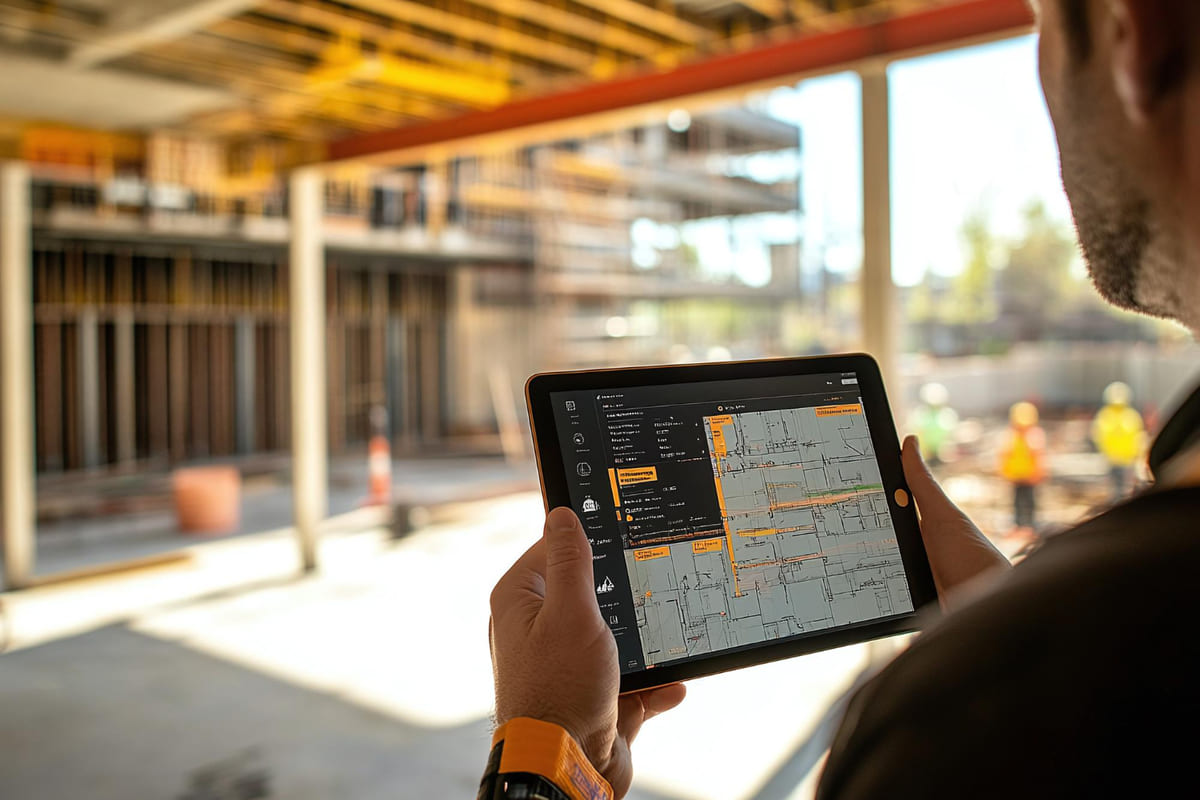
Another safety aspect is the use of IoT for real-time hazard monitoring on site. Beyond tools themselves, IoT sensors can track environmental conditions like noise levels, dust, or harmful gases around equipment. For example, a connected sensor on a fuel-powered generator might detect elevated carbon monoxide levels if used in a poorly ventilated area and send an immediate warning to workers’ smartphones.
Likewise, proximity sensors on equipment can detect when workers are too close to operating machinery and trigger an alarm to prevent accidents (this often overlaps with IoT wearables and smart safety vests). While these applications extend beyond simple tool “tracking,” they integrate with the overall IoT network on a jobsite to create a safer environment where people, tools, and the site infrastructure are all communicating.
Finally, regulatory compliance reporting is made easier through IoT tracking. Construction companies must often keep logs for safety inspections, equipment hours, emission checks, and other compliance metrics. With IoT systems automatically recording this data, generating compliance reports or proving that safety checks were performed becomes straightforward.
For example, if an inspector asks for proof that all forklifts on site have had their quarterly maintenance and safety check, the digital records from the telematics platform can be produced, showing timestamps and details of each service. This level of organization not only keeps the company compliant with occupational safety laws but also fosters a safety-first culture. Workers know that the equipment they are using is being actively monitored for safety, and that there is a system in place to catch issues before they become incidents.
In conclusion, enhancing safety and compliance via telematics and IoT comes down to greater visibility and control. By knowing the status and behavior of every tool and machine in real time, construction managers can proactively mitigate risks — whether that’s pulling a defective tool out of service or correcting unsafe usage habits. The end result is a worksite that is not only more efficient, but also significantly safer for everyone involved.
FAQs
How do telematics and IoT devices track construction tools and equipment?
Answer: Telematics and IoT devices use sensors and wireless networks to monitor tools and equipment. For example, a GPS or Bluetooth tracker attached to a tool will regularly send its location (via cellular, Wi-Fi, or gateway devices) to a cloud platform. Managers can then see the real-time position of each asset on a map or dashboard. These devices often also collect data like usage hours or engine metrics, which is transmitted and logged automatically. In short, IoT trackers give each tool a “digital voice” to report where it is and how it’s being used without any manual input.
What are the benefits of using IoT for construction tool tracking?
Answer: IoT-based tool tracking brings several key benefits. It provides real-time visibility of tool locations, so you spend less time searching for misplaced items. It helps prevent theft by sending alerts if tools leave the site without authorization. IoT data on usage and performance lets you optimize equipment utilization — ensuring assets aren’t sitting idle or being overworked. It also enables predictive maintenance, so you service machines right when needed and avoid breakdowns. Overall, using IoT leads to better efficiency, lower costs (by reducing losses and downtime), and improved project safety and scheduling.
Which technologies are commonly used for tracking tools on construction sites?
Answer: A few different tracking technologies are used, depending on the range and precision required. GPS trackers are common for heavy equipment and vehicles, providing location data over long ranges via satellite and cellular networks. Bluetooth Low Energy (BLE) tags are popular for smaller tools and indoor tracking; they broadcast a short-range signal that can be picked up by smartphones or onsite gateways. RFID tags (radio-frequency identification) are also used for tool tracking, especially passive RFID for inventory checks at short range.
Some systems use cellular or LPWAN telematics devices that combine GPS with long-range low-power communication (like NB-IoT or LoRa) for wide-area coverage. In many cases, a combination is used: for instance, an equipment fleet might use cellular GPS units, while individual power tools are tagged with BLE beacons, and all feed into the same software platform.
Is it true that IoT tool tracking can help prevent construction equipment theft?
Answer: Yes, IoT tool tracking is a proven method to deter and reduce theft. When valuable equipment is fitted with IoT trackers, it can be monitored remotely at all times. If a theft occurs, the tracker can pinpoint the equipment’s location in real time, greatly aiding recovery by police.
Many systems also use geofencing, so if a machine or tool is moved off its designated site after hours, an instant alert is sent out — allowing for quick action before the thief gets far. Knowing that assets are tracked also discourages thieves from targeting those items in the first place. While IoT tracking doesn’t guarantee to stop all theft, it has significantly improved recovery rates and helped companies save money by protecting their assets.
Conclusion
Telematics and IoT technologies are rapidly becoming essential tools in the construction industry’s toolkit. As we’ve seen in these five use cases, connecting construction tools and equipment to the internet unlocks capabilities that fundamentally improve how projects are managed. Real-time tracking ensures that resources are utilized optimally and not lost or idle. Enhanced security measures protect valuable assets from theft and misuse.
Detailed usage data helps companies optimize efficiency, cutting costs on fuel and rentals by leveraging what they already own. Predictive and condition-based maintenance powered by IoT reduces downtime and extends the life of expensive machinery. And importantly, these technologies bolster safety and compliance, ensuring that equipment is in proper working order and that best practices are followed on site.
Construction has historically been a hands-on field slow to adopt digital changes, but the tide is turning. Companies that have embraced telematics and IoT report tangible benefits — faster project completion, lower operating costs, and fewer incidents, to name a few. The example of LBNL in another context, where simply monitoring data at frequent intervals led to a 50% reduction in energy waste, illustrates the power of information; similarly, on a construction site, having continuous data about tools and equipment allows teams to make smarter decisions quickly. In an industry where profit margins and timelines are tight, these advantages can be game-changers.
In summary, telematics and IoT in construction tool tracking transform the management of assets from a manual, reactive process to an automated, proactive strategy. By leveraging sensors, connectivity, and data analytics, construction firms can work smarter — they gain visibility into the field like never before and can respond to issues in real time. As technology costs continue to drop and ease of use improves, we can expect even wider adoption of IoT in construction.
The five use cases discussed here are likely just the beginning; innovative contractors and builders are constantly finding new ways to apply connected tool tracking for even greater gains in productivity and safety. Embracing these digital tools is quickly becoming not just an advantage, but a necessity to stay competitive and deliver successful construction projects in the modern era.
Resources:
European Agency for Safety and Health at Work. (2022). Improving compliance with occupational safety and health regulations.
Construction Equipment Guide (Bobcat). (2025). Equipment Theft’s Rising Cost, What the Data Demands.
Cisco Spaces – Peppin, R. (2025). IoT Asset Tracking: What It Is & Benefits for Asset Management.
ELA Innovation – Bonzom, P. (2025). Construction Tools Tracking Thanks to Bluetooth: The Ultimate Guide.
AgileVision. (2024). Applying IoT in Construction: Top 7 Use Cases in 2024 and Beyond.
Teletrac Navman. (2019). Construction Telematics: A Complete Overview.
Tenna. (2023). IoT in Construction – How is IoT Used in Construction?.
For all the pictures: Freepik
Suggested article for reading:
4 Proximity and Intrusion Sensor Solutions for Work Zone Safety
Best 5 Wearable Sensor Innovations Keeping Construction Crews Safe and Productive
10 Benefits of Smart Sensor Networks in Construction Analytics and Maintenance
7 Emerging IoT Startups Accelerating Smart Construction Efficiency
Top 4 Leading IoT Companies Delivering Wearable Safety Solutions on Construction Sites
8 Benefits of IoT Construction Platforms for Jobsite Productivity and Safety