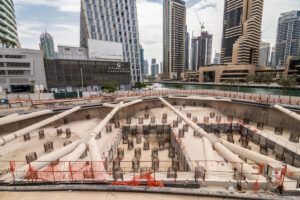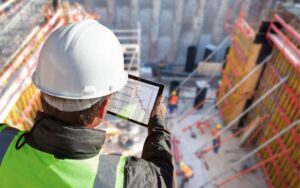

Work zones – whether highway construction sites or building projects – are high-risk environments where moving vehicles, heavy machinery, and oncoming traffic create constant hazards. Nearly 1,000 people are killed in roadway work zone crashes each year, including both motorists and workers, with tens of thousands more injured. These incidents often involve vehicles straying into protected areas or workers inadvertently coming too close to equipment. To combat this danger, companies and agencies are turning to advanced proximity and intrusion sensor solution technologies.
These systems can detect when a person or object is too close to moving equipment or when an unauthorized vehicle intrudes into a work zone, providing real-time warnings and even automatic interventions to prevent accidents. In this article, we explore four cutting-edge sensor solutions that are improving work zone safety through technology. Each solution is presented with practical examples and explanations, in a clear and objective manner, to illustrate how they work and their impact on reducing injuries and fatalities.
Table of Contents
4 Proximity and Intrusion Sensor Solutions for Work Zone Safety
1. Wearable Proximity Alert Systems for Workers
One of the most direct ways to protect workers on foot around heavy equipment is to equip them with wearable proximity alert devices. These systems create a virtual safety bubble around workers and machines. Each worker wears a small electronic tag, typically attached to a vest, hard hat, or tool belt, while heavy machinery and vehicles are fitted with corresponding sensor units. When a worker comes within a predefined distance of a machine, both the worker and the operator receive immediate alerts – usually through loud alarms, flashing lights, or vibrations. This warns both parties of a potential collision before it happens.
How It Works:
-
RFID and Ultrawideband Tags: Many systems use radio-frequency identification (RFID) or ultrawideband transmitters in the worker’s tag and receivers on the machine. The tag continuously broadcasts a signal. When a worker approaches a piece of equipment, the machine-mounted receiver detects the signal strength increasing. If the distance closes below a safe threshold (for example, 5 or 10 meters), it triggers an alert.
-
Two-Way Alerts: Advanced wearable solutions alert both the pedestrian and the equipment operator simultaneously. The worker’s tag might vibrate or beep, and the machine’s cab has an alarm or a flashing indicator. Dual alerts ensure both individuals take notice – the pedestrian can step back, and the operator can brake or slow down.
-
Automatic Slow or Stop: Some systems integrate with machine controls. If a person is detected too close, the system can automatically override and slow down or stop the equipment. This feature is more common in fixed industrial settings (like forklifts in a warehouse) but is emerging in construction as well.
Real-World Example: In an effort to prevent struck-by accidents, a large construction firm equipped its site crew with wearable proximity tags and installed sensors on all forklifts and excavators. During a six-month pilot, the system recorded multiple “near-miss” alerts. Managers reported a significant drop in close calls, as workers became more aware of keeping clear of machines when their tags vibrated. On one occasion, a tag alert warned a worker that a reversing dump truck was behind him – he moved aside just in time to avoid being hit. This proactive warning system acted like a personal guardian angel for each worker on site.
Key Benefits:
-
Collision Prevention: Wearable proximity systems are proven to reduce vehicle-to-worker collisions by alerting people in time. They address one of the “Fatal Four” construction hazards (struck-by incidents) by adding an active safety layer beyond high-visibility vests and spotters.
-
Ease of Implementation: Modern tags are lightweight (often under 100 grams) and can clip onto a belt or hard hat without burdening the worker. Installation on equipment is typically straightforward and battery-powered, meaning even older machinery can be retrofitted without complex wiring.
-
Data and Accountability: Many systems log every alert and track interactions. Safety managers can review this data to identify dangerous behavior or blind spots on the site. For example, if repeated alerts occur near a certain blind corner, the site layout can be adjusted or additional training given. This data-driven approach transforms near-misses into learning opportunities to improve practices continuously.
By creating an invisible safety zone around each worker, wearable proximity alert solutions empower site supervisors and crews to actively avoid danger. They serve as a constant reminder to maintain safe distances, significantly reducing the risk of a tragic incident.

Suggested article to read: Top 10 Wearable Sensors for Workers in Construction
2. Equipment-Mounted Proximity Sensors and Alarms
Heavy equipment and vehicles used in construction – from excavators and dump trucks to forklifts and cranes – often come equipped with their own proximity sensors to detect obstacles. These sensors turn the machines themselves into smart sentinels that can sense when a person or object is too close. Unlike the wearable systems (which require workers to carry a tag), equipment-mounted sensors can detect any obstacle, even if the person does not have a tag or if the object is another vehicle or a wall. They are especially valuable for eliminating blind spot hazards and assisting operators in tight or complex environments.
Types of Sensors on Machinery:
-
Ultrasonic and Radar Sensors: Similar to car parking sensors, ultrasonic detectors emit sound waves and measure reflections to judge distance. They are commonly mounted on the rear or sides of trucks and heavy machines to warn operators of people or obstacles in blind spots. Radar sensors serve a similar function using radio waves, and they can cover longer distances and wider areas around a vehicle.
-
Laser Scanners (LiDAR): Laser-based sensors (often called LiDAR) actively scan the environment around a machine. They can create a 360-degree “safety curtain” at a set radius. If anything breaches that curtain, the system triggers alarms or even machine shutdown. LiDAR is highly accurate and fast, capable of detecting a person stepping into a danger zone within fractions of a second.
-
Intelligent Vision Cameras: Advances in computer vision have enabled cameras to not only see but also recognize when a human is in danger. Mounted on the equipment, smart cameras use AI algorithms to differentiate between a person and a static object. This is important to minimize false alarms – for instance, the system won’t trigger for a traffic cone or a tree branch but will for a person wearing a reflective vest. Some construction equipment manufacturers offer “people detection” camera systems that overlay a detection zone around the machine. When a person is detected in that zone, the operator gets an immediate visual and audible alert.
Real-World Example: Global retail company Amazon implemented a laser-based proximity sensor system called ELOprotect in several of its distribution warehouses to protect workers from forklift accidents. In six of Amazon’s facilities in Germany, 50 forklifts were outfitted with laser scanners that monitor the front and rear of the vehicle as it moves through narrow aisles. If a person or another forklift intrudes within the preset range, the system automatically stops the forklift and emits a loud warning alarm. Amazon’s facilities team reported marked reductions in near-miss incidents and improved driver awareness within the first months of using this technology.
This example, while in a warehouse setting, mirrors what construction sites can achieve – the same laser scanner technology can be mounted on construction equipment to automatically prevent collisions. Likewise, Caterpillar Inc., a major machinery manufacturer, introduced a “Cat® Detect” camera system for excavators which can identify ground personnel in the machine’s swing radius. Early adopters of this system have noted that operators respond more quickly to potential hazards, since the system essentially gives them an extra set of eyes where they previously had blind spots.
Improving Safety Culture: The presence of equipment-mounted proximity alarms has an interesting side effect – it enhances the overall safety culture on site. Operators become more conscious of their surroundings because their machines actively remind them to be cautious. Workers on foot also learn to trust and respect these alarms. In practice, crews often report that after installing such systems, communication between operators and pedestrians improves (“I stay out of the excavator’s red zone now because I know it has that sensor and it will beep if I’m too close”). In essence, the technology encourages everyone to be more vigilant and communicate about safety.
3. Work Zone Intrusion Detection and Alert Systems
While proximity sensors protect against collisions inside the work zone, intrusion detection systems safeguard the perimeter of a work zone from external threats – namely, errant vehicles entering where they shouldn’t. Road construction crews, utility workers, and highway maintenance teams face the constant danger of cars or trucks accidentally driving into the work area, despite cones and warning signs. Intrusion alert solutions are designed to detect an oncoming vehicle that breaches the work zone boundary and give workers precious seconds of warning to get out of harm’s way.
How Intrusion Alarms Work: Most intrusion detection systems establish an electronic “tripwire” or detection field at the entrance or along the sides of a work zone. When a vehicle crosses that invisible line, sensors instantly trigger alarms. The technology to create this detection field can vary:
-
Infrared Beam Systems: One of the simplest methods uses an infrared beam projected across an approach lane. For example, a sensor unit can be placed on one side of the lane taper and a reflector on the other side. Under normal conditions, the IR beam goes uninterrupted. If a vehicle drives into the closed lane and breaks the beam, the system sets off an alarm. Early versions of these systems date back decades – a classic infrared intrusion alarm was able to sound a 120-decibel siren when a car entered a protected area, giving workers about 4 to 7 seconds of warning before the vehicle would reach them.
-
Microwave and Radar Sensors: Newer intrusion systems use microwave radar units that can cover a broader area than a single beam. These sensors emit microwave signals across a zone (for instance, the length of a work zone buffer space). If a vehicle encroaches, the change in the reflected signal is detected. Radar-based systems are robust in various weather conditions and can be tuned to ignore smaller objects (like debris or animals) and react only to vehicles.
-
LiDAR Scanning Networks: In cutting-edge implementations, multiple LiDAR sensors are mounted on cones, barrels, or portable poles along the work zone perimeter. These LiDAR units actively scan adjacent lanes for any vehicle that is veering off track. Because each sensor covers a certain angle, several units can be networked to guard an entire length of a work zone. When any one unit detects an intrusion, it can wirelessly trigger alarms up and down the work zone, ensuring the alert reaches all workers in the vicinity almost instantaneously.
Alerting and Response: When an intrusion is detected, these systems activate a variety of warnings:
-
Audible Alarms and Sirens: High-decibel sirens or horns placed near work crews will sound, overcoming the typical noise of construction equipment. The goal is to ensure workers hear the alarm even if they are focused on a task like jackhammering or paving.
-
Visual Alerts: Bright strobe lights may flash on barrier devices or on workers’ personal alarm units, providing a visual cue to accompany the sound. In nighttime operations, a flashing light can be an especially effective complement to a siren.
-
Personal Alerts: Some advanced systems issue personal warnings via wearable devices, similar to the proximity tags discussed earlier. For example, each worker might have a pager-like device that vibrates or beeps when an intrusion is detected, which is critical for staff who might not hear the main siren due to noise or hearing protection.
-
Driver Warnings: In certain setups, the system can also activate warning signs or message boards facing traffic, or even portable rumble strips, to jolt the errant driver’s attention. The priority is worker warning, but alerting the driver can sometimes help them correct course or at least slow down.

Real-World Example: State transportation departments have piloted intrusion alert systems to protect maintenance crews on highways. In one trial, a highway crew in California used a combination of radar-based intrusion sensors and wearable alert vests. When a speeding car entered the cone zone, workers’ vests began vibrating and an alarm siren blared, giving the crew roughly 5 seconds to scramble clear of the roadway. The intruding car indeed veered into the exact spot where workers had been standing moments before – but thanks to the alarm, a disaster was averted.
Similarly, a simple infrared tripwire alarm deployed by a county road team in Iowa proved its worth when it detected a pickup truck that broke through the taper at night, allowing six workers to jump behind a barrier. These anecdotes highlight that intrusion systems don’t prevent the vehicle from entering – but they do give those in harm’s way a critical heads-up to react and protect themselves.
Smart Connectivity and Analytics: Modern intrusion detection solutions are increasingly connected through wireless networks. For instance, researchers at Georgia Tech developed a “smart barrel” system – sensors mounted on standard traffic barrels that communicate wirelessly down the line. When one barrel’s sensor picks up a vehicle intrusion at the start of a work zone, it sends a signal to all barrels in the network, causing them to simultaneously flash lights and sound sirens.
The system also uploads data about the incident (time, location, and sensor triggered) to a cloud server. By analyzing this data, safety managers can identify patterns – perhaps certain locations or times of day see more intrusions – and deploy additional protective measures or adjust traffic control plans accordingly. This kind of data-driven approach to work zone safety represents a leap forward: instead of just reacting, agencies can proactively strengthen work zone setups in response to measured intrusion risks.
4. Advanced Vision and Geofencing Solutions
The fourth category of solutions combines the latest in digital vision, geolocation, and automation to create highly intelligent safety systems. These solutions extend the concept of proximity and intrusion detection by integrating sensors with software platforms, mapping systems, and even machine controls to not only warn of hazards but also enforce safety zones. They are especially useful in complex construction sites or large infrastructure projects, where multiple moving pieces need to be coordinated for safety.
AI-Powered Camera Surveillance: Building on the intelligent vision systems mentioned for individual machines, some work zones deploy camera networks with computer vision to monitor a broader area. These cameras, placed around the site or on high vantage points (like light poles or cranes), continuously scan for dangerous situations – for example, a worker entering a restricted area on foot, or a piece of equipment getting too close to a crew that’s on the ground. Artificial intelligence algorithms analyze the video feed in real time to detect pre-defined safety violations or intrusion events.
When something is amiss, the system can issue alerts to supervisors’ phones or over site loudspeakers. A practical scenario: if a worker crosses a barricade into an area where an overhead crane is operating, the camera system detects the person in the danger zone and immediately sets off a verbal alarm (“Danger – you have entered a restricted area”). These AI camera systems essentially serve as tireless safety observers that never get distracted.
Geofencing and GPS-Based Solutions: Geofencing uses GPS or similar location technology to create invisible boundaries on a digital map of the work zone. With geofencing, equipment and personnel can be tracked in real time, and alerts are generated if they go outside safe zones or into hazardous zones. For instance, each piece of machinery might have a GPS unit broadcasting its position, and each worker might carry a GPS-enabled device as well. The system is programmed with “no-go zones” – perhaps near live traffic or an excavation pit. If a worker approaches a no-go zone, their device can sound a warning.
Likewise, if a bulldozer or haul truck is about to leave its approved path and enter an area where ground crews are present, the system can alert the operator and workers. Some advanced construction management software ties this geofencing data into the equipment control: a concept known as “electronic safety fence” or e-fence on machinery. For example, an excavator can be set so that its boom will automatically slow or stop if it swings beyond a defined boundary where it could hit nearby workers or power lines. This is essentially a virtual limit that the machine will not cross, safeguarding anything on the other side.
Integration and IoT Platforms: What makes these advanced solutions powerful is integration. The proximity sensors, intrusion alarms, cameras, and geofencing tools can all feed data into a central system – often an Internet of Things (IoT) platform customized for site safety. Site supervisors can monitor a dashboard in real time, seeing the locations of all workers and equipment, and receiving instant alerts of any hazard detections. Over time, the collected data can be analyzed for trends: perhaps identifying that a certain crew has frequent proximity alerts, indicating they need additional training or better work planning. Integration also means that multiple layers of safety can work in unison.
For example, imagine a scenario at a highway construction project: an approaching car breaks through the first line of cones (intrusion detected – sirens go off), at the same time a worker close to that area gets a vibration alert on their wearable tag (personal proximity alert), and a nearby CCTV camera flags the incursion and automatically zooms in, recording the event and streaming it to the site manager’s tablet. The driver sees a message board illuminate warning “Slow Down – Work Crew Ahead” (connected smart signage). In seconds, all these actions happen in concert to prevent an accident. This kind of orchestrated response is possible when systems are interconnected through a smart platform.
Real-World Example: A large infrastructure project in Europe combined these technologies to protect road workers. They used GPS-enabled safety vests that tracked each worker’s position on the site. The site was geofenced into zones – if a worker was about to enter an active machinery zone, their vest emitted a warning beep. Meanwhile, all heavy trucks on site were fitted with both radar proximity sensors and GPS, forming a complete picture of moving parts. The control center software automatically would enforce speed limits: if a truck exceeded the safe speed within the zone, the driver got an instant dashboard alert to slow down, and supervisors were notified.

Over the course of the project, this integrated system reportedly eliminated several potential accidents – for instance, preventing trucks from backing into areas where crews were working by issuing timely re-route alerts. The project managers noted that beyond the direct safety benefits, these systems gave them far greater situational awareness of the site at all times. They could see, in one view, where every person and machine was, which made coordinating work and responding to emergencies far more efficient.
Future of Work Zone Sensors: The trend in proximity and intrusion sensor solutions is toward greater intelligence and autonomy. We are seeing experimentation with drones that can serve as roving safety monitors, wearable augmented reality glasses that flash warnings to workers, and integration with vehicle-to-everything (V2X) communication so that passing cars automatically get alerts in their on-board systems about work zone hazards ahead. While these are emerging ideas, the four solutions we described above – wearables, equipment sensors, intrusion alarms, and integrated smart systems – are already making a tangible difference on today’s work sites. They showcase how leveraging technology can save lives and prevent injuries in environments that have traditionally been very dangerous.
FAQs
How do proximity sensors improve work zone safety?
Proximity sensors improve work zone safety by detecting when a person or object gets too close to dangerous moving equipment. They provide immediate warnings – through alarms, lights, or vibrations – that allow both the equipment operator and nearby workers to react and prevent an accident. By creating a “safety zone” around vehicles and machinery, proximity sensor systems dramatically reduce the chances of collisions and struck-by incidents on site.
What is a work zone intrusion alert system?
A work zone intrusion alert system is a safety solution designed to detect unauthorized vehicles entering a construction or maintenance work area. If a car or truck breaches the work zone (for example, by going through cones or barriers), the system instantly triggers alarms to warn workers. Some systems use infrared beams or radar sensors to monitor the perimeter, and when an intrusion is detected, sirens, flashing lights, or personal wearable alerts notify everyone to move to safety. These systems give workers valuable seconds of warning to avoid being hit by an errant vehicle.
Which types of sensors are used in proximity and intrusion sensor solutions?
Proximity and intrusion sensor solutions employ a range of sensor technologies. Common types include RFID and ultrawideband tags (for wearable alert systems), ultrasonic and radar sensors (mounted on equipment to sense nearby obstacles), laser-based LiDAR scanners (for creating detection zones around machinery or along work zone perimeters), and AI-enabled cameras (that recognize people and vehicles in restricted areas). Often, multiple sensors work together as a layered system to ensure reliable detection and to minimize false alarms.
Is it true that these sensor solutions can automatically stop equipment or vehicles?
Yes, many modern sensor solutions can take automatic action to prevent an accident. For instance, if a proximity sensor on a forklift detects a person directly in its path, it can trigger an automatic brake to stop the vehicle. Similarly, geofencing systems on heavy equipment can be set up to limit movement – an excavator’s boom may be electronically restricted from swinging into a protected zone. While automatic intervention is used with caution (to avoid unintended stops), it has proven effective in situations like warehouses and mining sites, and it’s increasingly being adopted in construction work zones to enhance safety when a split-second response is needed.
Conclusion
Work zones will always be busy and hazardous places, but technology is providing new ways to dramatically improve safety for those who work in these environments. We have discussed four key proximity and intrusion sensor solutions – from wearable alerts and machine-mounted sensors to perimeter intrusion alarms and advanced integrated systems. Each plays a role in preventing accidents before they happen: wearables and onboard sensors keep workers and machines from colliding, while intrusion detection and geofencing systems guard against external threats and human error. Real-world examples have shown that these solutions are not just theoretical gadgets; they are delivering results such as reduced near-misses, valuable extra seconds of warning, and data-driven insights that help safety managers make better decisions.
Implementing these technologies does require planning and training. Workers and operators must be trained to respond appropriately to alarms, and false alarms need to be minimized through proper calibration and placement of sensors. However, when deployed thoughtfully, proximity and intrusion sensor solution technologies create a layered safety net that significantly enhances traditional measures like cones, signs, and personal protective equipment. They empower site supervisors with more control and awareness, and they give workers greater confidence that if something goes wrong, they will be alerted in time to act.
In conclusion, improving work zone safety is an ongoing challenge, but these four sensor-based solutions demonstrate how innovation can tackle that challenge head-on. By combining alert systems with a culture of safety, construction and maintenance teams can move closer to the goal of zero accidents. Embracing these tools today will pave the way for smarter, safer work zones in the future, where every worker goes home unharmed at the end of the day.
Resources:
-
National Safety Council, Work to Zero Initiative. (2020). Proximity Sensors: Avoiding Equipment Strikes at the Worksite.
-
Oregon Department of Transportation. (2017). Work Zone Intrusion Alert Technologies: Assessment and Practical Guidance.
-
Georgia Institute of Technology. (2020). Advance Warning System for Improved Safety in Roadway Work Zones.
For all the pictures: Freepik
Suggested article for reading:
6 Examples of Robotic Bricklaying and On‑Site Assembly in Construction
10 Government Policies for Solar Panels into New Builds in 2025
5 Ways AI is Revolutionizing Asset Tracking and Management
6 Must-know AI Tools for Construction Managers
5 Real‑World Applications of BIPV: From Facades to Canopies
10 Ways of Integrating Digital Twin Technology with Fabrication Workflows