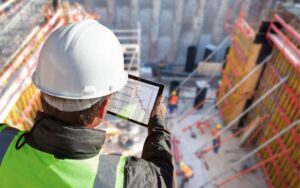

The construction industry is moving toward a connected, data-driven future. IoT startups are playing a crucial role in this transition by deploying sensors, trackers, and networked platforms that capture real-time site data. These technologies help construction teams monitor equipment, track materials, and ensure worker safety while improving productivity and reducing costs.
For example, construction sites traditionally relied on manual inspections to check concrete curing, leading to delays and missed issues. With embedded IoT sensors, project teams now receive real-time strength and temperature data, enabling precise decision-making that keeps projects on schedule. Similarly, wearable sensors and BLE tracking solutions provide live insights into workforce and equipment utilization, helping project managers identify inefficiencies and reallocate resources proactively.
This article explores seven emerging IoT startups that are providing scalable, practical solutions for smart construction efficiency. Each section details the startup’s technology, its application on job sites, and the tangible benefits these IoT innovations deliver for modern construction operations.
Table of Contents
7 Emerging IoT Startups Accelerating Smart Construction Efficiency
1. GreenVibe – Concrete Monitoring
GreenVibe builds smart sensors that embed in poured concrete to monitor its curing process. These IoT devices measure parameters like strength, temperature, humidity, and electrical conductivity. The data is sent to a cloud analytics platform, allowing contractors to track concrete quality from placement through curing. Early detection of cracks or weak spots prevents structural issues and schedule overruns. Key features include:
-
Real-time concrete quality data: Continuous monitoring of strength, temperature, and humidity.
-
Cloud-based analytics: Data processing identifies anomalies or delays in the curing process.
-
Defect prevention: Early alerts enable timely rework or material correction to avoid major downtime.
This system ensures that issues are caught while they are small. Instead of waiting weeks to perform manual tests, site teams can respond immediately if sensors report unexpected readings. In practice, such monitoring prevents costly rework or delays caused by concrete that fails to meet specifications.

2. Ynomia – Asset and Personnel Tracking
Ynomia provides a “digital warehouse” solution for construction sites using IoT tracking. It combines Bluetooth Low Energy (BLE) and LoRaWAN beacons (BLEAcons) to locate tools, equipment, materials, and even personnel on-site. By tagging items and people, Ynomia’s system continuously reports their positions, making it easy to find resources. This reduces time lost searching for critical components and prevents inventory mismanagement. Key benefits include:
-
Indoor/outdoor tracking: BLE for precise indoor location; LoRa for wide-area coverage.
-
Real-time inventory oversight: Monitor the status and location of high-value materials and equipment.
-
Efficiency boost: Site managers know instantly where items are, speeding up workflow and minimizing idle time.
For example, if a critical piece of rebar or machinery is needed urgently, Ynomia’s dashboard shows its last known location, preventing costly downtime. Such tracking helps construction teams stay organized and on schedule.
3. Latium Technologies – Site Monitoring
Latium Technologies transforms job sites into smart sites with a network of IoT sensors and gateways. It integrates data from environmental and equipment sensors to give project teams a centralized view of site conditions. By monitoring factors like temperature, humidity, vibration, and battery levels, Latium enables:
-
Centralized data hub: All sensor data streams into one platform for easy analysis.
-
Threshold alerts: Automatic notifications if a reading goes out of acceptable range.
-
Risk reduction: Identify problems early (e.g., potential equipment failure or hazardous conditions).
By providing continuous site awareness, Latium helps reduce rework costs and scheduling delays. For instance, if ground moisture sensors detect unexpected wetness, managers can address drainage before it affects the foundation. The system also tracks material deliveries and usage, ensuring supplies arrive on time and are stored correctly. In effect, Latium’s IoT solution keeps projects on budget and on schedule.
Suggested article to read: Top 21 Construction Management Company; 2024 Review

4. Lattice Build – AI-Powered Site Manager
Lattice Build offers a wireless IoT network combined with AI analytics to create a smart site manager. Small, battery-powered sensors and beacons are placed on workers, tools, and key materials. The network triangulates their positions and activity in real time. Lattice’s platform then uses this data to provide:
-
Real-time field awareness: Know where crews and equipment are at any moment.
-
AI-driven insights: Automatically flag inefficiencies, such as idle crews or misplaced tools.
-
Data-driven scheduling: Adjust work plans based on actual site conditions.
By turning raw IoT data into actionable intelligence, Lattice saves time and cost on projects. For example, the system might detect that a concrete pour is delayed because insufficient crews are present, triggering a notification so managers can reassign labor promptly. This reduces idle time and avoids cascading schedule slippage.
5. SmartBarrel – Connected Site Management
SmartBarrel develops a suite of IoT devices and software for comprehensive site oversight. Its small hardware modules capture data on environmental conditions (like weather and temperature) and on-site tasks. The platform offers tools for:
-
Task allocation: Assign and track jobs digitally rather than on paper.
-
Timesheets and payroll: Automate crew attendance and time tracking via IoT sensors.
-
Project monitoring: Consolidate weather, work progress, and productivity metrics.
SmartBarrel’s connected devices give contractors a live overview of the project. For instance, if sudden rain is detected, the system can automatically re-prioritize tasks and alert teams to cover materials. It can also integrate with payroll systems to accurately log hours, reducing administrative burden. Overall, SmartBarrel helps firms streamline operations and cut down on manual work.
6. WakeCap – Wearable Tracking and Safety
WakeCap provides wearable IoT tags that workers clip onto helmets or vests, turning them into wireless trackers. The system continuously monitors each person’s location, equipment usage, and access to hazardous zones. Key features include:
-
Worker attendance: Automatic logging of worker check-in/check-out and hours on site.
-
Equipment utilization: Track which worker is using which machine at any time.
-
Safety alerts: Immediate notification if a worker enters a forbidden area or if a fall is detected.
By automating attendance and safety protocols, WakeCap boosts job-site efficiency. Real-time reporting on productivity and workforce presence helps managers better allocate labor. Moreover, linking workers to equipment ensures tools are not left idle or misplaced. These insights, paired with improved safety outcomes, make the construction process both safer and more efficient.

7. Kalima Systems – IoT with Blockchain for WIP
Kalima Systems takes IoT data security to the next level by embedding blockchain technology on-site. Their solution records work-in-progress (WIP) data from IoT sensors on a distributed ledger. This provides:
-
Real-time progress tracking: A geo-localized view of all active worksites and their completion status.
-
Immutable records: No single party can alter the construction logs, ensuring data trustworthiness.
-
Transparency: Owners and contractors have a shared, live dashboard of project milestones.
For example, when a foundation is poured, sensors and IoT cameras feed completion data to the Kalima platform. Blockchain immediately timestamps and logs this event, visible to all stakeholders. This eliminates manual reporting errors and disputes. The combined use of IoT and blockchain cuts down on administrative overhead and keeps projects moving without confusion.
FAQs
How do IoT startups improve construction efficiency?
IoT startups equip sites with sensors and smart devices that collect real-time data. This visibility lets managers identify bottlenecks (e.g., material shortages or idle equipment) and make quick decisions. Automated tracking and alerts reduce manual errors and downtime, significantly boosting overall efficiency.
What are some examples of IoT technologies used on construction sites?
Common IoT tools in construction include wearable trackers for workers, environmental sensors in concrete and soil, GPS or BLE tags for equipment, and networked cameras. These devices feed data to cloud platforms or dashboards, where analytics provide insights on project progress and safety.
Which industries benefit from smart construction IoT solutions?
Smart construction IoT solutions are valuable in commercial building, infrastructure projects, and industrial facilities. Any project involving heavy machinery, strict schedules, or large workforces can benefit—from skyscrapers and factories to roads and bridges—improving quality and reducing cost overruns.
Is it true that IoT can reduce construction project delays?
Yes. IoT systems provide up-to-the-minute site information. For example, if a delivery is late or a machine breaks down, sensors can alert teams immediately. This foresight allows problems to be addressed before they cascade into major delays, making project timelines more reliable.
Conclusion
The rise of IoT startups in construction is unlocking new levels of efficiency. Each startup above illustrates how specialized IoT solutions can eliminate inefficiencies. As projects grow more complex, these connected platforms from IoT startups will be essential for meeting deadlines while controlling costs.
Resources:
StartUs Insights. (2021). Discover 5 Top IoT Solutions impacting Construction Companies.
StartUs Insights. (2021). 5 Top Connected Construction Site Startups.
For all the pictures: Freepik
Suggested article for reading:
Top 6 Robotic and LiDAR Sensor Integrations Powering Autonomous Construction Equipment
8 IoT Sensor Use Cases Revolutionizing Modern Construction Sites
9 Digital Twin Sensor Applications Driving Real-Time Project Insights
6 Examples of Robotic Bricklaying and On‑Site Assembly in Construction
10 Government Policies for Solar Panels into New Builds in 2025
5 Ways AI is Revolutionizing Asset Tracking and Management
6 Must-know AI Tools for Construction Managers
5 Real‑World Applications of BIPV: From Facades to Canopies
10 Ways of Integrating Digital Twin Technology with Fabrication Workflows