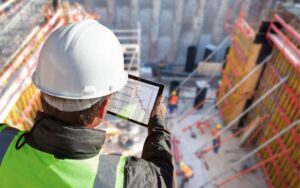

In many industries, critical tools and equipment are used in remote or infrastructure-poor locations – construction sites, mines, offshore rigs, rural utilities, and other unreliable connectivity zones. In these settings, maintaining visibility of assets is challenging because traditional tracking systems often assume a constant internet or network connection. Edge‑Ready Tool Tracking refers to solutions designed to function at the network’s edge (on-site or offline) so that tools can be monitored and data can be captured continuously, even when connectivity is intermittent or non-existent. This article explores three key technologies that enable robust tool tracking under such conditions. Each technology is presented with real-world examples and practical insights, showing how they keep operations running smoothly when standard online systems would fail.
Table of Contents
The Need for Edge‑Ready Tool Tracking in Remote Areas
In remote work zones or underground facilities, relying on cloud-based tracking alone can lead to gaps in data. Unreliable connectivity means that if a system requires constant Wi-Fi or cellular service, it may stop recording tool locations or usage the moment the signal drops. The consequences range from lost tools and downtime (due to searching or waiting for data) to safety risks if critical equipment isn’t where it’s expected. Edge-ready tracking technologies address this by bringing the data capture and processing closer to the tools themselves – either on the devices, via local networks, or through alternative communication channels.
In practice, this means field teams can continue tracking assets in real time on-site, with local devices or networks taking over when the internet goes out. Later, when a connection is available, the accumulated data syncs to central systems. The following sections describe three technologies that exemplify this approach, each suited for different scenarios but all sharing the same goal: ensuring no tool goes untracked, even off the grid.
Suggested article to read: Enhancing Project Efficiency Through Smart Construction Data Management (2025)
1. Offline Tool Tracking with RFID and Barcode Systems
One of the simplest edge-ready solutions uses RFID tags or barcodes on tools combined with mobile scanners or readers that work in offline mode. In this setup, every tool is tagged (with a barcode label or an RFID chip), and field personnel use a handheld device (like a rugged smartphone, tablet, or dedicated scanner) to scan tools on location. Crucially, the scanning device runs a tracking application with offline data storage.
This means all scans and data entries are saved locally on the device when there’s no internet connection. The information might include tool check-in/check-out events, location confirmations, or inventory counts. Once the device moves into connectivity (for example, back at the site office or a Wi-Fi zone) or is docked into a network cradle, it automatically syncs the stored data to the central asset management software.
How it works in practice: Imagine a maintenance team working on power lines in a rural area. Each morning, a technician scans the RFID-tagged safety gear and specialized tools as they load them into a truck. Even though there’s no cell signal in the field, the handheld scanner records which items are taken. Throughout the day, the crew continues to scan tools when used or transferred between teams.
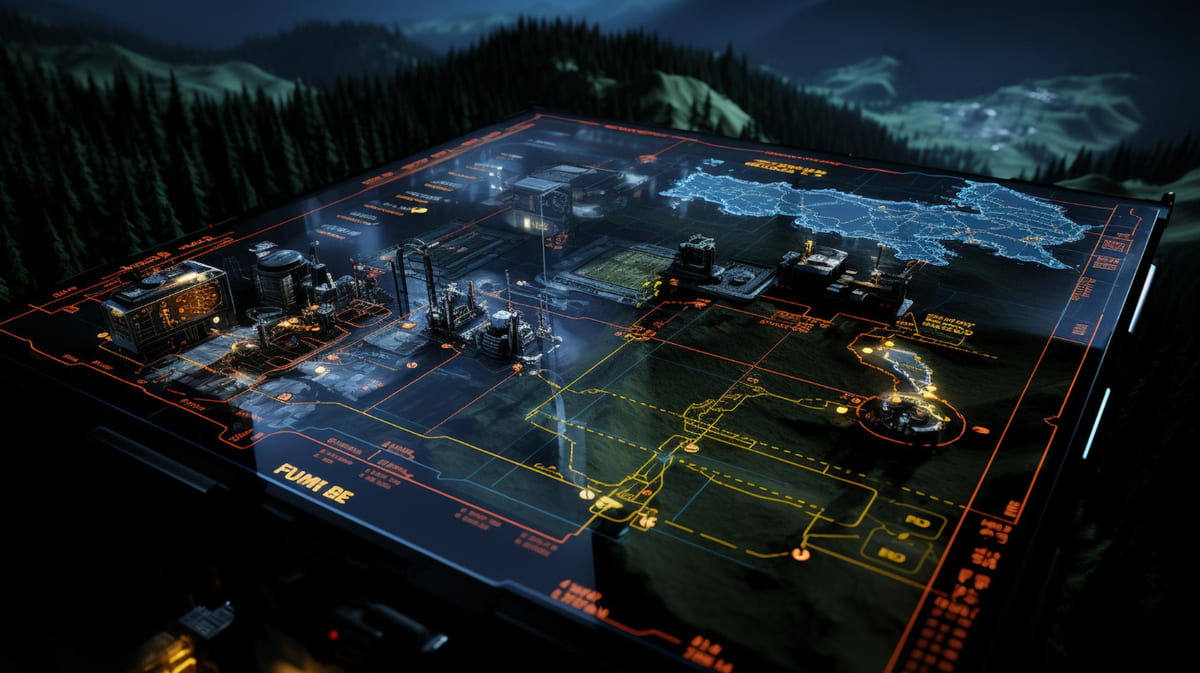
The device’s app provides on-the-spot verification – for instance, confirming a spare part is indeed on the truck – without needing to “check in” with a cloud server. In the evening, when the crew returns to a connected depot, the day’s transaction log automatically uploads to the company’s database. This offline-first approach ensures accurate tracking without delays. The field team doesn’t have to revert to pen and paper when the network drops, and the central system still receives all updates once connectivity is restored.
Key benefits of offline RFID/barcode tracking:
-
Continuous Asset Visibility: Tools are accounted for even in dead zones, reducing the chance of loss or misplacement. Field staff can verify tool availability on their device at any time.
-
No Downtime for Data Entry: There’s no need to wait for a connection; recording of tool usage or transfers happens on the spot. This immediacy improves data accuracy compared to end-of-day manual logs.
-
Automatic Syncing: Because data is cached locally, it won’t get lost. When a connection becomes available, the system syncs automatically, merging local records with the central database. This eliminates errors from re-entering data later on.
-
Ease of Use: Many offline-capable tracking apps have simple interfaces for scanning and record-keeping, requiring minimal training. For example, a warehouse worker can scan dozens of items quickly, and the app will batch-upload those scans later. The process feels the same to the user whether online or offline – making the technology practically invisible in terms of workflow disruption.
Real-world example: A large utility company adopted an offline asset tracking system for their emergency response kits. Technicians in hurricane-prone regions often must operate in the aftermath of storms where power and internet are down. With rugged tablets pre-loaded with the latest inventory list, teams scan each piece of equipment (generators, cables, tools) as they deploy them to restore services. In the first season using the system, the utility reported a significant drop in missing equipment incidents.
They credited this improvement to the fact that every item’s movement was logged, connectivity or not, fostering accountability. In one instance, a field crew discovered a critical tool was left behind at a site – but because the offline logs showed exactly where it was last scanned, another team recovered it the next day, averting a costly repurchase. This illustrates how offline RFID/barcode tracking brings reliability and clarity to asset management when traditional network-dependent methods would leave blind spots.
Practical Tip: When implementing offline tool tracking, ensure the handheld devices have adequate battery life and storage for a full day (or more) of data. Additionally, set up the system to alert users if a sync hasn’t occurred in a while (for instance, if they remain out of network for days), so they can manually sync via satellite phone or another means if needed. This guarantees that the central records stay as current as possible.
2. Local Mesh Networks and Bluetooth Tracking on Site
For tool tracking in a confined site (like a construction area, factory, or plant) with sporadic external connectivity, deploying a local wireless network can be an effective edge-ready solution. Bluetooth Low Energy (BLE) tags and mesh networks (such as those based on Zigbee or other short-range wireless tech) enable tools to be tracked automatically within the local vicinity, without reliance on public networks. In this approach, each tool is outfitted with a small wireless beacon or tag.
Fixed receivers or gateways are placed around the site – for example, at the site office, entry/exit points, or on heavy equipment – to pick up signals from the tool tags. These receivers form a mesh or local network that can cover the area where tools roam. Because the network is self-contained, it continues to function even if the internet connection to the outside world is down. A central edge device (like a gateway or on-site server) aggregates the data, processing the tags’ signals to determine which tools are nearby, which are moving, or if something has left the area.
How it works in practice: Consider a building construction site spread over several acres. The contractor attaches BLE tracking tags to high-value power tools and equipment. Onsite, they install a construction asset gateway – essentially a weatherproof box with a Bluetooth antenna – on the tool crib (storage container) and another in the main office trailer. Every few seconds, these gateways scan for any BLE tags in range. When a tagged drill or saw is moved, the nearest gateway captures that event (for instance, Tool #123 moved out of the tool crib at 7:45 AM).
The gateways have local memory or a small computer that updates the tool inventory log in real time and can even sound an alert if a tool leaves the designated area (a geo-fence) without authorization. Workers on site can pull up a dashboard (via a laptop or a mobile app connected to the local network) to see the last known location of each tool. If the internet is intermittent, the dashboard still works locally because all data processing happens on-site. Later on, when connectivity is restored, the system can send the collected data and any alerts outward to the company’s cloud or management team for oversight.
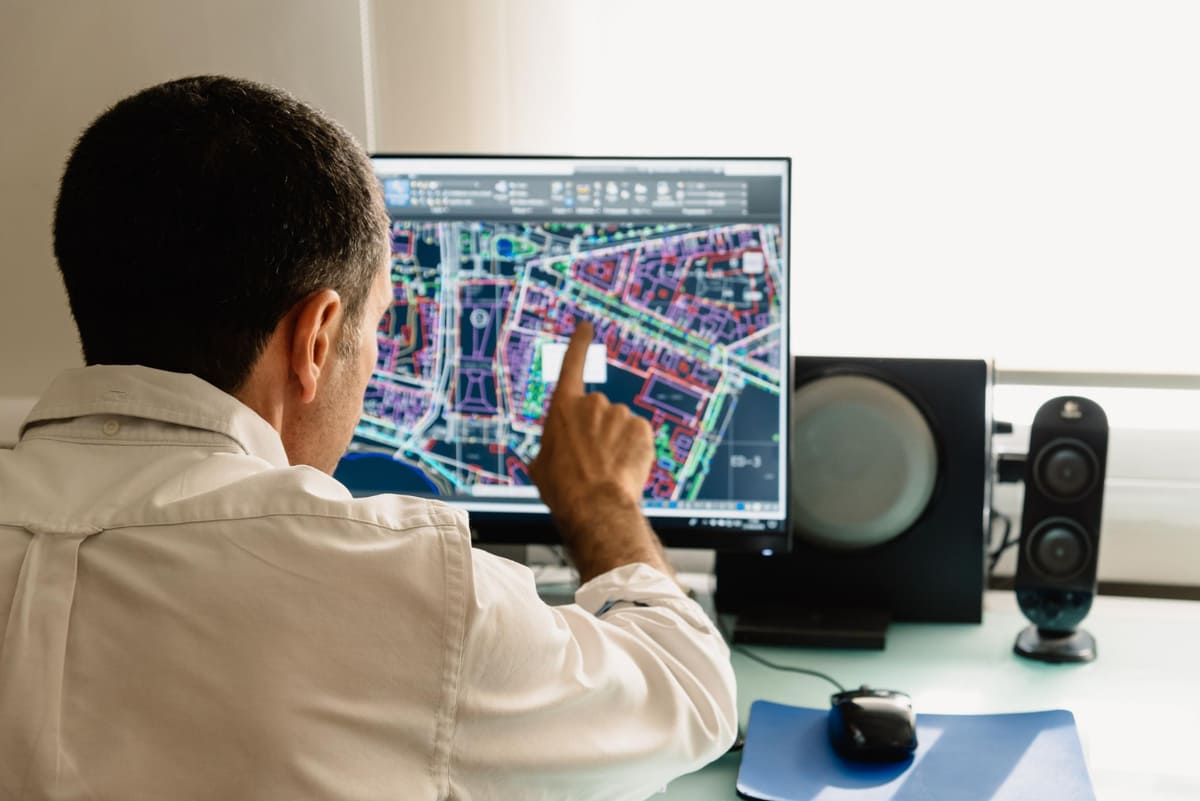
Benefits of local wireless tracking networks:
-
Real-Time Automated Monitoring: Unlike manual scanning, BLE or mesh networks update tool positions continuously without human intervention. This gives a live view of where everything is, which is invaluable on a busy site. For example, a supervisor can quickly locate a mislaid wrench by checking the system, instead of searching physically.
-
Edge Processing for Instant Alerts: Because the data is processed on the local gateway or server, alerts and analytics can be instantaneous. If a tool is leaving the premises (perhaps being taken beyond the gate), the system can trigger a local alarm or notification immediately, even with no external internet.
-
Reduced Tool Loss and Theft: These networks create a digital “safety net” around the site. Tools are much less likely to disappear unnoticed – if something goes missing, you’ll know the last seen location and time. Many companies report improved accountability; crew members are aware that every tool’s movement is logged automatically, which dissuades careless misplacement or theft.
-
Hands-Free Data Collection: Field teams don’t need to scan or log tools during daily work – it’s all handled by the wireless system. This saves time and allows workers to focus on their tasks rather than record-keeping. An illustrative outcome: a contractor implementing a Bluetooth tracking system found that their teams spent far less time at end-of-day tool inventory counts. What used to be a 30-minute manual checklist was essentially eliminated, as the system already knew which tools were back in the container and which were still out.
Real-world example: A commercial contractor in charge of multiple job sites adopted a Bluetooth tool tracking system to manage their equipment fleet. On one large project, they equipped about 200 tools and materials (generators, laser levels, heavy drills) with BLE tags. They installed several solar-powered gateways around the perimeter of the site. Within the first two months, the system revealed patterns they hadn’t been aware of: for instance, certain drills were consistently left on the fifth floor of the building under construction rather than returned to the tool crib each day.
This not only risked loss but also slowed work the next morning as teams hunted for those drills. Armed with these insights (delivered via 15-minute interval scans stored in the local gateway), the site manager introduced a policy that all tagged tools must pass by a gateway at the site exit by day’s end – effectively ensuring tools come back to the storage area.
The result was a 40% reduction in tools reported missing or left behind after work hours. Moreover, when an internet outage hit the area for a full day, the contractor didn’t lose any visibility into tool locations – the local network continued updating positions, and work proceeded without a hitch. They simply synced the data to the central system the next day. This example highlights how local wireless tracking not only prevents losses but also keeps operations efficient and resilient against connectivity issues.
Practical Tip: When deploying a mesh or Bluetooth tracking solution, plan the placement of gateways carefully. Conduct a site survey to identify signal blind spots (steel structures or underground areas can block signals). In critical zones, you might need additional receivers or an alternative like ultra-wideband trackers for pinpoint accuracy. Also, ensure the edge gateway has backup power (battery or solar) so it continues to operate during power outages – a common scenario in remote zones.
3. LPWAN and Satellite-Based Tracking for Wide-Area Coverage
Not all tools stay within a single site; some assets travel over vast distances or reside in truly off-grid regions (mountainous areas, open ocean, desert expanses). For such cases, edge-ready tracking leverages Low-Power Wide-Area Network (LPWAN) technologies and satellite communications. LPWAN includes protocols like LoRaWAN, Sigfox, and NB-IoT, which are designed to send small amounts of data over long ranges while using minimal power. They are ideal for battery-operated trackers attached to equipment or tool containers that might move in and out of coverage. These trackers often have the intelligence to log GPS coordinates and sensor data locally, then transmit periodically when possible.
Satellite-based trackers, on the other hand, use satellite networks (such as Iridium or Globalstar) to send data from anywhere on the globe, independent of local infrastructure. Modern satellite asset trackers are compact, rugged devices that can be affixed to a tool crate or vehicle; they often include an on-board GPS and memory buffer. If a tool (or the vehicle carrying it) is beyond cell range, the device communicates directly with satellites to report its location.
If the satellite connection is temporarily unavailable (e.g. obstructed by terrain), the device will store data and send it when the satellite link resumes. Both LPWAN and satellite technologies exemplify edge-readiness by ensuring data can get out (or be stored) from remote zones without real-time conventional networks.
How it works in practice (LPWAN example): A mining company operates heavy machinery and tool depots across a sprawling open-pit mine. They set up their own LoRaWAN network on-site by installing a LoRa gateway atop a hill overlooking the mine. The tools and equipment – from drills to fuel tanks – are fitted with LoRa-based tracking tags that wake up and send a small packet of data every hour with the item’s ID and last seen location. These signals travel long-distance (LoRa can cover several kilometers in open environments) back to the gateway.
Even though the mining site has no cellular coverage, the LoRa gateway collects all tool locations and statuses to a local edge server. Supervisors at the field office can see a live map of asset positions; for instance, they can verify that a generator has been returned to the storage shed by looking at the local dashboard. All this happens with no internet. Periodically, perhaps via a VSAT satellite internet link from the office, the aggregated data is synced to headquarters. In case that link is down, operations aren’t affected – the local LoRa system keeps running. The data simply queues up and will transmit when the link is back.
How it works in practice (Satellite example): A geological survey team brings a set of expensive tools (like core sample analyzers and GPS units) into a remote wilderness for a two-week expedition. To protect their assets, they attach a satellite GPS tracker to the main equipment case. This tracker wakes up every 30 minutes to attempt sending its GPS location via a Low Earth Orbit satellite network. In this scenario, there are truly no other networks – no Wi-Fi, no LoRa, no cell towers – so the device is essentially a lifeline.
Each successful transmission puts a point on the map that the home office can monitor. If dense forest or terrain blocks the signal at the exact moment of an update, the device’s edge logic stores that position and tries again later. Over the expedition, the survey team never has to actively check in the tool case’s whereabouts; even if they split the gear between camps, the trackers provide continuous location updates. The satellite-based system ensures nothing “falls off the radar”. Should an item get separated or if an emergency extraction is needed, the last known coordinates are readily available via satellite data.
Benefits of LPWAN and satellite tracking:
-
Extremely Wide Coverage: These technologies are specifically built for remote coverage. A single LoRaWAN gateway can blanket a large area (tens of square kilometers) with connectivity for sensors. Satellite trackers can operate literally anywhere on Earth, from polar regions to mid-ocean, providing peace of mind that assets can be tracked beyond the reach of any terrestrial network.
-
Store-and-Forward Capabilities: Both LPWAN devices and satellite units typically include store-and-forward capabilities – a hallmark of edge readiness. If a transmission fails (due to interference or absence of receiving station at that moment), the device doesn’t lose the data; it keeps trying until the data is delivered. This reliability is crucial for intermittent connectivity scenarios.
-
Power Efficiency for Long Deployments: LPWAN trackers are very power-efficient, often lasting years on a battery because they send small packets infrequently and use low bandwidth. This makes them ideal for tools or equipment that are deployed long-term in remote places (e.g. a toolkit left at a remote pumping station for months). Satellite trackers use more power than LoRa, but many now come with solar panels or clever battery management to extend their field life. Either way, these devices are designed for minimal maintenance, which is key when assets are far from any charging source.
-
Integration with Edge Gateways: In advanced setups, LPWAN and satellite can be combined with edge computing gateways. For instance, an edge gateway at a remote site might collect data via LoRa from dozens of tools locally, and then use a satellite uplink once a day to transmit summarized data to central systems. This hybrid approach keeps bandwidth costs low (since satellite data is expensive) while still maintaining near-real-time local oversight.
Real-world example: A drilling company in the oil & gas industry outfitted its remote rigs and tool containers with a mix of LPWAN and satellite trackers. In one scenario, a set of specialized drill heads (each costing tens of thousands of dollars) was moved between a base camp and various drilling sites in the Alaskan wilderness. The company placed LoRaWAN tags on each drill head and installed a gateway at the base camp.
As long as the drill heads stayed within ~10 km of the camp, their movements were tracked locally. However, some sites were beyond that range, so the transport cases for the drill heads were also fitted with satellite trackers. During transit over mountain passes, when nothing else worked, the satellite pinged the location every hour.
Over six months, despite operating in extremely harsh, connectivity-sparse conditions, the company never lost track of a single drill head’s location. In fact, they discovered one morning that a tool container had been mistakenly left behind at a distant site – the LoRa system at base camp showed that two drill heads hadn’t returned, and the satellite tracker on the container pinpointed it 50 miles away. They dispatched a small team to retrieve it immediately, saving a week of delay.

The project manager highlighted that before adopting the edge-ready tracking approach, such mistakes might not be discovered until crews manually checked inventory days later, potentially causing major operational delays. With the new system, however, they had near-real-time accountability for their tools, no matter how remote the operation.
Practical Tip: When considering satellite tracking, factor in the operational costs (subscription or message fees) and choose an update interval that balances information needs with budget and battery life. Some solutions allow dynamic adjustment – for example, a device can send frequent updates when movement is detected and then scale back to a low frequency when stationary. This optimizes both cost and power. For LPWAN, ensure that the local regulatory spectrum rules are followed (frequencies for LoRaWAN or Sigfox can vary by region) and that the devices are ruggedized if they’ll face extreme weather or handling.
FAQs
What is Edge‑Ready Tool Tracking?
Edge‑Ready Tool Tracking refers to tracking systems designed to function independently of constant internet or cloud connectivity. “Edge-ready” means the data processing and storage can happen on local devices or networks (at the “edge” of the network) rather than relying entirely on a centralized server far away.
In simpler terms, an edge-ready tool tracking system can keep monitoring and recording the location/status of tools on-site, even if it’s offline or in a remote area. For example, a handheld scanner that logs tool check-outs offline or a local gateway that tracks Bluetooth tags on tools are edge-ready solutions. They ensure that tool tracking data is captured in real time and saved safely at the site, then synced to the main system whenever a connection becomes available.
How do tracking systems work without reliable internet?
Edge-ready tracking systems use a combination of local data storage, alternative networks, and smart devices to work without real-time internet. If the internet or cellular service is unreliable, these systems store data locally (on a device or local server) until they can upload it. Some use local wireless networks – for instance, tools with Bluetooth or RFID tags are detected by on-site receivers that don’t require external connectivity. Others might use offline modes in software (caching information on a tablet or laptop).
Additionally, technologies like LoRaWAN or private radio networks can transmit data within a remote site without internet. The key is that the system doesn’t “freeze” when offline; it continues to log movements, check-ins, and other events. Later, once a connection is restored (via Wi-Fi, cellular, or even satellite uplink), the accumulated data is synchronized to the central database. To the user, the tracking appears seamless – you can still search for an item or scan a tag and get a result on the spot, because the logic and data needed are right there at the edge.
Which technologies can track tools in unreliable connectivity zones?
Several technologies enable tool tracking when connectivity is spotty or non-existent. RFID and barcode systems with offline scanners let workers scan assets and save the info on the device until it can sync. Bluetooth Low Energy (BLE) tags and mesh networks (like Zigbee or Wi-Fi Direct) create a local network that automatically logs tool locations around a site without needing internet. Ultra-wideband (UWB) is another local tech for high-precision indoor tracking in warehouses or plants. For wider areas, Low-Power Wide-Area Networks (LPWAN) – such as LoRaWAN or Sigfox – allow long-range wireless tracking on-site, with a local gateway collecting data.
And for truly remote global coverage, satellite tracking devices (using networks like Iridium) can send location data from virtually anywhere on Earth. Often, a combination is used: for instance, a job site might use Bluetooth tags for on-site tracking and a satellite link to send daily summaries back to head office. All these technologies share the ability to function with little or no traditional network infrastructure, making them well-suited for unreliable connectivity zones.
Is it true that satellite trackers can locate assets anywhere?
Yes, essentially satellite asset trackers can work almost anywhere in the world. Unlike regular GPS devices that still need a cell network to report their location, satellite trackers communicate directly with satellites orbiting the Earth. This means that whether you’re in a desert, the middle of the ocean, deep in a mountain range, or any remote region, a satellite-based tracker with a clear view of the sky can send its GPS coordinates to the satellite network.
The data is then relayed to the end user via satellite gateways. There are a few caveats: extremely dense cover (like deep caves or certain indoor environments) might block satellite signals, and there’s usually a short delay (from seconds to minutes) in receiving data due to satellite transmission. Also, using satellites can be more expensive per message than cellular data. However, in exchange, you get truly global coverage.
Companies frequently use satellite trackers on shipping containers, remote environmental sensors, or expedition equipment to ensure those assets are trackable even far beyond cellphone range. In summary, it is true – satellite trackers provide near-universal reach, making them the go-to solution for tracking in the most connectivity-challenged zones.
Conclusion
Operating in unreliable connectivity zones no longer means operating in the dark. Edge‑ready tool tracking technologies empower organizations to maintain full visibility and control of their assets by shifting data capture and processing to where the action is – on the job site, on the device, or through networks that don’t depend on a central grid. In this article, we examined three pivotal approaches: offline scanning systems, which keep tracking going on mobile devices regardless of internet status; local mesh and Bluetooth networks, which create a self-sufficient bubble of real-time tracking at the site level; and LPWAN/satellite trackers, which leapfrog traditional networks to cover vast and remote areas.
Each of these technologies addresses the same core challenge from a different angle, and they can even complement each other in a comprehensive asset management strategy. The examples given – from construction projects recovering misplaced drills overnight, to mining operations spanning miles, to expedition teams relying on satellites – all underscore a common theme.
By adopting edge-ready tracking, companies ensure that their tools and equipment remain on the radar at all times. The result is fewer losses, less downtime, and greater confidence that even when the internet blinks, the business doesn’t miss a beat. As remote work and field operations become increasingly central to many industries, embracing these resilient tracking methods is not just an IT upgrade, but a strategic imperative to keep productivity and accountability high under any conditions.
Resources:
European Agency for Safety and Health at Work. (2022). Improving compliance with occupational safety and health regulations.
Wasp Barcode Technologies. (2022). How to Track Assets and Inventory while Offline.
Techcedence (Vivek Kumar). (2025). Why Mobility and Offline Access Are Critical for Remote Asset Tracking.
Link-Labs. (2024). Why Edge Computing is a Necessary Part of Asset Tracking Solutions.
GAO Tek Inc. (2023). Applications of LoRaWAN & LPWAN in Mining, Quarrying, and Oil and Gas Extraction.
For all the pictures: Freepik
Suggested article for reading:
5 Use Cases of Telematics and IoT in Construction Tool Tracking
Top 7 Construction Tool Tracking Systems Transforming Site Efficiency in 2025
Top 7 Sensor Solutions Transforming Construction Site Safety in 2025
Top 6 IoT Use Cases in Construction Backed by Top Companies in 2025