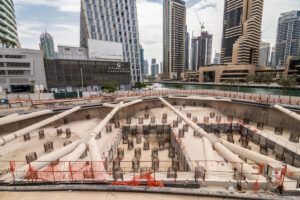

In today’s dynamic business landscape, particularly within the large-scale construction sector, efficient asset management is no longer a luxury but a critical operational necessity. Asset tracking, defined as the process of monitoring and managing physical assets using technology, provides real-time visibility into asset location, status, and utilization. This capability is paramount for informed decision-making, minimizing losses, optimizing resource allocation, and enhancing overall operational efficiency.
Table of Contents
Problems and Consequences on Large Construction Sites
Large construction sites are inherently complex and dynamic environments, presenting unique challenges for effective asset management. The sheer volume and diversity of equipment, tools, and materials, coupled with constant movement and varying environmental conditions, create fertile ground for inefficiencies and significant financial and safety repercussions.
1. The Pervasive Challenge of Asset Mismanagement
Misplacement and Loss of Critical Tools and Materials
On chaotic job sites, equipment is easily forgotten, misplaced, or simply goes unnoticed. This encompasses a wide range of items, from small hand tools to larger, more expensive machinery. The direct consequence of this misplacement is often significant wasted man-hours, as crews spend valuable time searching for missing items. This leads to stalled productivity and missed deadlines, directly impacting project timelines and labor costs. For instance, studies indicate that bricklayers can waste 45 minutes, and plumbers up to 83 minutes, daily searching for materials or waiting for deliveries.
Beyond the immediate productivity drain, poor material management also contributes to inefficient procurement practices. A lack of clear visibility into inventory can lead to overbuying, resulting in unnecessary expenses and cluttered sites, or conversely, understocking, which causes critical shortages when materials are most needed. A study conducted in Ethiopia highlighted that 6–10% of purchased construction materials end up as waste, directly contributing to project cost overruns.
The problem extends beyond the visible loss of assets; it triggers a cascade of secondary financial burdens that erode profitability and project margins, often remaining unquantified until aggregated. These hidden costs include emergency repairs, expedited shipping for critical spare parts, overtime labor due to extended downtime, and energy inefficiencies stemming from poorly maintained assets. This comprehensive financial impact underscores the critical need for robust asset tracking.
Escalating Risks of Equipment Theft and Unauthorized Use
Construction equipment is a prime target for thieves due to its high value and portability. The U.S. construction industry faces estimated annual losses ranging from $300 million to $1 billion due to equipment theft. The average stolen machine is valued at $29,000, and a dismal recovery rate of approximately 21% means most stolen assets are never retrieved. This results in direct financial loss and the added costs of replacements, often compounded by work stoppages while waiting for new equipment.
Beyond outright theft, unauthorized after-hours use or operation by untrained personnel poses substantial risks. Such misuse can prematurely wear down equipment, create significant liability issues, and drastically impact asset lifespan, ultimately increasing the risk of accidents and injuries on site. Without proper monitoring, construction sites effectively become “low-risk, high-reward” environments for theft and misuse, exacerbating the financial and safety consequences for businesses. The true return on investment for asset tracking software extends far beyond the initial cost of lost items, encompassing a broader mitigation of these operational inefficiencies and unforeseen expenses that significantly impact a company’s financial health.
Suggested article to read: Calculating ROI in Construction Project; Ultimate Guide 2024

2. Operational Bottlenecks and Project Timeline Disruptions
Unplanned Downtime and Stalled Productivity
Inadequate asset management practices are a primary driver of frequent equipment breakdowns and unplanned downtime, which severely disrupt production schedules and reduce overall output. A significant portion of construction equipment time, approximately 30%, is spent idle, representing a substantial drain on cost and efficiency. This idle time often stems from crews waiting for missing equipment or for equipment that is mismanaged, leading to direct productivity losses.
Unplanned downtime can cost hundreds to thousands of dollars per hour, particularly when subcontractors are involved, directly impacting labor costs and project milestones. Industry data indicates that downtime rates of 20–30% are common in construction, with a large portion attributable to delays caused by missing or mismanaged equipment. The problem of idle time and unplanned downtime is not an isolated issue but an interconnected symptom of a fundamental lack of real-time visibility and centralized, accurate data.
This situation creates a vicious cycle where inefficient utilization directly leads to over-renting or over-purchasing because managers lack the precise, up-to-date information needed to optimize resource allocation. This dynamic highlights how addressing one inefficiency, such as reducing idle time through better tracking, can positively influence other operational areas like procurement, scheduling, and overall resource planning, demonstrating the holistic benefit of comprehensive asset tracking software.
Inefficient Equipment Utilization and Resource Misallocation
Without clear visibility into asset usage patterns, managers frequently resort to over-renting or over-buying equipment “just in case,” adding unnecessary expenses to already tight project budgets. This lack of precise information leads to significant resource misallocation, where some assets sit unused, incurring rental or ownership costs, while other crews face delays waiting for essential equipment to arrive. Such inefficiencies severely limit a company’s ability to scale operations and take on multiple projects simultaneously.
Furthermore, fragmented data, often siloed between different teams, forces managers to make decisions based on incomplete or inaccurate information. This frequently results in costly mistakes and missed opportunities, further compounding operational inefficiencies. The interconnectedness of these issues means that solving one problem, such as improving equipment utilization, can have a ripple effect, leading to better overall resource planning and reduced unnecessary expenditure across the entire operation.
3. Compounding Safety Hazards and Compliance Issues
Increased Worker Safety Risks from Uncontrolled Assets
Poorly maintained assets pose a direct threat to worker well-being, significantly increasing the risk of accidents, injuries, and potential legal consequences. Lost or missing tools can create hazardous environments, ranging from simple tripping hazards caused by errant tools to the more severe risk of a tool breaking or malfunctioning during use, which can quickly compromise safety. Equipment misuse by untrained workers or operation outside allowed hours significantly increases accident risk, leading to excessive wear-and-tear or unplanned breakdowns that create unsafe situations.
The Occupational Safety and Health Administration (OSHA) identifies “Focus Four” hazards in construction: Falls, Struck-By, Caught-In/Between, and Electrocution. Struck-by incidents, involving moving vehicles, equipment, or falling objects, and caught-in/between incidents, where limbs get caught in machinery or workers are compressed between objects, are particularly exacerbated by uncontrolled assets and lack of real-time visibility. The connection between effective, technology-driven asset control and a safer work environment is direct and profound. This moves beyond mere adherence to regulations to fostering a proactive safety culture.
Regulatory Non-Compliance and Damage to Business Reputation
Poor asset management practices often lead to non-compliance with regulatory standards and industry regulations, which can result in severe penalties, legal actions, and significant damage to a company’s reputation. Failure to meet compliance requirements, such as ensuring equipment meets safety standards through scheduled calibration and maintenance, can have severe repercussions, including fines and legal actions.
Beyond legal and financial penalties, delayed projects and mistakes caused by irregular equipment maintenance or material shortages can severely damage a company’s standing among clients and workers. This erosion of trust can jeopardize future contracts and create a cycle of inefficiency and missed opportunities. Therefore, asset tracking software is not merely a financial or operational tool but a critical component of a company’s comprehensive safety and risk management strategy, contributing significantly to a positive brand image and mitigating costly legal and reputational damage.
Table: Common Construction Site Asset Management Problems & Consequences
| Problem Category | Specific Issue | Consequences |
|---|---|---|
| Misplacement & Loss | Lost tools/materials | Wasted man-hours, stalled productivity, overbuying/understocking, project cost overruns |
| Theft & Unauthorized Use | Equipment theft | Direct financial loss (average $29,000 per machine), low recovery rates (~21%), work stoppages, increased insurance premiums |
| Theft & Unauthorized Use | Unauthorized use | Premature equipment wear, liability issues, increased accident risk |
| Downtime & Inefficiency | Unplanned breakdowns | Disrupted schedules, reduced output, high hourly costs ($100s-$1000s/hour), project delays |
| Downtime & Inefficiency | Idle equipment | Underutilization (30% common), annual losses up to $200,000 per firm, over-renting/buying |
| Downtime & Inefficiency | Inefficient utilization | Resource misallocation, inability to scale operations, decisions based on incomplete data |
| Safety & Compliance | Safety hazards | Accidents, injuries, production delays, potential legal consequences, exacerbated OSHA “Focus Four” risks |
| Safety & Compliance | Regulatory non-compliance | Penalties, legal actions, damage to company reputation, jeopardized future contracts |
Solutions with Advanced Sensor Technologies
Advances in sensor technology and digital tracking are providing effective solutions to the pervasive challenges of asset management in construction. By leveraging interconnected devices and data analytics, these systems offer immediate, actionable insights, transforming traditional, reactive approaches into proactive, data-driven strategies.
The Transformative Impact of Real-Time Data and IoT Integration
1. Achieving Unprecedented Asset Visibility and Inventory Control
Integrating IoT with asset tracking systems provides construction managers with real-time visibility of all critical assets. For heavy equipment, GPS trackers continuously report their location, even across multiple job sites, ensuring managers know the exact whereabouts of each machine. Smaller tools and construction materials can be tagged with Radio-Frequency Identification (RFID) or Near Field Communication (NFC) labels, which are automatically scanned as they move in and out of warehouses or through gate checkpoints. Bluetooth Low Energy (BLE) beacons and Ultra-Wideband (UWB) tags offer precise indoor and outdoor location tracking, enabling granular location data, such as identifying which floor of a high-rise a particular tool is on.
This real-time visibility ensures that nothing “vanishes” unnoticed. If a pallet of steel beams is delivered, its last known location is recorded; if a generator is left on the far side of the project, its position can be pinpointed in seconds. This capability prevents the idle time previously spent searching for misplaced items, directly boosting productivity. Furthermore, it significantly improves inventory management, allowing project managers to see stock levels of materials at a glance and avoid double-ordering supplies that are already available. In essence, an IoT-integrated tracking system ensures every tool, vehicle, and material is accounted for in real time, enabling quick decision-making to keep projects on schedule.
2. Enabling Proactive Maintenance and Extending Asset Lifespan
IoT sensors enable predictive maintenance by continuously monitoring asset behavior and performance metrics such as movement patterns, temperature fluctuations, or energy consumption. AI algorithms can then detect anomalies or deviations from expected behavior, signaling potential issues before they lead to breakdowns. This proactive approach significantly reduces unplanned downtime, with studies showing reductions of around 25–30% in unexpected equipment downtime, leading to fewer work stoppages and keeping project timelines on track.
The cost savings associated with this approach are substantial, as preventing major equipment failures avoids emergency repair costs, overtime labor, and expensive rental of replacement equipment. Avoiding a single catastrophic machine failure, such as a crane motor burnout, can save tens of thousands of dollars, with one case study noting a commercial contractor saved approximately $100,000 in a year by using predictive maintenance to avert breakdowns. Well-maintained machinery is inherently safer.
IoT monitoring often catches issues, such as excessive vibrations or overheating, that could lead to unsafe conditions if left unchecked. By addressing these issues proactively, the risk of accidents caused by equipment failure is reduced, and workers spend less time dealing with emergency fixes in hazardous situations. The evolution of asset tracking software, especially with IoT and AI integration, moves beyond simple location monitoring to sophisticated operational optimization. This directly impacts equipment uptime, maintenance costs, and site safety proactively, fundamentally shifting operational paradigms. The system is not just reporting an asset’s condition, but predicting its future performance and recommending proactive actions.
Key Sensor Typologies for Robust Construction Asset Tracking
A comprehensive asset tracking strategy in construction often involves a combination of sensor technologies, each suited for different types of assets and environmental conditions.
1. Radio-Frequency Identification (RFID)
Technical Overview: Passive vs. Active RFID, Range, Accuracy RFID technology utilizes radio waves to automatically identify and track assets. Each asset is tagged with an RFID chip containing a unique identifier, and RFID readers scan these tags to monitor location, status, and movement.
- Passive RFID tags do not have an internal battery and are powered by the electromagnetic energy transmitted from the RFID reader’s signal. They typically have a read range of up to 10 meters (33 feet) and are cost-effective, ranging from $0.50 to $6 per tag. These tags are widely used for inventory tracking and can last indefinitely as they have no internal power source.
- Active RFID tags are battery-powered, allowing them to broadcast their unique ID signal periodically. This enables longer read ranges, typically up to 100 meters (328 feet) or more, and supports real-time tracking of high-value assets like vehicles or containers. Active tags are more expensive, costing between $10 and $50 or more per tag, and have a battery life of 3 to 10 years depending on usage.
The accuracy of RFID tracking can be affected by environmental factors such as interference from metal or liquids.
Advantages and Practical Limitations in Construction Environments RFID offers several advantages in construction. It provides efficient, fast data capture without requiring a direct line-of-sight, can read multiple tags simultaneously, and active RFID provides real-time updates. This technology helps reduce foreign object damage (FOD) by ensuring tools are accounted for, protects costly equipment from loss or theft, and preserves business continuity by preventing delays caused by missing items.
Despite its benefits, RFID has notable limitations in harsh construction environments. Initial implementation costs can be high due to the investment required for tags, programming equipment, and specialized scanners. Durability issues are also a concern, as the tiny antennas and receivers within RFID tags are susceptible to breakage when exposed to extreme temperatures, abrasive forces, or rigorous daily use. Furthermore, RFID tracking functionality is limited to when tags are within range of readers, making recovery of stolen assets difficult if they leave the tracked area. Technical complications, such as signal interference, can also occur.
2. Global Positioning System (GPS)
Technical Overview: Real-Time Location, Geofencing, Usage Data GPS utilizes global satellites to pinpoint the exact location of assets in real time, making it one of the most commonly used methods for tracking vehicles and heavy machinery over long distances.
- Real-time location tracking allows for the instant pinpointing of any asset from a tracking platform application. This is particularly useful for large or sprawling job sites or when equipment is used across multiple locations.
- Geofencing enables the setting of virtual boundaries around job sites or storage yards. Alerts are triggered if equipment enters or exits these defined sites, which is crucial for theft prevention, utilization monitoring, and security enforcement.
- GPS systems can analyze asset usage data, such as engine hours, mileage, and idle time, providing valuable insights for optimizing utilization and identifying service needs.
Benefits for Heavy Equipment and Fleet Management, Accuracy Considerations GPS offers significant benefits for construction. It effectively prevents equipment theft and loss, greatly aiding in the recovery of missing equipment. It enables proactive maintenance scheduling based on actual usage hours or diagnostic trouble codes (DTCs), optimizing equipment utilization by identifying and reallocating idle assets. For companies managing multiple job sites, GPS provides critical data for optimal resource allocation.
Standard GPS provides meter-level accuracy (±1-3m). For survey-grade results, technologies like Real-Time Kinematic (RTK) and Post-Processed Kinematic (PPK) enhance accuracy to centimeter-level (±1-2cm) by applying real-time or post-processed corrections from a base station or Continuously Operating Reference Station (CORS) network.
Despite its strengths, GPS has limitations. It generally has higher power consumption compared to other tracking technologies. Its effectiveness is reduced indoors or in urban canyons where satellite signals are limited or obstructed, and it requires clear sky visibility for optimal performance.

3. Bluetooth Low Energy (BLE) Beacons
Technical Overview: Proximity Tracking, Low Power Consumption BLE beacons are small, wireless transmitters that use Bluetooth Low Energy technology to broadcast signals to nearby compatible devices, such as smartphones or dedicated receivers/gateways. Designed for short-range data exchange, BLE consumes significantly less energy than traditional Bluetooth, allowing tags to last for years on a single coin battery, thereby reducing maintenance needs and replacement costs. They are primarily used for proximity-based tracking, where the location of an asset is detected by compatible Bluetooth readers within a certain range.
Use Cases for Smaller Assets and Indoor Environments, Range and Interference Factors BLE beacons are ideal for indoor environments like warehouses, offices, and multi-level buildings where traditional GPS signals may be unreliable or lack precision. They offer a cost-effective solution for tracking smaller, non-powered assets such as hand tools, surveying tools, equipment attachments (e.g., buckets, grapples, forks, blades), and construction materials like trench boxes and concrete forms.
The range of BLE tags is generally limited to 10-100 meters, depending on environmental conditions and transmit power. Interference from walls, doors, or other electronic devices can reduce signal strength and impact location accuracy. While effective for zone-based tracking (e.g., identifying an asset as “in a room” or “in a specific zone”), BLE may not offer pinpoint-level accuracy (e.g., within 1-2 meters) like ultra-wideband systems.
4. Ultra-Wideband (UWB) Technology
Technical Overview: Centimeter-Level Precision, Time-of-Flight (ToF) UWB is a short-range radio frequency technology that transmits data using short nanosecond pulses across a wide frequency spectrum, typically between 3.1 to 10.6 GHz. Its exceptional positioning accuracy, down to less than 50 centimeters under optimal conditions, is achieved through Time-of-Flight (ToF) measurement. This method calculates location based on the precise time it takes for radio pulses to travel from one device to another. UWB offers extremely low latency, often less than 1 millisecond to obtain a location, enabling true real-time indoor positioning with refresh rates exceeding 100 times per second, allowing for instant sensing of movement and motion.
Applications in Complex Environments, Comparison with Other Technologies UWB is highly effective in challenging environments with numerous obstacles, even under non-line-of-sight (NLOS) conditions, making it suitable for complex construction sites, factories, and warehouses. Its applications include tracking high-value equipment, tools, and personnel, enabling anti-collision systems, and optimizing workflow.
When compared to other technologies, UWB provides significantly superior location accuracy. For example, it outperforms BLE (typically <5 meters) and Wi-Fi (typically <10 meters), which often rely on Received Signal Strength Indicator (RSSI) for location estimation. While UWB’s optimal range is shorter, typically 0-50 meters with a maximum of 200 meters, its precision and resistance to interference make it a premier choice for advanced indoor positioning applications where exact location and real-time movement are crucial.
Limitations of UWB include a higher cost compared to barcodes or BLE, and it requires more infrastructure (anchors/readers) for full coverage. Its range is also generally shorter than GPS. The selection of a particular sensor technology for asset tracking in construction is not a one-size-fits-all decision. Each technology possesses distinct technical specifications, including range, accuracy, power consumption, and cost, making it more or less suitable for specific scenarios. Construction sites are highly diverse, encompassing vast outdoor areas, multi-level indoor structures, and a wide variety of asset sizes and values.
This necessitates a hybrid or multi-technology approach, intelligently combining different sensors to comprehensively cover all asset types and environmental conditions within a project. The key lies in understanding how to integrate these diverse technologies effectively to create a comprehensive, tailored solution that maximizes benefits across the entire operational spectrum while mitigating the individual limitations of each technology. This integrated approach represents a critical strategic decision for construction firms aiming for holistic asset management.
Table: Key Sensor Technologies for Asset Tracking: A Comparative Overview
| Technology | Typical Range | Accuracy | Power Consumption | Best Use Cases in Construction | Key Advantages | Key Limitations |
|---|---|---|---|---|---|---|
| RFID | Passive: Up to 10m; Active: Up to 100m+ | Meters (zone-based) | Passive: None; Active: High | Inventory, tool tracking, material flow control | Efficient, fast data capture, reads multiple tags, durable (active) | High initial cost, durability issues (passive), limited range (passive), recovery difficult |
| GPS | Global | Standard: ±1-3m; RTK/PPK: ±1-2cm | High | Heavy equipment, vehicles, large outdoor assets, fleet management | Global tracking, real-time location, geofencing, usage data, theft prevention | High power consumption, less effective indoors/urban canyons, requires clear sky |
| BLE | 10-100m | Zone-based (meters) | Very low | Small tools, equipment attachments, indoor environments, proximity tracking | Cost-effective, energy-efficient, easy deployment, mobile-friendly | Limited range, accuracy issues (interference), not ideal for long-distance outdoor tracking |
| UWB | Optimal: 0-50m; Max: 200m | Centimeter-level (<50cm) | Low | High-precision indoor tracking, complex environments, anti-collision, workflow optimization | Precision accuracy, real-time positioning, reliable (low interference), secure | Higher cost, requires more infrastructure, shorter range than GPS |
Real-World Case Studies: Quantifiable Success in Large-Scale Construction Projects
The theoretical benefits of sensor-based asset tracking are best understood through practical applications. These case studies illustrate how construction firms have leveraged these technologies to overcome significant challenges and achieve measurable improvements.
1. Byrne Group: RFID for Enhanced Tool and Plant Management
Problem: Byrne Group, a prominent UK construction contractor, faced significant challenges in managing over a thousand pieces of plant and tools dispersed across multiple building sites. This resulted in substantial losses, theft, and inefficient, labor-intensive manual tracking processes.
Solution: The company implemented an RFID-based tracking system, seamlessly integrating it with their existing project management software, branded as “AssetTagz” within their COINS construction software. Each equipment item was tagged with an RFID chip, and site staff were issued RFID-enabled ID cards. The issuance and return of tools were automated via scanning, ensuring real-time traceability and crucial verification of safety inspections and operator qualifications before equipment was released.
Quantifiable Results: The implementation yielded significant and quantifiable benefits. Loss and theft of equipment dropped by an impressive 50% after deployment, directly reducing replacement costs. The company achieved an 87% reduction in manual paperwork for tracking assets, such as job cards at their depot, due to the automation provided by the RFID system. This led to over £300,000 in savings within the first couple of years, attributed to better asset utilization and shrinkage control. Furthermore, the improved visibility of tools not only cut costs but also contributed directly to site safety by enabling managers to quickly locate critical safety gear and verify operator training, thereby preventing potential accidents.
2. John Holland Group: IoT GPS for Excavated Material Compliance and Efficiency
Problem: John Holland Group, a large Australian infrastructure contractor, encountered significant difficulties in monitoring the movement and legal disposal of thousands of tons of excavated soil and rubble (“spoil”) across vast project sites. Traditional methods relied on slow and error-prone paper tickets and forms, leading to potential compliance issues, overbilling by haulers, and risks of illegal dumping.
Solution: To address these challenges, John Holland developed an IoT-based asset tracking system called SpoilTRAC. They equipped dump trucks and earth-moving equipment with rugged, battery-powered GPS trackers that incorporated motion and tilt sensors. These devices utilized low-power LTE-M connectivity, ensuring reliability even in remote areas. Geofence technology was employed to compare the GPS coordinates of dump sites with approved disposal locations. The entire network of trackers fed real-time data into a central dashboard, providing comprehensive monitoring of spoil movement from excavation to final disposal.
Quantifiable Results: The implementation of SpoilTRAC transformed a labor-intensive tracking task into an automated, accurate digital process. It provided real-time confirmation of each load’s type, quantity, and disposal site, eliminating the need to wait months for subcontractor reports to verify proper disposal. According to John Holland’s environmental team, immediate alerts for incorrect dumping could save between $1,600–$4,000 per truckload in fines and extra handling costs by catching issues early.
The system also improved operational efficiency by providing precise data for optimizing truck fleet usage and verifying contractor bills against actual recorded trips. Additional benefits included enhanced sustainability by knowing material categories in real-time, allowing for potential reuse of excavated material on other projects, and improved safety and compliance due to all movements being tracked.
3. J&M Contracting: GPS for Proactive Theft Prevention and Rapid Recovery
Problem: J&M Contracting, a regional contractor in Texas (USA) specializing in highway construction and repairs, frequently experienced significant theft and unauthorized use of expensive machinery left unattended after hours at remote job sites. A notable incident involved a $50,000 backhoe disappearing overnight, threatening costly project delays.
Solution: J&M implemented a GPS-based asset tracking system. Small, weatherproof GPS tracking devices were installed on each piece of heavy equipment and trucks. This system was integrated with a telematics platform that provided real-time location updates and usage alerts. Geofence alerts were configured to notify managers immediately on their mobile devices if any machine moved outside its designated area or during off-hours.
Quantifiable Results: The system demonstrated immediate success. Shortly after deployment, an alert from a backhoe tracker led to its recovery only 0.8 miles from the site, hidden in a wooded area, preventing damage or further removal. This quick recovery avoided costly project delays and eliminated the need to purchase or rent a replacement machine. Since adopting the system, J&M has not had a single piece of equipment go unrecovered in theft attempts. Their insurance provider adjusted their premiums downward due to the reduced risk profile. Additional benefits included monitoring engine hours and idle time for improved maintenance scheduling and using data on vehicle speeds and braking to encourage safer driving habits among operators.
These examples illustrate that while direct financial returns are a strong initial driver for adopting asset tracking software, the ability of these systems to mitigate operational risks, such as theft, safety incidents, and compliance failures, and to provide strategic advantages, including predictable operations, enhanced reputation, and improved planning capabilities, is equally compelling for large construction firms. The true success of these implementations lies in a holistic improvement across financial, operational, safety, and strategic dimensions, demonstrating a comprehensive return on investment.
4. Skyscraper Project: IoT-Enabled Predictive Maintenance for Uptime
Problem: A commercial contractor engaged in a skyscraper project faced the constant risk of unplanned downtime from critical equipment, which could significantly derail tight project schedules and incur substantial penalties for delays.
Solution: The contractor implemented an IoT-based predictive maintenance approach. Sensors were strategically placed on key equipment, such as a tower crane’s main winch motor, to detect abnormal vibrations and temperature rises. This real-time data was continuously analyzed to predict potential failures, allowing maintenance crews to address issues proactively at optimal times, for example, during off-peak hours, rather than in the middle of critical operations.
Quantifiable Results: Over an 8-month period, this IoT predictive maintenance approach proved invaluable. The contractor reported averting approximately 176 hours of unplanned downtime, equating to about 22 hours per month of additional machine availability. This ensured that tasks that would have stalled due to equipment failure were completed on time, maintaining the skyscraper’s construction on schedule and avoiding delay penalties. Furthermore, maintenance costs became predictable and lower, as the team avoided the need for emergency repairs, overnight parts shipments, or costly emergency equipment rentals. The IoT monitoring initiative not only prevented costly repairs but also significantly improved the confidence of project managers when planning work, as they could rely on their machines to perform without unexpected interruptions.

Top 10 Asset Tracking Software Solutions for Businesses in 2025
The market for asset tracking software is robust and evolving, with numerous solutions tailored to diverse business needs, including the demanding requirements of the construction industry. Choosing the right asset tracking software is a critical decision that can significantly impact operational efficiency, cost control, and overall project success.
Essential Criteria for Software Selection
Selecting the optimal asset tracking software requires careful consideration of several key factors to ensure the solution aligns with an organization’s specific operational demands and strategic objectives.
1. Scalability and Seamless Integration Capabilities
The chosen solution must be able to grow with the organization, handling an increasing number of assets and projects without performance degradation. Scalability ensures that as a business expands, the software can accommodate additional assets, users, and locations without requiring a complete system overhaul.
Seamless integration with existing enterprise systems such as Enterprise Resource Planning (ERP), Customer Relationship Management (CRM), accounting tools (e.g., QuickBooks, Xero), and project management platforms is crucial. This integration facilitates centralized data management, streamlines workflows, and provides comprehensive insights, thereby avoiding fragmented data and siloed information that can lead to costly mistakes.
2. User-Friendliness, Mobile Accessibility, and Robust Support
A user-friendly and intuitive interface is paramount to minimize training requirements, reduce errors, and encourage widespread adoption by field teams and managers. If a system is difficult to navigate, employees are less likely to utilize it effectively, undermining its potential benefits.
Mobile accessibility, typically through dedicated iOS and Android applications, is essential for real-time asset tracking and updates from anywhere. This feature is particularly vital on dynamic construction sites or for remote teams, allowing for on-the-go data access and management, which directly impacts productivity and responsiveness.
Effective customer support, including comprehensive training resources, detailed documentation, and ongoing assistance, is critical for troubleshooting, ensuring consistent implementation, and maximizing software utilization. Reliable support ensures that any issues can be quickly resolved, minimizing downtime and frustration.
3. Advanced Reporting, Data Analytics, and Security Measures
Robust reporting tools and advanced analytics provide detailed insights into asset usage, costs, performance, maintenance history, and compliance. Customizable dashboards and predictive analytics help optimize maintenance strategies, identify inefficiencies, and support data-backed decision-making for resource allocation and capital investments.
Security measures are equally important to protect valuable asset data and prevent unauthorized access. Features such as role-based access controls, remote data wiping, and secure data transmission protocols are crucial, especially for companies handling sensitive information or high-value assets.
Leading Asset Tracking Software Solutions for Construction in 2025
The following asset tracking software solutions are recognized for their capabilities and relevance to businesses, particularly within the construction and heavy equipment industries, in 2025.
1. Revnue
Revnue distinguishes itself with robust asset management capabilities and a seamless integration of Contract Lifecycle Management (CLM) at no additional cost. Key features include an asset map view for geographical visualization, QR and barcode scanning for easy tagging, geofencing to monitor movement, and comprehensive asset maintenance tools. This solution is suitable for businesses seeking a powerful platform that accommodates both asset and contract management needs across various sectors.
2. Asset Panda
Asset Panda is a highly customizable asset tracking and management tool, excelling in usability and integration capabilities. Its mobile applications allow for real-time asset tracking and updates from anywhere, making it ideal for businesses with mobile teams, including construction firms tracking tools and equipment across multiple job sites. It supports up to 5,000 assets, offers integrated barcode scanning, unlimited users, and strong security features like remote locking and data wiping.
3. IBM Maximo
IBM Maximo is an enterprise asset management solution designed for complex industries such as utilities, oil and gas, and manufacturing, which share operational complexities with large-scale construction. It offers features like predictive maintenance, asset health insights, and advanced analytics to optimize asset performance and lifespan. It is a heavy hitter for big businesses, supporting multi-location tracking and integrating with major ERP systems.
4. Tenna
Tenna is specifically built for the construction and heavy industries, offering rugged GPS trackers and QR code tags for tracking equipment in tough conditions. It provides real-time visibility into asset locations and usage, with alerts for maintenance or unauthorized movement. Tenna integrates with fleet management systems and is designed to withstand harsh construction environments, making it a highly relevant solution for the sector.
5. UpKeep
UpKeep is an accessible and mobile-first asset management tool ideal for small and medium-sized enterprises (SMEs) and facility managers. It simplifies work order and maintenance management, provides excellent mobile support, and offers real-time reporting features. Its focus on ease of use and mobile accessibility makes it practical for construction teams in the field.
6. Fiix
Fiix combines asset maintenance with parts inventory management and maintenance scheduling, all on a cloud-based platform. Its user-friendly interface and flexible reporting tools make it a favored choice among maintenance teams. For construction, this means streamlined maintenance schedules and better control over spare parts, reducing downtime and extending equipment life.
7. MaintainX
MaintainX is effective for managing both physical and digital assets, offering features like geofencing, asset mapping, and contract management. It is mobile-friendly with apps for Android and iOS and integrates with CRM and ERP systems. MaintainX supports preventive maintenance schedules, real-time location tracking, and detailed reporting, making it a comprehensive solution for construction asset management.
8. Verizon Connect
Verizon Connect excels in fleet management and asset tracking, utilizing GPS and Bluetooth trackers to monitor vehicles and equipment in real time. It provides analytics for insights into asset usage and costs and integrates with accounting software. This solution is particularly strong for construction companies with large vehicle fleets and heavy equipment that require robust real-time tracking capabilities.
9. Procore
Procore is a leading platform for large-scale construction management, offering centralized project and task management, document management, and financial management features. While not solely an asset tracking software, its robust capabilities for connecting field and office teams, managing project financials, and providing real-time visibility into project aspects make it a powerful tool for overall construction asset management, especially for large enterprises. It integrates with various systems to provide a comprehensive view.
10. ClickUp
ClickUp is highly effective for streamlining and managing inventory operations within construction projects. It offers customizable views, dashboards, and automations to centralize stock levels, reorders, vendors, and costs. Its ability to align material deliveries with project timelines and simplify task tracking for dispatches makes it a valuable asset tracking solution, particularly for efficient inventory management and operational coordination.
FAQs
What is asset tracking software and why is it crucial for construction?
Asset tracking software uses technology to monitor and manage physical assets, providing real-time visibility into their location, status, and utilization. It is crucial for construction to minimize losses from theft and misplacement, optimize equipment use, streamline maintenance, and enhance worker safety on complex job sites.
How do sensors contribute to effective asset tracking in construction?
Sensors such as GPS, RFID, BLE beacons, and UWB tags are attached to assets to collect data on their location, movement, and condition. This data is transmitted to a central system, enabling real-time visibility, predictive maintenance, theft prevention through geofencing, and improved operational efficiency across diverse construction environments.
Which types of asset tracking technologies are best for different construction assets?
GPS is ideal for heavy equipment and vehicles due to its global range and real-time location capabilities. RFID is effective for inventory and tool management, especially for bulk scanning. BLE beacons are cost-effective for smaller tools and indoor tracking. UWB offers centimeter-level precision for high-value assets and personnel in complex indoor environments.
Is it true that asset tracking software can significantly reduce operational costs and improve safety?
Yes, it is true. Asset tracking software significantly reduces operational costs by minimizing equipment loss and theft, optimizing utilization to prevent over-renting, and enabling predictive maintenance to avoid costly breakdowns and unplanned downtime. It improves safety by preventing equipment misuse, ensuring proper maintenance, and enabling rapid response to incidents through real-time location data.
Conclusion
The challenges inherent to large construction sites—ranging from pervasive asset misplacement and theft to critical operational bottlenecks and significant safety hazards—underscore the imperative for robust asset tracking software. These issues not only lead to substantial financial losses through direct replacement costs and hidden expenses like unplanned downtime and overtime labor, but also compromise worker safety and regulatory compliance, ultimately damaging a company’s reputation and jeopardizing project timelines.
The evolution of asset tracking software, driven by advancements in sensor technologies and IoT integration, offers powerful solutions to these complex problems. By leveraging real-time data from diverse sensor typologies—including RFID for inventory and tool management, GPS for heavy equipment and fleet tracking, BLE for smaller assets and indoor environments, and UWB for centimeter-level precision in complex spaces—construction firms can achieve unprecedented visibility and control over their assets.
These technologies move beyond simple location monitoring to enable sophisticated operational optimization, facilitating proactive maintenance, extending asset lifespan, and significantly enhancing site safety. The real-world case studies demonstrate tangible, quantifiable benefits, proving that successful asset tracking implementations yield a holistic return on investment, encompassing financial savings, risk mitigation, and strategic advantages.
Selecting the right asset tracking software requires careful consideration of scalability, integration capabilities, user-friendliness, mobile accessibility, robust support, and advanced analytics. The top solutions for 2025 offer diverse features tailored to various business sizes and industry-specific needs within construction. Investing in a comprehensive asset tracking software solution is not merely a technological upgrade but a strategic imperative for construction businesses aiming to enhance efficiency, ensure safety, maintain compliance, and secure a competitive edge in an increasingly demanding market.
Resources:
- Argo Software. (n.d.). Understanding Asset Tracking: Key to Enhancing Business Operations and ROI.
- Asset Infinity. (2025, April 17). BLE Tag Benefits & Drawbacks for Asset Tracking.
- Asset Infinity. (n.d.). RFID Asset Tracking. Retrieved from
- AssetVue. (n.d.). RFID in Construction. Retrieved from
- Camcode. (2025, February 23). RFID for Tool Tracking: 3 Advantages and Disadvantages.
- Combain. (n.d.). Asset Management and Low-power tracking.
- Contractor Foreman. (n.d.). Construction Material Allocation: How Poor Planning Impacts Outcomes.
- Deeyook. (n.d.). The Evolution of Asset Tracking: From Manual to Digital. Retrieved from
- ENC Store. (n.d.). Top Factors Affecting Your Bluetooth Low Energy (BLE) Beacon Range.
- Geotab. (2025, April 22). Best asset trackers and software for fleet management [2025].
- GoCodes. (n.d.). The Effects of Poor Construction Material Management. Retrieved from
- Vectorsolutions. (n.d.). Construction Hazards: Common Risks & How to Avoid Them.
- Watsoo. (n.d.). Top 20 Types of Sensors in IoT You Need to Know in 2025.
For all the pictures: Freepik
Suggested article for reading:
4 Streamlining Construction Supply Chains with AI-Powered Platforms
6 Benefits of Integrating IoT with Asset Tracking Systems
5 Leading Sensor Companies in Structural Health Monitoring for Construction
6 Sensor Technology Leaders Driving Sustainable Construction in 2025
3 Case Studies Showcasing Successful Asset Tracking Implementations in Construction
5 Ways AI Enhancing Safety and Efficiency in Construction Projects