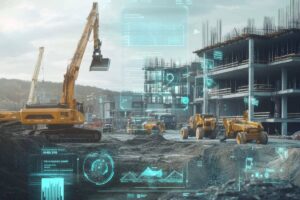

Construction projects increasingly rely on AI-powered sensor networks to improve efficiency. These intelligent sensors collect data on site conditions, worker activities, and equipment status. Machine learning algorithms analyze this data in real time, flagging issues and optimizing operations. For example, vision systems can monitor every corner of a job site continuously, detecting hazards or quality problems faster than manual inspections. AI-powered sensors also automate routine monitoring, so managers spend less time gathering information and more time making data-driven decisions.
This proactive monitoring prevents delays caused by unnoticed problems, much like how granular energy data helped a national lab halve its gas use by correcting misconfigurations in its building systems. In construction, AI Sensors empower teams to catch and fix issues early – avoiding rework, downtime, and cost overruns. The sections below explore five key types of AI-enabled sensors and their real-world impacts on construction efficiency.
Table of Contents
5 AI-Powered Sensor Technologies Enhancing Construction Efficiency
1. AI-Powered Vision Sensors for Site Monitoring and Safety
AI-powered vision systems use high-resolution cameras combined with computer vision algorithms to watch construction sites around the clock. These sensors can detect a wide range of conditions: for example, computer vision can spot workers without hardhats or safety vests, machinery operating unsafely, or tools placed incorrectly. In practice, a national construction firm installed AI-connected cameras on its sites and saw a dramatic safety improvement. The system identified nearly all unsafe acts before accidents occurred, leading to a large drop in incident rates. By automatically scanning video feeds, these sensors relieve managers of manual oversight and alert teams immediately when something is wrong.
Vision sensors can also speed up quality checks. Traditional inspections might take days; an AI camera system can review a whole structure in minutes. Using image recognition, the system flags missing bolts, misaligned parts, or cracks that deviate from the project model. One construction project used drones and cameras to capture the entire site daily, comparing real-time images to the building plans. When the AI noticed that a wall was missing a beam, crews fixed it before concrete was poured, saving weeks of rework. This continuous inspection approach cuts project delays and reduces labor hours.
Key Benefits of AI Vision Sensors:
-
Hazard Detection: Identify unsafe conditions (unsecured scaffolding, missing PPE, workers in restricted zones) instantly.
-
Compliance Monitoring: Check that safety rules are followed, issuing alerts for violations.
-
Progress Tracking: Compare actual work to plans by analyzing site images, catching schedule slips early.
-
Quality Control: Detect defects (misalignments, cracks, missing components) automatically to avoid rework.
By extending the eyes of the safety team through automation, AI vision sensors create a safer, more efficient site. They capture data constantly and let managers focus on solutions instead of paperwork.
Suggested article to read: 8 Tips For Construction Project Managers

2. AI-Powered Wearable Sensors for Worker Safety and Productivity
Wearable devices embedded with AI-powered sensors are transforming how teams monitor worker health and efficiency. Examples include smart helmets, vests, wristbands, and even footwear that collect data on vital signs, movement, and location. For instance, a smart helmet might track a worker’s heart rate, core body temperature, and head impacts. If the AI detects signs of heat stress or fatigue, it can alert the wearer and supervisors immediately. This early warning prevents heatstroke or exhaustion from halting the job. In one case, a large construction crew using wearable sensors had alerts routed to site medics, who intervened before minor injuries became serious. This kept labor forces healthy and maintained steady productivity.
Wearables also improve safety oversight in busy areas. Sensors using proximity detection can warn workers when they approach heavy machinery or fall hazards. If a worker steps into the swing radius of an excavator, an AI-based alert on their vest can trigger an immediate signal. Geofencing features on wearables ensure that workers stay within authorized zones; if someone crosses into an unsafe area, the system notifies managers. By tracking each worker’s location and activity in real time, AI algorithms can automatically record time spent on tasks, enabling more accurate productivity analysis.
Key Benefits of AI Wearables:
-
Health Monitoring: Continuously measure vitals (heart rate, temperature) to predict heat stress or fatigue.
-
Fall and Accident Alerts: Detect sudden impacts or lack of motion (possible falls) and summon help immediately.
-
Proximity Alerts: Warn workers and operators when people or equipment get too close, preventing collisions.
-
Productivity Data: Track movement and task duration to find workflow bottlenecks or balance workloads.
By embedding sensors in personal equipment, these AI systems give a granular view of workforce status. Managers gain real-time insights into site operations while protecting individual workers – which ultimately keeps projects on schedule and avoids costly injury-related stops.
3. AI-Enabled Drone Sensors for Surveying and Progress Tracking
Drones equipped with AI-powered sensors are revolutionizing site surveying and inspection. A single drone flight can cover an entire building site in minutes, capturing high-resolution images, LiDAR scans, or thermal maps. Machine learning software then processes this data to build precise 3D models of the terrain and structures. Compared to traditional ground surveys, drones are often five times faster. For example, a utility agency used drones with LiDAR to map a complex infrastructure site, finishing in days what used to take weeks. The AI stitched together aerial images to create accurate volume and progress reports automatically.
On the construction site, this capability translates to tighter schedules. Daily or weekly drone scans can be compared against the BIM model to check progress or detect deviations. If the AI finds that a section of foundation is not as deep as planned, project engineers are notified immediately. This allows on-the-spot corrections that avoid downstream delays. Drones with thermal cameras can even inspect rooftops and identify insulation gaps or heat leaks without any human climb. In one case, a contractor used an AI-analysed thermal survey after sunset to pinpoint areas needing additional insulation, cutting winter heating costs later on.

Key Benefits of AI Drone Sensors:
-
Rapid Surveying: Capture site topography and models much faster than manual methods.
-
Automated 3D Modeling: Generate accurate maps and models with AI, enabling precise volume calculations and planning.
-
Change Detection: Track week-to-week progress by comparing scans, identifying any setbacks early.
-
Safety Inspections: Reach high or dangerous spots (roofs, bridges) with thermal or visual sensors, detecting issues without risking personnel.
By combining aerial mobility with AI analysis, drones turn raw site data into actionable intelligence. This speeds up planning cycles and keeps construction timelines tight by spotting potential delays at their source.
4. AI-Integrated Environmental Sensors for Hazard Mitigation
Construction efficiency also depends on monitoring the site environment. AI-powered IoT sensor technologies can measure air quality, noise levels, vibration, and weather conditions continuously. AI algorithms analyze this stream of data to prevent hazards and improve conditions. For example, air sensors can detect elevated dust or toxic gas levels (like CO or methane) that could endanger workers. When a recent tunnel project installed a network of smart gas sensors, the AI system identified ventilation issues overnight and adjusted fans automatically. This kept air clean and allowed work to continue without interruption.
Weather sensors play a key role too. Wind and precipitation sensors feed an AI model that alerts crews if crane operation becomes unsafe or if rain might compromise freshly poured concrete. In another case, a construction team used moisture sensors in concrete mixes; AI predicted the curing rate and recommended extra heating during a cold snap. This avoided delays and prevented structural weaknesses.
Key Benefits of AI Environmental Sensors:
-
Air Quality Monitoring: Detect harmful gases or dust and trigger ventilation or evacuation before exposure limits are reached.
-
Weather Forecasting: Use on-site weather and soil sensors to adjust schedules (e.g., delay pours in high humidity) and avoid material waste.
-
Noise and Vibration Alerts: Ensure equipment stays within safe vibration limits to prevent structural issues or machine damage.
-
Energy Optimization: Track temperature and occupancy with sensors; AI can adjust HVAC systems or lighting to save power without sacrificing comfort.
With environment-focused AI sensors, teams prevent stoppages caused by weather or unsafe conditions. Maintaining a safe and stable site environment means work can continue efficiently, without unplanned downtime or remediation.
5. AI-Driven Predictive Maintenance Sensors for Equipment
Heavy machinery downtime is a major source of project delays. AI-powered maintenance sensors tackle this by continuously monitoring equipment health. Vibration, temperature, hydraulic pressure and oil quality sensors feed data into machine learning models that predict failures before they happen. For example, fleet managers often fit IoT sensors on bulldozers and cranes to log engine performance. An AI system might notice that a particular excavator’s hydraulic pressure is trending outside normal ranges and alert technicians. They can fix the issue overnight instead of suffering a costly breakdown in the middle of a critical earthmoving phase.

The efficiency gains are striking. Construction companies using predictive maintenance report up to a 70% drop in unplanned equipment downtime. This translates to projects staying on schedule and lower repair bills. One analysis even found that a building contractor saved over $100,000 in one year by replacing worn parts proactively. AI models also learn from each maintenance cycle, getting more accurate at forecasting. As a result, maintenance is scheduled only when needed, rather than on a fixed timetable, which reduces labor costs and extends machine life.
Key Benefits of AI Maintenance Sensors:
-
Failure Prediction: Identify patterns (noises, vibrations) that precede breakdowns, so repairs happen on a convenient timeline.
-
Optimized Maintenance: Schedule service based on equipment condition rather than fixed intervals, saving time and parts.
-
Fuel and Energy Monitoring: AI models analyze fuel usage data to suggest operational adjustments (like optimal engine settings or route planning) that cut fuel costs.
-
Asset Tracking: IoT sensors track location and usage of tools and vehicles, preventing loss and ensuring efficient deployment.
By keeping machinery running and well-configured, AI-driven sensor technologies remove a major bottleneck. Equipment is available when needed and works at peak efficiency, which helps the whole project stay on track.
FAQs
How do AI-powered sensors improve construction site safety and monitoring?
AI-powered sensor technologies provide continuous, automated monitoring. For example, cameras with AI analytics can flag missing safety gear or unsafe machinery operation in real time, while wearables track worker vitals and location. These alerts let site managers address hazards immediately, reducing accidents and keeping projects on schedule.
What types of AI-powered sensors are commonly used in construction?
Common types include computer vision cameras (for real-time video analysis), wearable devices (smart helmets or vests with biosensors), drone-mounted cameras (for aerial mapping and thermal imaging), environmental sensors (air quality, noise, weather), and equipment IoT sensors (engine diagnostics, vibration, fuel use). Each type feeds data into AI systems to detect issues or optimize processes.
Which problems do AI-powered sensors help solve on construction projects?
They address hazards and inefficiencies before they escalate. For instance, vision sensors catch defects or safety violations early, preventing rework and injuries. Wearables alert to fatigue or heat stress. Drones find delays in progress and quality issues. Environmental sensors avoid weather- or pollution-related stoppages. Maintenance sensors predict equipment breakdowns. Altogether, they reduce downtime, waste, and risks.
Is it true that AI-powered sensors can significantly reduce construction costs and delays?
Yes. By catching issues early and optimizing operations, AI sensors prevent costly rework and idle time. Case studies show large safety and productivity gains – for example, one company reduced safety incidents by about 78% after deploying AI camera monitoring. Predictive maintenance can cut unplanned downtime by up to 70%. These improvements translate directly into lower costs and faster project completion.
Conclusion
AI-powered sensor technologies are reshaping construction by turning passive data streams into proactive management tools. Vision cameras, wearables, drones, environmental monitors, and equipment sensors each bring unique data to the table. When these AI systems detect problems early — whether an unsafe worker behavior, a hidden material defect, a brewing weather risk, or a looming machine failure — teams can intervene before small issues become major delays. In practice, this means fewer accidents, less wasted time, and smarter use of resources.
For example, AI vision systems have reduced incidents and compliance lapses, and predictive maintenance systems have cut downtime dramatically. In sum, integrating AI with sensors boosts productivity across every phase of construction. The success of these technologies depends on using the insights wisely and not in isolation; balanced coordination ensures projects advance smoothly while maintaining safety and quality.
Resources:
OpenAsset. (2023). How to use AI in construction: 15 examples & benefits.
FlyEye. (2025). AI-Enabled Drones: The New Era of Construction Efficiency.
National Insulation Association. (2023). Leveraging artificial intelligence for real gains in construction project management efficiency, job performance, and safety.
Visionify.ai. (2021). Case study: How computer vision solutions enhanced safety at a major construction company.
For all the pictures: Freepik
Suggested article for reading:
6 Examples of Robotic Bricklaying and On‑Site Assembly in Construction
10 Government Policies for Solar Panels into New Builds in 2025
5 Ways AI is Revolutionizing Asset Tracking and Management
6 Must-know AI Tools for Construction Managers
5 Real‑World Applications of BIPV: From Facades to Canopies
10 Ways of Integrating Digital Twin Technology with Fabrication Workflows