
In the construction industry, keeping tools and heavy equipment up and running is critical for on-time project delivery and cost control. Unplanned breakdowns can halt work, leading to expensive project delays and repair bills. Traditional maintenance approaches – either reactive (fix it when it breaks) or preventive (service on a fixed schedule) – often fall short. Reactive fixes come too late, after damage is done, while fixed schedules might waste resources by servicing machines that are still in good condition.
This is where AI and telematics are making a transformative impact. By combining telematics (the remote monitoring of equipment via sensors and GPS) with artificial intelligence, construction firms can predict problems before they happen. In fact, early adopters have drastically cut down on surprise equipment failures – some reports show unplanned downtime dropping from around 30% of operating time to just 5% by switching to proactive maintenance programs. The bottom line: AI-driven predictive maintenance helps avoid costly downtime, optimize repair schedules, and extend the life of valuable construction assets.
In this article, we will explore four key ways in which AI and telematics are powering predictive maintenance for construction tools. Each section will explain one of the core mechanisms or benefits, with practical examples of how they work in real-world scenarios. These range from real-time equipment monitoring to smart analytics that schedule repairs at exactly the right time. The tone is technical yet clear and objective – aimed at training or informing professionals on how to leverage these technologies effectively. Let’s dive into the four ways AI and telematics are revolutionizing maintenance for construction equipment.
Table of Contents
4 Ways AI and Telematics Are Powering Predictive Maintenance for Construction Tools
1. Real-Time Equipment Monitoring Through Telematics
Telematics systems enable continuous real-time monitoring of construction equipment, laying the groundwork for predictive maintenance. Modern construction tools and machinery come equipped with an array of IoT sensors and GPS units that constantly collect data. This can include engine performance metrics (RPM, temperature, oil pressure), hydraulic system pressure, vibration levels, battery health, fuel consumption, and even operator behavior (such as harsh braking or overloading). All of this information is transmitted wirelessly via telematics devices to a central platform where it can be analyzed.
For example, imagine a fleet of excavators at a job site. Each excavator’s telematics unit streams data about how the machine is being used: hours of operation, the loads it’s lifting, hydraulic pressure peaks, and engine temperature trends. Without telematics, a maintenance team might only notice an issue when a warning light comes on or – worst case – when the excavator breaks down. In contrast, with real-time monitoring, the team can see subtle changes as they happen. If an excavator’s engine temperature starts running higher than normal or its hydraulic pressure spikes repeatedly, these are early warning signs. Telematics data provides an immediate alert that something is outside the usual range of operation.
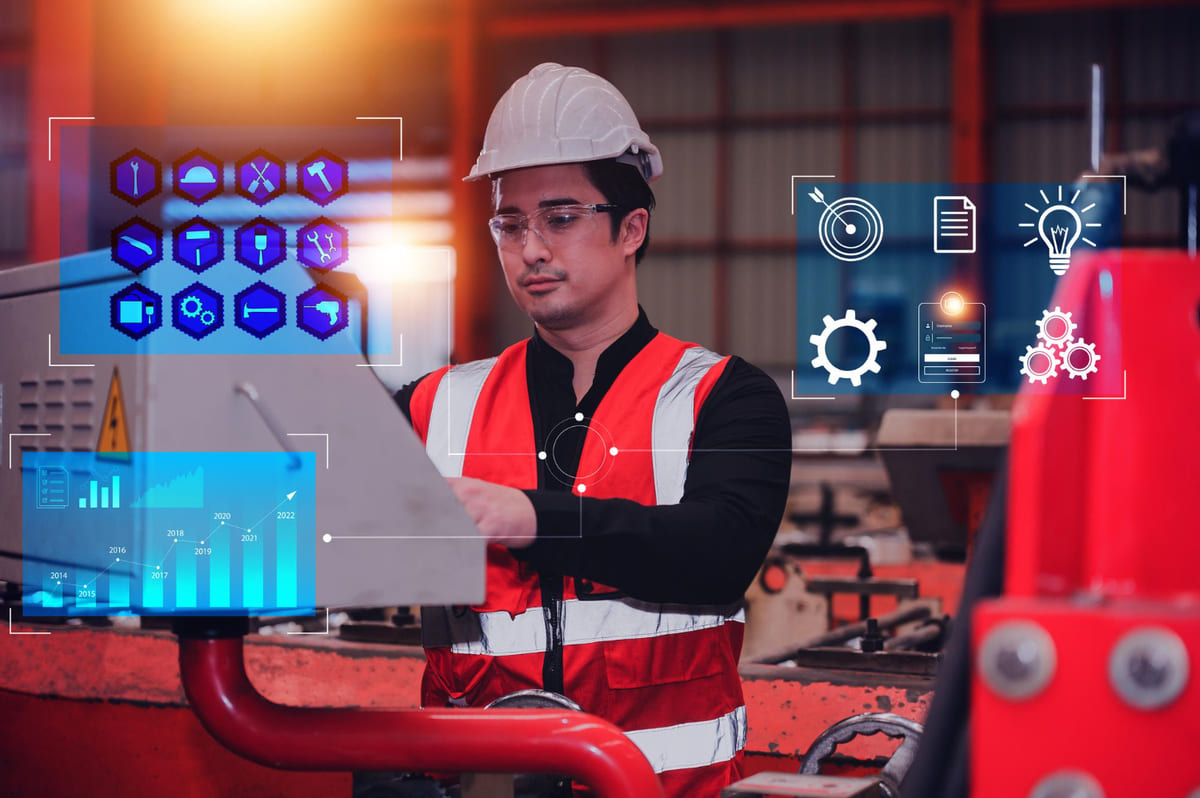
Continuous monitoring means equipment managers gain full visibility into their assets’ health at all times. Instead of relying solely on scheduled inspections or an operator noticing a problem, the telematics system itself flags abnormalities. For instance, sensors on a bulldozer might detect unusual vibrations in the undercarriage long before a mechanical failure. A concrete mixer’s telematics could report that the engine is frequently idling at high RPM – information that might indicate a tuning issue or an inefficiency that needs correcting. All this data is centralized on dashboards where maintenance teams can track the condition of multiple machines simultaneously. In essence, telematics turns every construction tool into a smart, connected device that “reports” its own status continuously.
Practical benefits: Real-time monitoring through telematics not only catches problems early but also helps establish baseline performance for each machine. By observing normal operating patterns, the system can more readily recognize when something deviates from the norm. Additionally, maintenance can be aligned with actual usage conditions. Historically, many contractors performed maintenance strictly based on metrics like engine hours or calendar time.
Now, telematics allows a more nuanced approach – for example, a generator running in a harsh, dusty environment might need its filters replaced sooner than one in a mild setting, even if their hour meters are similar. Telematics data captures these context details (like operating environment and load levels), enabling maintenance schedules that truly match the equipment’s condition and workload rather than a one-size-fits-all schedule. This real-time insight is the foundation upon which AI can build predictive models, moving maintenance from reactive guesswork to data-driven precision.
Suggested article to read: Predictive Maintenance in Buildings; Ultimate Guide 2024
2. AI-Driven Data Analysis and Failure Prediction
Collecting mountains of data via telematics is only half the story – the other half is making sense of it. This is where artificial intelligence comes into play. AI systems, especially those using machine learning, excel at analyzing large data sets to detect patterns and predict future events. In the context of predictive maintenance, AI algorithms ingest the real-time sensor data (along with historical maintenance records) and look for subtle indicators of impending problems. The goal is to forecast issues before they escalate into failures, allowing maintenance teams to intervene proactively.
Consider how a machine learning model could be trained for a fleet of cranes or loaders. Over time, the model sees many examples of normal operation versus pre-failure conditions in these machines. It learns that, say, a certain vibration frequency coupled with a gradual increase in motor amperage has historically preceded a motor bearing failure. Or it learns that when an excavator’s hydraulic pressure experiences three sharp spikes within a short period, a hose rupture often follows.
Armed with this knowledge, the AI can alert the maintenance team as soon as it detects a similar pattern emerging in the live data. In our excavator example, if the telematics feed shows multiple sudden pressure spikes in the hydraulic circuit, the AI system can flag that machine and even pinpoint the likely component at risk (such as a particular hydraulic hose). This advanced warning allows a hose replacement to be scheduled before it bursts, preventing a messy and costly downtime incident on the job site.
AI analysis isn’t limited to single parameters – it looks at combinations of factors and trends over time. For instance, a slight uptick in engine vibration might not trigger an alert on its own. But if that uptick is accompanied by increasing engine temperature and decreasing oil pressure, an AI algorithm might recognize this multi-symptom pattern as the signature of an oncoming engine failure.
It can then predict, with a certain confidence level, that the engine is likely to fail within the next 50 hours of operation unless maintenance is done. In another real-world case, construction fleet managers have used AI predictions to catch battery and brake issues on heavy trucks weeks in advance. The AI noticed anomalies in voltage patterns and brake actuator readings that humans hadn’t spotted, and it recommended targeted inspections. Those insights led to replacing batteries and brake pads before any roadside breakdown occurred.
Turning data into actionable insights: The strength of AI is that it can sift through the noise of telematics data to find meaningful signals. Modern construction equipment generates an overwhelming volume of data points every day – far more than a human analyst could manually review. AI handles this by continuously crunching the numbers in the background.
It employs techniques like anomaly detection (spotting data that looks unusual compared to normal patterns) and predictive modeling (forecasting future values or failure probabilities based on past trends). The output is typically a clear alert or recommendation. For example, the system might output: “Alert – Compressor #3 on Air Compressor Unit is showing a 85% probability of failure in the next 10 days due to abnormal vibration trends.” This kind of prediction transforms maintenance from a reactive scramble into a planned activity.
Instead of being blindsided by a breakdown, technicians get a diagnostic heads-up. Over time, these AI models become more accurate as they learn from each maintenance action and outcome (a feedback loop where the AI refines its predictions based on what fixes resolved the issue). The end result is a smart maintenance brain that continuously learns the unique behavior of each tool and predicts its needs – a true game changer for keeping construction equipment healthy.
3. Proactive Maintenance Scheduling to Minimize Downtime
One of the most immediate benefits of AI-powered predictive maintenance is the ability to schedule maintenance proactively at optimal times. Rather than sticking to rigid service intervals or waiting until something breaks, maintenance can be performed just-in-time – right when it’s needed and when it will least disrupt operations. This strategic timing dramatically reduces unplanned downtime on construction sites and keeps projects running on schedule.
How does this work in practice? Let’s say the AI system has predicted that a particular bulldozer’s fuel pump is likely to fail in the near future due to irregular pressure readings. Instead of running the bulldozer until the pump fails (which could happen in the middle of a busy workday), the maintenance team gets an alert ahead of time.
They can then plan to replace or repair the fuel pump during a period of low activity – for instance, after hours or on a weekend, or at a point in the project when that bulldozer’s task is not critical. By addressing the issue at a scheduled time, the team prevents a sudden breakdown. The bulldozer is serviced and back in operation before its absence impacts the workflow. This kind of proactive scheduling turns maintenance from an emergency fire-fighting exercise into a well-coordinated part of project planning.
Telematics and AI platforms often include automated workflow features to assist in this process. When the system detects a problem or a looming failure, it can automatically generate a maintenance work order or send a notification to the maintenance crew with details. For example, if a generator on site shows signs of an impending alternator failure, the system might send an email or app alert to the equipment manager: “Generator #5 – alternator health deteriorating, recommend service within 10 engine hours

” The manager can then coordinate to have a technician and the necessary spare part ready. In many cases, multiple maintenance tasks can be bundled together conveniently. If you know you’ll take a machine out of service tomorrow to fix that alternator, you might also perform a few other small preventive tasks (like changing filters or belts that are near due) at the same time. This streamlining of maintenance tasks means the machine will require fewer shop visits overall, increasing its productive time on site.
The reduction in surprise breakdowns has huge ripple effects. Unplanned downtime is often cited as one of the costliest problems in construction fleet management – it can lead to idle crews, project delays, missed deadlines, and sometimes penalties or overtime costs to catch up. By proactively managing maintenance, companies have seen major improvements in equipment availability.
Uptime percentages go up, meaning each machine is working and earning its keep for a greater portion of time. Projects become more predictable since equipment is less likely to suddenly be out of service. Moreover, safety risks are reduced: a controlled maintenance stop is far safer than a catastrophic failure in the field (for instance, it’s better to replace a worn crane cable in a planned manner than to have it snap unexpectedly during a critical lift).
Real-world example: A large contracting firm introduced an AI-driven maintenance scheduler for their fleet of asphalt paving machines and trucks. They found that over a season, they virtually eliminated major breakdowns during work hours. Instead, minor repairs and part replacements were handled in evening shifts. Operators noticed the difference – the machines were more reliable day to day. The company not only saved money on emergency repair bills but also reported that they could finish projects a few days earlier on average, since machinery downtime was no longer eating into their schedule buffer. This illustrates how proactive maintenance scheduling, enabled by telematics data and AI foresight, directly boosts productivity and profitability on construction projects.
4. Extending Equipment Lifespan and Reducing Maintenance Costs
AI-enhanced predictive maintenance doesn’t just keep equipment running day-to-day – it also has long-term benefits for asset longevity and cost savings. By constantly caring for each machine’s needs at just the right moments, you avoid the kind of neglect or extreme wear and tear that shortens equipment life. Over the span of months and years, this means construction tools and machinery last longer and perform more reliably, deferring the huge expense of premature replacements. Additionally, maintenance budgets are used more efficiently: money is spent fixing issues that truly need attention, and costly catastrophic failures are averted.
One big way costs are reduced is through the prevention of major breakdowns. A catastrophic failure – say an engine seizure or a broken transmission in a loader – can be incredibly expensive to repair, sometimes approaching a significant fraction of the machine’s value. These failures often also cause collateral damage; a minor component failing can cascade into damaging a major component if not caught in time. Predictive maintenance tackles this by catching the small problems before they escalate. Replacing a $100 bearing or a $500 hose at the right time might prevent a $20,000 repair down the road. Over an entire fleet of equipment, these savings add up quickly.
Maintenance teams report that with predictive analytics, they experience fewer emergency repairs. Parts can be ordered in advance (often at lower cost than rush orders) and inventory can be managed smartly – for example, if the AI predicts that a set of machines will need new cooling fans in the next quarter, those can be purchased in bulk proactively, possibly at a discount. Thus, inventory and parts management become more efficient as well, trimming down the overhead of keeping rarely used spares.
Extending the lifespan of equipment is another significant benefit. Construction machinery is capital-intensive – companies invest hundreds of thousands of dollars in heavy equipment expecting them to serve for many years. AI and telematics help ensure each unit reaches or even exceeds its expected service life. By always maintaining optimal conditions (never running too long with contaminated oil, never letting filters clog up for too long, ensuring proper tire pressures, etc.), the natural wear and fatigue on components is minimized.
For instance, consider a concrete pump that, thanks to predictive alerts, always gets its hydraulic fluid changed exactly when it starts to degrade. Its hydraulic pump and seals are never running with burnt or metal-filled fluid, so they stay in good shape much longer. The result might be that the concrete pump remains productive on site for an extra year or two beyond the usual lifecycle.

In one case study, a construction firm implementing an AI-driven maintenance system on their excavators and loaders found the equipment’s usable life went up by roughly 20%. Machines that might have been retired or overhauled after, say, 10,000 hours were now confidently operating well beyond that, because none of the internal components had suffered the kind of extreme stress that typically accumulates with reactive maintenance. This life extension translates to huge savings – you can delay buying new machines or avoid total overhauls, directly improving return on investment for each asset.
There’s also an improvement in safety and compliance intertwined with these benefits. Well-maintained tools are safer – the risk of a critical part failing during operation is much lower. This protects operators and site workers from accidents caused by equipment malfunction. For example, keeping up with predicted brake system maintenance on a large dump truck ensures it can always stop effectively, preventing dangerous incidents on site.
From a compliance standpoint, many safety regulations require equipment to be in sound working condition (for instance, OSHA standards for construction equipment). By using AI and telematics to stay ahead of maintenance, companies naturally stay in compliance with such regulations, avoiding fines and ensuring inspections go smoothly. It also creates a positive feedback loop for culture: operators who see their machines are always in top condition tend to have more trust and take better care of them, and management reinforces that safety and maintenance are high priorities.
In terms of sustainability and efficiency, predictive maintenance can contribute here as well. Equipment running in peak condition typically consumes less fuel and produces fewer emissions. Something as simple as keeping an engine tuned and air filters clean (prompted by telematics alerts) can improve fuel efficiency. Reducing breakdowns also means you’re not running backup machines or performing repeated trips for repairs, which has an environmental and cost impact. All these factors – fewer breakdowns, longer equipment life, efficient parts usage, safer operation, and even fuel savings – showcase how AI and telematics create value far beyond the maintenance department. They fundamentally change the cost structure and reliability of managing construction tools, turning maintenance from a headache expense into a strategic advantage.
FAQs
How do AI and telematics work together to enable predictive maintenance in construction?
Answer: AI and telematics complement each other by combining data collection with smart analysis. Telematics devices on construction equipment gather real-time data (like engine hours, pressures, temperatures, etc.), and AI algorithms process this information to spot patterns or anomalies. In predictive maintenance, AI looks at trends in the telematics data to predict when a component might fail or need service. In short, telematics provides the raw equipment health data, and AI uses that data to forecast maintenance needs. Together, they enable maintenance teams to fix issues before they cause a breakdown, rather than reacting after the fact.
What types of data do telematics sensors collect for predictive maintenance on construction equipment?
Answer: Telematics sensors on construction tools can collect a wide variety of data useful for maintenance. Key examples include engine metrics (such as oil pressure, coolant temperature, RPM), hydraulic system pressure, battery voltage, vibration readings from critical components, fuel usage and idle time, and even GPS location and usage hours. Some advanced telematics systems also capture error/fault codes from the machine’s onboard diagnostics. All this information is sent in real time to a central system. Predictive maintenance software then analyzes these data points to determine equipment condition and predict if something (like a filter, hose, or brake) is wearing out or behaving abnormally.
Which construction equipment benefits the most from AI-based predictive maintenance?
Answer: Virtually all heavy construction equipment can benefit, but the impact is greatest on high-value, hard-working machines where unexpected failure is costly. Examples include excavators, bulldozers, cranes, wheel loaders, and haul trucks – these machines are expensive to repair and their downtime can disrupt entire projects. AI-based predictive maintenance is very useful for such equipment because it can prevent major failures (for instance, predicting an engine or hydraulic failure before it happens). Fleet vehicles like dump trucks and concrete mixers also see big benefits, as do critical support assets like generators or pumps. In essence, any construction equipment that is integral to operations or expensive to replace will gain the most from predictive maintenance powered by AI and telematics.
Is it true that AI and telematics can completely eliminate equipment breakdowns through predictive maintenance?
Answer: Not completely – while AI and telematics greatly reduce unexpected breakdowns, they cannot guarantee to eliminate all failures. They are extremely effective at catching many issues early, which prevents the majority of catastrophic failures. However, there’s always a chance of sudden, unpredictable issues (like a freak component defect or damage from an accident) that even the best predictive system might not foresee. The goal of AI-driven predictive maintenance is to minimize breakdowns as much as possible. In practice, companies that use these tools do experience far fewer failures and significantly less downtime. So, AI and telematics won’t make equipment immortal, but they will make it much more reliable and allow maintenance teams to stay ahead of most problems.
Conclusion
In summary, the integration of AI and telematics is reshaping how construction companies maintain their tools and equipment. By enabling real-time monitoring, intelligent data analysis, proactive scheduling, and optimized care of assets, these technologies ensure that maintenance is performed predictively rather than reactively. The four key approaches we discussed – continuous condition monitoring, AI-driven failure prediction, proactive maintenance scheduling, and life-extending cost optimization – all work together to minimize downtime and maximize the value derived from each machine.
Construction firms adopting these methods are experiencing more reliable operations: machines break down far less frequently, maintenance interventions are shorter and better planned, and expensive surprises are largely eliminated. Importantly, this shift doesn’t just save money – it also improves safety for workers and keeps projects on track, benefiting everyone involved. As AI algorithms and telematics hardware continue to advance, predictive maintenance will only become more accurate and accessible, making it an essential part of modern construction management. By embracing these tools, companies can ensure their construction fleet is always ready for the job, setting the foundation for timely, efficient, and safe project delivery in the digital age.
Resources:
Association of Equipment Manufacturers (AEM). (2025). How Telematics Helps Optimize Construction Equipment Efficiency.
Jarvis Contracting. (2025). Implementing AI-Powered Predictive Maintenance for Construction Equipment Fleets and Assets.
Heavy Vehicle Inspection. (2023). Predictive Maintenance for Caterpillar Equipment with HVI Integration.
For all the pictures: Freepik
Suggested article for reading:
5 Use Cases of Telematics and IoT in Construction Tool Tracking
Top 7 Construction Tool Tracking Systems Transforming Site Efficiency in 2025
Top 7 Sensor Solutions Transforming Construction Site Safety in 2025
Top 6 IoT Use Cases in Construction Backed by Top Companies in 2025