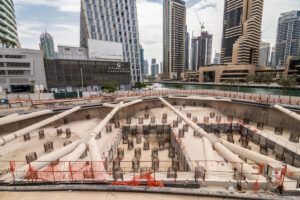

Construction estimating and bidding are the lifeblood of any project – they determine which jobs a contractor wins and whether those jobs will be profitable. Traditionally, preparing estimates and bid proposals has been a labor-intensive process prone to human error and requiring weeks of effort. In fact, contractors often win only a small fraction of the bids they submit, meaning a majority of estimating work never translates into revenue.
This high stakes, high effort environment is exactly where artificial intelligence (AI) is making a powerful impact. AI tools are now automating tedious tasks, analyzing vast data sets, and providing insights that change how construction teams estimate costs and prepare bids. The result is faster turnaround, greater accuracy, and more informed decision-making in the pre-construction phase.
In this article, we explore seven cutting-edge AI-driven tools that are transforming construction estimating and bidding right now. From automating quantity takeoffs and contract review to optimizing project schedules and finding new bidding opportunities, these examples show how AI is empowering construction professionals to work smarter. The tone here is objective and technical, with real-world examples and practical explanations of each tool’s capabilities. Let’s dive into the tools and see how they work in practice.
Table of Contents
7 AI Tools Changing Construction Estimating & Bidding Right Now
1. Togal.AI – Automated Construction Takeoffs in Seconds
One of the most time-consuming parts of cost estimating is performing quantity takeoffs from plans. Togal.AI is an AI-powered takeoff tool that dramatically speeds up this process by automatically reading and interpreting construction drawings. Instead of an estimator manually tracing over plans for hours, Togal.AI’s algorithms detect and measure building components (like walls, windows, flooring areas, etc.) within seconds. The software labels each area or object on the digital plans and calculates quantities instantly. This allows estimators to generate detailed quantity takeoffs with a few clicks, freeing them from days of repetitive measuring work.
In practice, the impact is significant. For example, Coastal Construction’s Miami team adopted Togal.AI and was able to cut down the time spent on takeoffs from roughly 50% of their workweek to just 10%. They reported saving about 14.5 hours per project plan set by using AI to handle the bulk of the measuring. Over the course of a year, those saved hours added up to an estimated 13,920 hours, which the firm equated to about $1 million in labor cost savings in that first year.
Equally important, the estimators used that reclaimed time to bid on more projects (about 10 bids per month for one office, up from a lower rate before). By automating the grunt work of takeoffs, Togal.AI enabled the team to concentrate on higher-value tasks like pricing strategies, value engineering, and subcontractor outreach – ultimately helping them win more bids and increase profit margins.
Togal.AI also improves accuracy and consistency. In Coastal’s case, the team measured that their manual takeoffs were around 97% accurate; with Togal’s AI, accuracy nudged up to about 98% with far less effort. Additionally, because it’s a cloud-based platform, multiple team members can collaborate on the same estimate simultaneously without version conflicts.
Togal.AI even introduced a ChatGPT-powered interface recently, allowing users to query and interact with the project plans through natural language. For instance, an estimator can ask the AI, “What’s the total square footage of roofing in this plan?” and get an immediate answer, or prompt it to calculate all the concrete quantities for foundations. This kind of conversational approach further streamlines estimating for those who prefer asking questions to navigating menus.
Overall, Togal.AI is changing construction estimating by turning what used to be days of plan reading and measuring into a quick, automated task. Estimators can generate fast, detailed takeoffs with confidence, then focus their energy on analyzing results and refining the bid. The tool acts like a tireless digital assistant that boosts both the speed and accuracy of the estimating process.
2. SmartBarrel – AI-Powered Time Tracking and Labor Cost Management
Accurate estimates depend on knowing how much work actually costs in the field – especially labor, which is often the hardest element to predict. SmartBarrel is an AI-enhanced tool that tackles this challenge by automating jobsite time tracking and workforce management. It combines biometric hardware with machine learning software to ensure that the labor hours logged on a project are precise and trustworthy, which in turn feeds better data back into estimating and bidding.
SmartBarrel’s system uses a jobsite device (a rugged time clock) equipped with facial recognition AI to verify each worker’s identity at clock-in and clock-out. This eliminates “buddy punching” and other forms of time fraud because the AI confirms the person is who they claim to be without needing supervisors to constantly monitor. The technology learns to recognize workers’ faces so well that no pre-enrollment of photos is required – new people can be recognized on the fly.
By removing manual timesheets and sloppy data, contractors get a real-time, accurate record of labor hours on each task. In addition, SmartBarrel’s cameras use computer vision to check for proper personal protective equipment (PPE) compliance when workers clock in, adding a safety monitoring aspect to the tool.
The immediate benefit is a dramatic reduction in administrative work and errors. One SmartBarrel customer reported that after implementing the system, they reduced their payroll processing time by a factor of 8 (what used to take days each week was done in a few hours) and eliminated most timekeeping errors and fraudulent entries.
This not only saves office staff time, but also gives project managers up-to-date insight into labor costs as the project progresses. With clean, trustworthy labor data flowing in, companies can compare actual labor hours versus the estimate on an ongoing basis. If certain activities are consistently taking longer than estimated, that information can be captured and used to improve future bids. Conversely, if productivity is better than expected, that might inform more competitive pricing on the next job.
Beyond the numbers, SmartBarrel’s approach also improves field morale and accountability – workers know their attendance is being recorded accurately and fairly, and managers don’t have to chase down timesheets or dispute hours. All of the time clock data syncs automatically with popular construction project management and accounting systems (like Procore, CMiC, or Sage), so there’s no double entry.
In the context of estimating and bidding, SmartBarrel serves as an AI-driven feedback loop. It ensures the job costing data (especially labor costs) is solid, which in turn lets estimators build more realistic budgets and unit rates for future projects. By tightening the link between field performance and estimating, AI tools like SmartBarrel are helping contractors bid with greater confidence in their numbers.

3. SubBase – Automated Invoice Reconciliation and Cost Tracking
While bidding a job, contractors do their best to anticipate material and equipment costs, but managing those costs during construction is just as important to overall project success. SubBase is an AI-driven tool focused on the procurement and accounting side of construction, specifically automating the invoice reconciliation process for materials and supplies. By streamlining this traditionally tedious task, SubBase helps contractors keep their cost data accurate and up-to-date, which feeds back into better estimating and budgeting practices.
For many specialty trade contractors (and general contractors managing their subcontractors’ payments), the workflow of matching purchase orders to delivery tickets and invoices is a paperwork nightmare. A purchasing manager might spend hours each week cross-checking that what was ordered matches what was delivered and billed. SubBase’s platform changes this by providing a central place to manage all those documents and using AI to do the matching and checking automatically.
Users simply upload or forward their POs, supplier invoices, and delivery documents into the system. The SubBase AI then extracts key data (like item quantities, prices, dates, PO numbers) and compares across the documents. Inconsistencies – say an invoice charging for 100 units when the PO was for 90, or a missing delivery ticket – are flagged for review. If everything matches, the invoice can be approved with one click.
The time savings here are significant. What might take a person 3–5 minutes of checking per invoice, the AI can do in about 20 seconds, and it doesn’t get tired or make arithmetic mistakes. For a busy contractor processing hundreds of material invoices, this translates to many hours freed each month.
One of the biggest advantages is speed: project cost records stay current almost in real-time, rather than lagging weeks behind while paperwork piles up. This means project managers always have an accurate picture of committed costs versus the estimate. If certain material line items are trending over budget, they can be caught and addressed early (for example, by finding a cheaper supplier for remaining materials or adjusting usage on site).
SubBase also integrates with accounting systems like QuickBooks and construction ERP software, so once an invoice is reconciled it can automatically update job cost reports and ledgers. By removing manual data entry and human error, the final cost data for a project becomes more reliable. When it’s time to bid the next project, historical cost libraries (unit costs, production rates, etc.) drawn from these actuals are trustworthy. AI tools are changing construction estimating not only by helping create estimates, but by ensuring the feedback loop of actual costs is accurate. In summary, SubBase’s AI saves contractors valuable administrative time and catches costly discrepancies, which ultimately leads to more predictable project costs and sharper bidding strategies.
4. Document Crunch – AI Contract Review and Risk Analysis
A successful bid is not just about getting the numbers right – it’s also about understanding the contract terms and project requirements hidden in the documentation. Document Crunch is an AI tool that assists construction teams by rapidly reviewing contracts, specifications, and other project documents to identify critical items and potential risks. Think of it as an automated contract assistant that highlights the “fine print” that could make or break a job, ensuring nothing important is overlooked when putting a bid together.
Construction contracts can easily run hundreds of pages and are full of legal and technical language. Within those pages might be a clause that, for example, requires working night shifts (affecting labor costs), a stringent penalty for missing deadlines (schedule risk), or a unique insurance requirement (added cost). Traditionally, contractors rely on experienced in-house counsel or project managers to comb through contracts and flag such issues – a slow and sometimes error-prone process. Document Crunch uses natural language processing (NLP) algorithms trained on construction documents to do this parsing automatically.
A user uploads a contract or spec document to the platform, and the AI scans through it in minutes, calling out key sections like indemnities, change order processes, payment terms, liquidated damages, differing site conditions, and so on. It doesn’t just flag the paragraphs; it provides a plain-language summary or “insight” for each, so that non-lawyers can understand the implications. For example, it might highlight a clause about “No damage for delay” and explain that this clause means the contractor cannot recover costs if the project is delayed through no fault of their own – a significant risk to be aware of when bidding.
By translating dense legalese into a practical checklist or playbook, Document Crunch allows estimators and project teams to account for all requirements and risks in their bid proposal. If the contract says the contractor must maintain a full-time safety manager on site, the estimator can ensure that cost is in the bid.
If there’s a risk-shifting clause, management might decide to add a contingency or clarify something with the owner before finalizing the price. Essentially, the AI tool makes the contract review process much faster and more thorough. A task that might have taken days of back-and-forth between the preconstruction team and legal advisors can now be done in a matter of hours, with the AI never getting tired or distracted.
This doesn’t eliminate the need for human expertise – project lawyers and managers still review the AI’s findings – but it augments the team’s capability by catching details that might be missed and doing it in a fraction of the time. By managing contract risk proactively at the bidding stage, contractors can avoid costly surprises later (like unbudgeted liability or scope gaps) that might erode the project’s profitability. In summary, Document Crunch leverages AI to give construction estimators a clearer view of the contract landscape they are entering, enabling smarter bids that take into account not just the cost of materials and labor, but also the cost of contractual obligations and risks.
5. Buildots – AI Jobsite Monitoring for Real-Time Progress Tracking
Even the best estimate and bid can be undermined by what happens on the jobsite. Unforeseen delays, out-of-sequence work, or mistakes in installation can drive up costs and eat into the contractor’s bid margin. Buildots addresses this problem by using AI and computer vision to continuously monitor construction progress and compare it to the plan. It’s like having an ever-vigilant site supervisor that documents everything and flags issues as soon as they arise, ensuring projects stay on schedule and budget – and giving feedback that can improve future estimating.
Buildots works by equipping personnel (often site managers or engineers) with 360-degree cameras, typically mounted on their hardhats. As they walk the site, the cameras capture a detailed visual record of each space. The Buildots AI then processes these images and maps them against the project’s BIM model or schedule. It can recognize installed elements (for example, it knows what ductwork or piping should look like and where it should be according to the plans) and check if they are in place correctly. By doing this daily or multiple times a week, Buildots creates a real-time digital twin of the construction progress.
The system will automatically highlight discrepancies or delays. For instance, if the schedule says the framing on Level 3 should be 100% complete by now but the images show only 70% installed, Buildots will alert the team that framing is behind schedule. Or if the plans call for a certain type of lighting fixture and the AI sees a different model installed, it flags a potential mistake or change. These insights are delivered through a dashboard that project managers and executives can review, complete with visuals pinpointing each issue’s location and nature.

By catching deviations early, the project team can respond before a small issue becomes a big problem. They might reschedule a crew to get a task back on track, or rectify an installation error before it requires expensive rework. From a bidding and estimating perspective, Buildots provides a wealth of historical performance data. Over time, a contractor can analyze this data to see patterns – for example, identifying which activities frequently cause delays or which trades have productivity issues. This knowledge allows estimators to adjust their future bids, perhaps allocating more time or contingency for certain tasks known to be problematic, or conversely, gaining confidence to tighten a bid where the data shows consistent efficiency.
In essence, Buildots uses AI to create a feedback loop between the project execution and the estimating department. It ensures that on any ongoing job, the work is aligned with what was bid, reducing cost overruns. And after the job, the detailed records of what actually happened can inform the next estimate. Additionally, having such an accurate progress record can help with more immediate financial aspects like timely billing (by proving percent-complete) and managing client expectations. AI tools like Buildots are changing the construction landscape by bringing the kind of real-time data analytics common in manufacturing onto the dynamic, ever-changing construction site – making projects more predictable and bids more data-driven.
6. ALICE Technologies – AI for Optimizing Schedules and Construction Planning
Large construction projects come with complex schedules and enormous risks. A single delay or inefficient sequence can cost millions. ALICE Technologies offers an AI-based construction simulation and scheduling tool that helps contractors not only estimate project timelines and costs more accurately during the bid, but also continuously optimize and de-risk those plans. ALICE (which stands for Artificial Intelligence Construction Engineering) essentially allows you to ask “What if…?” on a massive scale, generating and evaluating countless scenarios to find the best path for building a project.
At its core, ALICE takes in a project’s data – either a BIM model or a detailed project schedule with all the tasks, logic, and resources – and then uses AI algorithms to explore different ways the project could be built. It considers various combinations of construction sequences, crew allocations, and methods (for example, what if we pour the concrete in a different order, or use two cranes instead of one?).
While a human planner might sketch out a handful of alternatives, ALICE can simulate thousands or even millions of scenarios by tweaking parameters and constraints, all much faster than manual methods. It then evaluates these scenarios against objectives like minimum project duration, lowest cost, or least risk, and presents the top options to the team.
The value of this during bidding is huge: contractors can find more efficient ways to execute the project that they might not have otherwise considered, giving them a competitive edge. For instance, a general contractor bidding on a high-rise construction could use ALICE to identify a sequence that finishes the project 10% faster than a traditional schedule – they could then bid with a shorter schedule (a selling point to the client) or simply enjoy reduced overhead costs if they win. ALICE can also highlight risk areas. If nearly all scenarios show a particular phase as a bottleneck, the contractor knows where to focus contingency plans or alternative approaches.
There are real-world examples of ALICE’s impact. In one case, a construction team faced an unforeseen delay of almost 30 days on a major project (due to supply chain issues). A one-month delay would have normally meant heavy financial losses and penalties. By using ALICE, the team swiftly ran recovery scenarios and found a solution (adding targeted overtime for certain crews for a short period) that allowed them to mitigate the delay entirely.
Essentially, ALICE helped them recapture those 30 days, which translated to protecting roughly $30+ million in potential revenue that would have been lost. In other projects, ALICE has demonstrated an ability to reduce project durations by around 15–20% and cut certain costs (labor, equipment rental) by around 10–15% through optimized planning. These are not theoretical gains – they are realized through smarter sequencing and resource use that the AI uncovers.
By integrating with cost estimates, ALICE also ensures that any schedule it proposes is resource-loaded with costs, giving estimators a very detailed picture of how schedule changes affect the bottom line. During bidding, having this level of insight means fewer contingencies and guesswork, because the team has effectively “seen the future” of the project through simulation.
Of course, human judgement is still crucial – the planning team guides ALICE with constraints and chooses among its suggestions – but the heavy lifting of crunching the permutations is handled by AI. ALICE Technologies is changing construction estimating and bidding by making the project planning process data-driven and proactive. Instead of reacting to delays and overruns after the fact, contractors can now anticipate and avoid them from the outset, leading to bids that are both more competitive and more reliable.
7. Mercator AI – Predictive Market Intelligence for Finding Projects
Winning more bids often starts with knowing the right opportunities to pursue. Mercator AI is a tool that uses artificial intelligence to give contractors a strategic advantage in business development and pre-bid planning. It sifts through vast amounts of public data and industry information to detect early signs of new construction projects and provide actionable leads, helping companies get in position to bid on projects as soon as they’re coming down the pipeline.
In the public project arena, information is often available in scattered places: government procurement portals, public meeting notes, environmental permit filings, etc. Manually monitoring all these sources is impractical, especially at a national or global scale. Mercator’s platform automates this research by continuously crawling and analyzing such data. For example, it might scan government databases to identify when an agency posts a request for qualifications (RFQ) or when budgets are approved for upcoming infrastructure work. It uses AI to extract key details like project type, size, location, and likely stakeholders. Mercator also keeps tabs on which contractors are getting awarded jobs and which architects or engineers are involved, building a network map of who’s doing what in the industry.

All this information is presented to users in a dashboard where they can filter and search for the types of projects they’re interested in. Let’s say a concrete subcontractor in California is looking for more work – Mercator could alert them when a new city hall project is in planning in their region and even tell them which general contractor won a preliminary contract, so they know whom to approach for subcontracting opportunities.
In the private sector, Mercator might pick up on early-stage indicators like developer land acquisitions or zoning change proposals that hint at a forthcoming construction project. The AI essentially acts as an early warning system for project opportunities, often finding signals weeks or months before traditional bid invitations are published.
For contractors and estimators, this is a game-changer. It means they can be proactive in building relationships and learning about the project requirements ahead of the formal bidding process. Early intel allows more time to gather pricing from subs, understand project risks, and even influence specs or negotiate terms in some cases.
It also helps firms be selective – by having a fuller view of the market, they can choose to chase the projects that best fit their strengths and workload, rather than scrambling for whatever comes last-minute. Moreover, Mercator’s analysis of industry trends can guide strategic decisions, like identifying growing sectors or regions so companies can tailor their estimating teams or partnerships accordingly.
In summary, Mercator AI is changing the front end of the bidding process by leveraging AI to turn data into actionable intelligence. It saves countless hours that would be spent on business development research and ensures that no opportunity slips through the cracks unnoticed. By knowing where to focus their estimating efforts and having more lead time, contractors can improve their bid hit rate and invest their energy in the most promising prospects. It’s a great example of AI expanding the capabilities of construction professionals – not by doing the core work of building or even estimating, but by equipping companies with better information to drive their pre-construction strategy.
FAQs
How are AI tools improving construction estimating and bidding?
AI tools are improving construction estimating and bidding by automating tedious tasks and providing data-driven insights. They can perform quantity takeoffs, cost calculations, and risk analysis much faster than humans, which speeds up the estimating process dramatically. For example, AI algorithms can extract quantities from drawings or BIM models in seconds and pull current pricing data, giving estimators instant cost breakdowns. AI also learns from historical project data – it can analyze past estimates versus actual outcomes to improve accuracy on new bids.
Which AI tools are commonly used for construction estimating and bidding?
There are several AI-powered tools making an impact in construction estimating and bidding today. On the estimating side, popular options include AI-driven takeoff software like Togal.AI (for automating plan measurements) and Stack or PlanSwift with AI add-ons. For cost estimating and management, platforms like ProEst and ConstructConnect are integrating AI to refine estimates and subcontractor pricing. In bidding and preconstruction planning, tools such as ALICE Technologies assist with AI-based schedule optimization, and BidBoard/Downtobid use AI to streamline bid invitations and subcontractor management.
Is it true that AI will replace human estimators in construction?
No, AI is not going to replace human estimators in construction – rather, it augments their capabilities. AI tools excel at number-crunching, pattern recognition, and handling repetitive tasks, but they lack the nuanced judgement and experience that human professionals bring. Construction projects have many variables and often need creative thinking to manage unique risks or client preferences. Human estimators understand context, build relationships with clients and subcontractors, and make judgement calls that AI cannot fully replicate.
What are the limitations of using AI in construction estimating and bidding?
While AI offers many benefits, there are a few limitations and challenges to be aware of in construction estimating and bidding. First, AI systems depend on data quality – if the project data or historical data fed into the tool is incomplete or inaccurate, the outputs (estimates or analysis) will also be unreliable. This “garbage in, garbage out” issue means firms must maintain good data practices. Second, AI tools may not handle unusual project scenarios well; they are trained on typical patterns, so a very unique or complex project might still require extensive human oversight. Third, the recommendations from AI are only as good as the assumptions built into them.
Conclusion
AI technologies are rapidly becoming indispensable in construction estimating and bidding. The seven tools discussed above illustrate how different facets of the pre-construction process can be optimized and enhanced by artificial intelligence – from ultra-fast quantity takeoffs and contract analysis to smarter scheduling and early project intel. The common thread is that AI takes over the heavy lifting of data-crunching and pattern recognition, allowing human professionals to focus on decision-making, strategy, and expertise. Estimators and project managers are not replaced by these tools; instead, they are empowered by insights and automation that make their jobs easier and outcomes more reliable.
Importantly, companies adopting these AI solutions are seeing tangible benefits today: significant time savings, higher bid throughput, reduced errors, and better alignment between estimated and actual performance. Bids can be turned around in days instead of weeks, and with greater confidence in their accuracy. Overruns and surprises on projects are mitigated because potential issues are identified early – whether by analyzing contract fine print or monitoring job progress with computer vision. Additionally, AI helps firms be more competitive in a tight market, whether by lowering their costs through efficiency or by enabling them to pursue more opportunities.
It’s worth noting that successful use of AI in construction still relies on human oversight and quality data. As the saying goes, “garbage in, garbage out” – the insights are only as good as the information provided and the guidance from experienced professionals. Challenges like data integration, training staff to trust and use the tools, and maintaining data security are all part of the journey.
However, the trajectory is clear: AI tools are changing construction for the better, especially in the crucial realms of estimating and bidding where precision and productivity directly impact the bottom line. Contractors who leverage these technologies are turning what was once an exhausting numbers game into a more streamlined, informed, and strategic process – and gaining an edge in the process.
Resources:
Autodesk. (2025). Design and Bid Intelligently with AI. Autodesk University.
Kassalen, B. (2025). How AI can be used in construction bidding, negotiation. Construction Dive.
Tcharnaia, Y. (2025). 7 Top AI Tools for Construction in 2025. SmartBarrel Blog.
Togal.AI. (2024). Coastal Construction’s Miami Office Saves a Total of ~$1 Million in First Year Using Togal.AI (Case Study).
ALICE Technologies. (n.d.). $32M Saved: Data Center Project Overcomes 29-Day Delay with ALICE (Case Study).
Document Crunch. (2023). How AI Tools Are Transforming Construction Contracts and Risk Management.
Downtobid. (2025). AI Construction Bidding Software for GCs & Subs.
For all the pictures: Freepik
Suggested article for reading:
7 Essential Environmental Sensors Every Construction Site Needs in 2026 (AQ, Dust, Noise, Vibration)
6 Sensor Data KPIs to Track for Construction-Phase Carbon Reduction
5 Steps to Integrate Environmental Sensors with BIM for Live Site Monitoring
11 Use Cases for Drones + Environmental Sensors on Construction Sites (Dust Mapping, Emissions, Surveying)
11 Environmental Sensor Regulations Construction Firms Must Follow in 2026