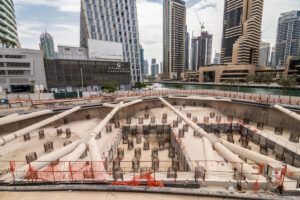

In the construction industry, specialized ESG software is becoming essential for measuring sustainability and compliance. The built environment contributes nearly 40% of global greenhouse gas emissions and a significant share of resource use, so construction firms face increasing pressure to improve their environmental and social performance. By 2026, new regulations (from California’s climate disclosure laws to the EU’s sustainability directives) are raising the bar for reporting on ESG metrics.
This means companies must gather accurate data on everything from carbon footprints to worker safety. A robust Construction ESG Software platform helps centralize this data and turn it into actionable insights. For example, without proper tracking, companies may be unaware of inefficiencies or risks – similar to how one facility unknowingly heated and cooled empty buildings at night until energy data revealed the issue. To avoid such gaps, here are 10 key metrics that construction ESG software must track by 2026, with practical explanations for each.
Table of Contents
10 Metrics Your Construction ESG Software Must Track in 2026
1. Scope 1 Direct Emissions (On-Site Fuel Use)
Scope 1 emissions are the greenhouse gases released from sources that a company owns or controls directly on the construction site. This includes exhaust from heavy machinery, generators, company-owned vehicles, and any fuel burned for heating or processes. Tracking Scope 1 emissions is critical because it quantifies the immediate environmental impact of site operations. Your ESG software should capture data on fuel consumption (diesel, gasoline, natural gas, etc.) and refrigerant losses to calculate these emissions in CO₂-equivalent terms. Accurate tracking of Scope 1 helps construction firms identify inefficiencies – for instance, excessive idling of equipment or outdated machinery with poor fuel efficiency.
By monitoring this metric, companies can implement targeted measures such as preventive maintenance or switching to lower-carbon fuels. In addition to environmental benefits, reducing Scope 1 emissions often translates to cost savings on fuel. With climate regulations tightening, direct emissions data is increasingly required in sustainability reports. For example, California’s Climate Accountability law will mandate large companies to report their direct (Scope 1) emissions by 2026, so having this data ready is a must.
In practice, a construction ESG platform might generate a monthly report of on-site fuel use and emissions, flagging projects with unusually high fuel consumption. This empowers project managers to investigate and take action – whether it’s optimizing equipment use or adopting cleaner technologies – ultimately shrinking the project’s carbon footprint at its source.
2. Scope 2 Indirect Emissions (Purchased Energy)
Scope 2 emissions cover the indirect greenhouse gases from the electricity, heat, or steam that a company purchases and uses. In construction, this often means emissions from the power drawn from the grid to run site offices, lighting, tower cranes, and electric equipment. Although these emissions occur off-site at power plants, they are attributed to the company’s activities. Tracking Scope 2 is vital for understanding your project’s total carbon impact.
A good ESG software will integrate utility data (kWh of electricity consumed, for example) and apply appropriate emission factors for the region’s energy grid. By monitoring Scope 2, companies can see how energy-efficient their operations are and identify opportunities to cut consumption or source greener power. For instance, if a construction site’s temporary offices and lighting systems are using large amounts of electricity, the software might highlight this usage in carbon terms. The team could then take action such as installing LED lighting, improving insulation in site trailers, or even using portable renewable energy generators.
Many firms also choose to purchase renewable energy credits or install solar panels on-site to offset or reduce their Scope 2 emissions. The importance of tracking this metric is underscored by stakeholder expectations: the majority of large companies now disclose their Scope 1 and 2 emissions – nearly 90% of S&P 500 firms do so – reflecting how standard this practice has become. By 2026, transparent reporting of Scope 2 will not only aid regulatory compliance but also demonstrate a commitment to energy efficiency. In short, monitoring Scope 2 emissions allows construction companies to manage their electricity use smarter, lower their indirect carbon footprint, and save on energy costs while meeting sustainability goals.
Suggested article to read:
3. Scope 3 Emissions (Value Chain Impact)
Scope 3 emissions encompass all other indirect emissions that occur in a construction company’s value chain, outside of the direct operations. These are often the largest share of a project’s carbon footprint and also the most challenging to measure. Scope 3 includes upstream impacts like the manufacturing of building materials (cement, steel, etc.), transportation of materials to the site, employee commuting, and equipment manufacturing. It also includes downstream impacts such as emissions from the building’s use phase (energy consumed by the building over its lifetime) and end-of-life demolition and waste disposal.
Because construction relies on energy-intensive materials and complex supply chains, Scope 3 emissions can account for a substantial 80–90% of a project’s total greenhouse gas impact. Therefore, any comprehensive Construction ESG Software must be able to track and estimate Scope 3 emissions. This involves gathering data from suppliers (for example, the embodied carbon in concrete or steel from Environmental Product Declarations) and using industry emission factors for activities like freight transport.
Tracking Scope 3 is becoming increasingly important due to new reporting standards. For example, the EU’s Corporate Sustainability Reporting Directive (CSRD) and other frameworks are pushing companies to disclose supply-chain emissions, and California’s climate regulations will require Scope 3 reporting in the near future (by 2027). By 2026, construction firms need to be actively managing this data. Although collecting Scope 3 information can be complex, the payoff is significant: it helps identify “hidden” carbon hotspots and opportunities to collaborate with suppliers on cleaner materials or methods.
Real-world example: a project team in Sweden assessed its Scope 3 emissions and found that using reclaimed structural elements significantly cut embodied carbon. They salvaged 300 square meters of concrete slabs from a demolition site and transported them on biogas-fueled trucks, resulting in an estimated 30-ton reduction in CO₂ emissions. This kind of insight – achievable only by analyzing value chain data – showcases how tracking Scope 3 can drive innovative practices like material reuse, ultimately shrinking the overall carbon footprint of construction.

4. Energy Consumption and Efficiency
Beyond emissions accounting, it’s important for ESG software to track the overall energy consumption of construction operations. This metric measures how much energy is used on site and in company facilities, covering electricity, fuel, and even renewable energy generated on-site. Monitoring energy use in real time provides a basis for improving efficiency and cutting waste. For construction projects, energy consumption can come from many sources: site lighting, electric tools, tower cranes, ventilation in enclosed work areas, and diesel generators, to name a few.
By tracking energy usage (in kilowatt-hours of electricity, liters or gallons of fuel, etc.), the software helps managers understand where energy is going and how effectively it’s being used. An energy intensity metric (such as kWh per square meter of construction or per unit of output) can be especially useful to benchmark efficiency across projects. Why it matters: Reducing energy waste not only lowers emissions and costs, but also can reveal operational issues. A striking example comes from building facilities management: the Lawrence Berkeley National Laboratory used a data platform to monitor energy in 15-minute intervals across dozens of its buildings.
In doing so, the team discovered that an HVAC system was running heating and cooling overnight in vacant buildings. By correcting this scheduling error, they cut those buildings’ natural gas use by about 50% in just two months. This illustrates how detailed energy tracking can uncover hidden inefficiencies. On construction sites, similar monitoring might reveal, for instance, that lighting is left on during daylight or equipment is running idle during breaks. Armed with this information, teams can take simple actions like adjusting timers, upgrading to more efficient equipment, or improving work schedules to save energy.
Moreover, demonstrating strong energy management is often part of green building certifications and ESG ratings. In summary, an ESG software platform must provide clear visibility into energy consumption patterns so that construction companies can optimize their operations – saving energy, reducing greenhouse gases, and cutting operational costs all at once.
5. Water Usage and Conservation
Water is an increasingly critical resource to track in construction. The industry is a significant consumer of freshwater, from mixing concrete to suppressing dust and maintaining landscaping on project sites. In fact, buildings and construction account for roughly 15% of global freshwater use, indicating how impactful this sector is on water resources. By using ESG software to monitor water usage, companies can identify opportunities to conserve water and reduce strain on local supplies.
Key water metrics might include total water consumed on a project (in cubic meters or gallons), sources of water (municipal, groundwater, or recycled), and water intensity (such as liters per square meter of construction). Tracking these details helps project managers spot inefficiencies – for example, excessive use of potable water for tasks that could use non-potable or recycled water.
Practical scenario: Suppose a construction site logs high water consumption due to concrete curing and dust control. With data in hand, the team could implement measures like reusing water from onsite sedimentation ponds for dust suppression, collecting rainwater for use in concrete mixing, or using admixtures that reduce the curing water needed. Some companies have even started using advanced curing techniques (like curing compounds or moisture-retaining covers) that significantly cut down water usage for concrete works. By tracking water metrics over time, the ESG software can verify how effective these measures are – for instance, it might show a 20% drop in water drawn from the hydrant after recycling systems were introduced.
Besides conserving resources, reducing water use often saves money on water bills and pumping costs. It also prepares companies for a future where regulators and clients may require water footprint reporting for projects, especially in water-stressed regions. In summary, monitoring water usage and implementing conservation strategies is a key metric not only for sustainability – mitigating the construction industry’s water problem – but also for operational resilience in the face of growing global water scarcity.

6. Waste Generation and Recycling
Construction and demolition (C&D) waste is one of the largest waste streams in many regions, so tracking waste metrics is vital for any ESG initiative. This metric covers the amount of waste generated on a construction site and how much of it is diverted from landfills through reuse or recycling. Effective waste tracking in ESG software typically involves logging each type of waste (wood, concrete rubble, metal scrap, packaging, etc.), measuring quantities (in tons or cubic yards), and recording the disposal method (landfill, recycled, salvaged, etc.).
By quantifying waste, construction companies gain insight into their efficiency in using materials and can identify opportunities to reduce waste at the source. Importance: Excessive waste not only indicates lost resources (materials paid for but not used efficiently) but also contributes to environmental burdens – landfills, pollution, and embedded carbon emissions. Many project owners now set waste diversion targets (for example, “at least 75% of construction waste by weight will be recycled”) as part of sustainability goals. ESG software can track progress toward these targets in real time.
Example: A leading contractor in New Zealand conducted a waste management trial on a major project by setting up dedicated sorting bins on site and training crews to separate materials. The ESG metrics showed that over 90% of the construction waste from that project was successfully diverted away from landfill. This high diversion rate not only benefited the environment (since C&D waste can make up half of all landfill volume in some areas) but also reduced disposal costs by about 40%. The data highlighted which waste categories were most significant, enabling the company to adjust procurement and site practices to prevent those wastes in the first place (such as optimizing cut lengths for lumber and reusing formwork).
This case demonstrates that tracking waste metrics drives action: by knowing exactly how much waste is produced and recycled, construction teams can implement circular economy practices, save on hauling and landfill fees, and even find opportunities to repurpose materials. In short, a construction ESG platform must diligently track waste generation and recycling rates so that companies can minimize waste, cut costs, and meet the increasingly stringent waste-reduction goals set by clients and regulations.
7. Life Cycle Assessment (LCA) and Embodied Carbon
Life Cycle Assessment metrics refer to the evaluation of a project’s environmental impact across its entire life cycle – from raw material extraction and manufacturing (embodied impacts) through construction, operation, and eventual demolition. In the context of construction ESG, LCA is often used to quantify embodied carbon, which is the total greenhouse gas emissions associated with building materials and construction processes. Tracking LCA results is becoming non-negotiable as we approach 2026, especially in many forward-thinking markets. For example, several countries in Europe now legally require whole-life carbon reporting for new buildings.
An ESG software tool equipped with LCA capabilities can help construction companies calculate metrics like the Global Warming Potential (CO₂-equivalent emissions) per square meter of a building over its life cycle, or the carbon footprint per ton of a specific material used. These metrics allow teams to compare different design or material options from a sustainability perspective.
Why it matters: Traditionally, construction focused on operational energy, but now the embodied emissions in materials like cement, steel, and insulation can be as large or larger over a building’s life. By integrating LCA metrics, companies can identify carbon “hotspots” – for instance, discovering that a certain concrete mix or facade material is responsible for an outsized portion of the project’s carbon footprint. With that knowledge, alternatives can be explored, such as using supplementary cementitious materials (like fly ash or slag) to lower concrete’s carbon intensity, or choosing recycled steel and low-carbon products with Environmental Product Declarations.
ESG software makes this process easier by providing databases of material carbon factors and tracking the project’s cumulative impacts. The benefits are twofold: better environmental performance and compliance with emerging standards.
For example, the EU’s upcoming building regulations (starting 2026) mandate reporting of whole-building lifecycle carbon – a metric that can only be produced through LCA. Additionally, LCA data enhances credibility when setting science-based carbon targets or aiming for green certifications. In practice, integrating LCA early in project planning can lead to innovative solutions that dramatically reduce emissions. Construction ESG Software should thus be capable of tracking and reporting life-cycle metrics, ensuring that by 2026 organizations not only know their operational carbon footprint but also the embodied carbon in their projects – and can take action to reduce it through informed design and material choices.
8. Safety Incident Rates (Injuries and Accidents)
Environmental metrics are only part of ESG – the “S” (social) aspect is equally crucial, and nowhere is this more evident in construction than in worker health and safety. Every construction ESG software system should track key safety performance metrics, foremost among them the safety incident rates. This typically includes the Total Recordable Incident Rate (TRIR) – the number of work-related injuries per a standard number of hours worked (usually per 200,000 hours).
It may also include the Lost Time Injury Frequency Rate (LTIFR), which focuses on injuries that result in time off work, as well as fatality rates or other reportable incident statistics. Monitoring these metrics is vital for protecting workers and also for demonstrating a company’s social responsibility performance. How it works: The software would record safety incidents reported on each project, categorize them by severity, and calculate the rates relative to hours worked.
By analyzing incident rates, companies can identify trends – for example, if a particular project or subcontractor has a higher injury rate than others, or if certain times of year see spikes in accidents. Early warning signs can prompt proactive interventions such as additional training, improved protective equipment, or changes in work procedures. High incident rates not only harm employees but also affect productivity and can lead to legal penalties and higher insurance costs. Conversely, a declining incident rate over time is a strong indicator of effective safety management.
Case in point: One construction company implemented a digital safety management system through their ESG platform and saw their TRIR drop dramatically within a year – from about 4.6 incidents per 200k hours to below 1.0. This improvement was attributed to better tracking of near-misses and hazards, streamlined reporting of issues, and quicker corrective actions enabled by the software’s real-time data. Workers became more engaged in reporting unsafe conditions when they saw issues being addressed promptly.
This example highlights that when ESG tools are used to diligently track safety metrics, the result can be a markedly safer work environment. By 2026, many clients and regulatory bodies will expect construction firms to provide these safety performance indicators in ESG reports. Thus, tracking safety incident rates isn’t just about numbers – it reflects a company’s commitment to its workforce’s well-being and helps drive continuous improvement in jobsite safety practices.
9. Workforce Diversity and Inclusion Metrics
Beyond safety, broader workforce metrics like diversity and inclusion are increasingly considered in ESG evaluations of construction companies. The construction sector has historically been less diverse than other industries, so tracking progress in this area is essential for the social dimension of ESG. Key metrics could include the percentage of employees from various underrepresented groups (for example, the percentage of women in the workforce or in management roles, and similarly the percentages for other demographic groups such as racial/ethnic minorities).
It might also include metrics like the ratio of local hires on projects, or the number of training and apprenticeship opportunities provided to underrepresented communities. A modern Construction ESG Software platform can help aggregate HR data to produce these insights. For instance, the software could report that women comprise a certain percentage of your total staff and how that number has changed year-over-year. Why track this? Firstly, diverse teams have been shown to foster innovation and better problem-solving, which can benefit project outcomes. Secondly, many clients and government contracts now emphasize inclusion; some require reporting of diversity statistics or have supplier diversity requirements.
By 2026, showing improvement in workforce diversity can enhance a construction firm’s reputation and ability to win contracts. Current state: As of the mid-2020s, women make up only about 10–11% of the construction workforce, reflecting a significant gender gap. Recognizing this, companies are setting targets to recruit and retain more women in trade and leadership positions. By tracking metrics like these, ESG software lets organizations measure the impact of their efforts (such as mentorship programs, bias training, or flexible work policies) on improving diversity figures.
For example, if a company launches a program to partner with vocational schools to attract female apprentices, the software can show whether the percentage of female new hires increases as a result. Inclusion metrics are not limited to gender; they can cover other aspects like workforce turnover rates, employee engagement survey scores, or training hours per employee (to ensure continuous development for all staff).
Ultimately, by monitoring diversity and inclusion data alongside traditional metrics, construction firms can build a more equitable and skilled workforce. This not only meets social expectations and reporting standards but can also lead to a more robust, dynamic organization. In ESG terms, it demonstrates that the company values people and equal opportunity – a crucial part of sustainable growth.

10. Regulatory Compliance and ESG Governance
The final essential metric category revolves around compliance and governance – essentially tracking how well the company adheres to environmental and safety regulations, as well as its own ESG policies. This can include metrics such as the number of regulatory violations or fines incurred (for example, environmental permit breaches, OSHA safety citations), the number of significant environmental spills or incidents, and the closure rate of corrective actions arising from audits. It may also encompass monitoring whether the company meets specific ESG targets or standards it has committed to (such as achieving ISO 14001 environmental management certification or adhering to a code of conduct on labor standards).
Having these compliance metrics in your ESG software gives an unvarnished view of risk and governance performance. For instance, the platform might log that a project had two environmental non-compliance incidents in the past quarter (perhaps a stormwater runoff violation or a noise complaint) and whether those issues have been resolved. By tracking such data, management can ensure that lessons are learned and shared across the organization to prevent repeat issues.
It also helps prioritize areas for additional training or investment – if a pattern of safety infractions is noted, that signals a need for improved safety protocols or oversight. Moreover, with the rise of ESG reporting frameworks, companies are often asked to disclose any legal issues or non-compliances as part of their overall ESG score. Stakeholders take governance seriously; a strong record of compliance can improve trust with investors, clients, and the public, whereas frequent violations can damage a firm’s reputation and lead to project delays.
By 2026, we can expect even more scrutiny in this area due to expanding disclosure regulations. For example, climate-related financial risk reports and sustainability audits will put management accountability in the spotlight. An ESG software system not only records incidents but can also track the implementation of mitigation measures (for example, tracking that 100% of staff completed an updated safety training after an incident, or that an environmental management plan is in place for all active projects)
In summary, tracking regulatory compliance and governance metrics completes the ESG picture – ensuring that beyond raw performance numbers in environment and safety, the company is also following through on its commitments and operating ethically. This metric reinforces a culture of transparency and continuous improvement, which is the foundation of good ESG practice.
FAQs
How does construction ESG software help track carbon emissions?
Answer: Construction ESG software streamlines the collection of carbon data by aggregating fuel use, electricity consumption, and material information. It automatically calculates Scope 1, 2, and 3 emissions for projects, providing accurate carbon footprint reports. This helps project managers pinpoint major emission sources and track progress as they implement reduction strategies.
What is life cycle assessment (LCA) in construction ESG, and why is it important?
Answer: Life cycle assessment (LCA) in construction is an analysis of a building’s total environmental impact, from material production to demolition. It’s important because it reveals the “hidden” carbon in building materials and construction processes (embodied carbon). By using LCA metrics, construction teams can choose design and material options that significantly reduce overall project emissions, helping meet sustainability targets and comply with new regulations.
Which safety metrics should construction companies track for ESG reporting?
Answer: Construction companies should track safety metrics like Total Recordable Incident Rate (TRIR) and Lost Time Injury Frequency Rate (LTIFR), which indicate how often injuries occur relative to hours worked. They should also monitor any serious incidents or fatalities and track leading indicators such as near-miss reports and safety training completion. These metrics demonstrate the company’s commitment to worker safety and help identify areas to improve jobsite practices.
Is it true that ESG metrics can lead to cost savings in construction projects?
Answer: Yes. Improving ESG metrics often goes hand-in-hand with operational efficiency, which can save costs. For example, tracking energy use and fixing inefficiencies can lower fuel and electricity bills. Reducing waste can cut disposal costs and even save money on materials. Likewise, preventing accidents through better safety metrics avoids downtime and expensive claims. In short, a strong ESG performance can make construction projects more cost-effective while also meeting sustainability goals.
Conclusion
By monitoring these ten metrics – from carbon emissions across Scopes 1, 2, and 3 to life-cycle impacts, resource usage, and people-focused indicators – construction companies can gain a comprehensive view of their ESG performance. In 2026, having robust data in these areas is no longer just nice-to-have; it’s essential for regulatory compliance, risk management, and staying competitive in a market that increasingly values sustainability and social responsibility. Importantly, tracking metrics with a dedicated Construction ESG Software platform is only the first step.
The true value lies in using the insights to drive action: cutting energy waste, choosing greener materials, improving safety protocols, and fostering a more inclusive workforce. Companies that effectively leverage these metrics will be better equipped to reduce their environmental footprint, protect their workers, and meet stakeholder expectations. In essence, these measurements serve as a compass for continuous improvement. As the construction industry faces new challenges and goals in the ESG realm, the organizations that excel will be those who turn data into concrete improvements on the ground – building not just structures, but a more sustainable and responsible future.
Resources:
Harvard Business Review. (2016). Smart Cities Start with Smart Buildings.
UL Solutions. (2025). Reporting Regulations Put ESG and Sustainability Software in the Spotlight.
One Click LCA. (2025). Carbon and compliance: The Scope 1–3 strategy for impact and ESG alignment.
One Click LCA. (2025). LCA compliance landscape in Europe for construction and manufacturing.
Skanska. (2025). Can you tell your scope 1 emissions from your scope 3? Available at: https://foresight.skanska.com/decarbonizing-construction/can-you-tell-your-scope-1-emissions-from-your-scope-3.
Property Council New Zealand. (2023). Case study: Naylor Love – Diverting construction waste.
For Construction Pros. (2024). Construction Industry’s Water Problem.
Labor Finders. (2025). The State of Women in Construction in 2025.
HSI Donesafe. (2022). Harmon, Inc. Safety Management Case Study.
For all the pictures: Freepik
Suggested article for reading:
10 Key ESG Metrics Construction Companies Need to Report
8 Construction Tender Evaluation Criteria You Must Master to Boost Your Success Rate
6 Ways ESG in Construction Is Becoming Mandatory: What Firms Must Do in 2025
7 Digital Transformation Reshaping Construction Tenders Right Now
5 Steps to Create an ESG Strategy for Construction Firms That Boosts Profit & Reputation