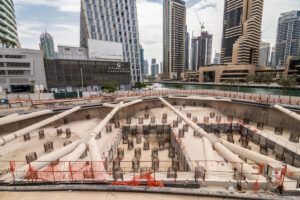

In modern concrete construction, every concrete dashboard metric provides critical insight into the health and performance of a structure during curing. By monitoring concrete in real time, project teams can catch issues early, optimize construction schedules, and ensure long-term durability. Neglecting these metrics can lead to delays, structural problems, or costly repairs. For example, large infrastructure projects have avoided thermal cracks and saved days of construction time by closely tracking concrete temperatures and strength development instead of relying on guesswork.
In this article, we will explain eight important metrics that appear on concrete monitoring dashboards—Concrete Maturity, Thermal Differential, Crack Risk, and beyond. Each section will describe what the metric is, why it matters, and how it’s used in practice, with real-world examples for clarity. This straightforward, technical guide is written in a didactic style for engineers, contractors, and construction teams seeking to improve quality control in concrete projects. Let’s explore these key metrics one by one.
Table of Contents
8 Important Concrete Dashboard Metrics
1. Concrete Maturity (Curing Index)
Concrete maturity is a measure of the progress of curing, combining time and temperature into a single index. It is based on the principle that concrete strength gain depends on both how long the concrete has been curing and at what temperatures. Higher curing temperatures accelerate strength development, while lower temperatures slow it down. The maturity value (often expressed in units like °C·hours or equivalent age) accumulates the concrete’s temperature history from the moment of placement.
Why it matters: Maturity is a proven indicator of in-place strength. Using the ASTM standardized maturity method, engineers can predict the real-time compressive strength of concrete without waiting for lab-cured specimens. This helps determine when the structure can be loaded or formwork removed safely. For instance, if a required strength is 20 MPa for post-tensioning a slab, the maturity method can show exactly when that strength is reached on site. This can save significant time on projects by eliminating unnecessary waiting days.
In fact, many projects have found that real-time maturity monitoring allowed critical operations (like stressing tendons or opening to traffic) a full day or more ahead of schedule compared to traditional fixed timelines. For example, on a multi-story construction in Copenhagen, sensors revealed that one portion of a concrete floor reached the target strength 18 hours earlier than other areas due to localized heating. Armed with this information, the team post-tensioned that section one day sooner than planned, saving valuable time and avoiding delays. Such insights are only possible by tracking maturity.
Practical use: A concrete dashboard will display the current maturity index for each sensor location. Typically, the system is pre-loaded with a maturity curve (a calibration relating maturity to strength for the specific mix). As maturity climbs, the software computes an estimated strength. Project engineers watch these values closely. When the maturity index corresponds to the desired strength (for example, 3000 psi for stripping forms), they get an alert that the concrete has achieved its goal. This removes guesswork and conservatism—teams can act based on data. In summary, concrete maturity is an essential metric for quality control and schedule optimization, directly linking curing conditions to strength development.
Suggested article to read: 10 Tips For Quality Control in Construction
2. Concrete Temperature (Internal Heat)
Monitoring the internal concrete temperature is fundamental for understanding and controlling the curing process. Freshly placed concrete generates heat due to cement hydration. In mass concrete elements or cold-weather placements, the core temperature can vary widely from ambient conditions. Sensors embedded in the concrete (at the center of a slab or column, for example) provide continuous readings of this internal temperature.
Why it matters: The internal temperature affects both the rate of strength gain and the quality of the concrete. If the concrete gets too cold (for example, approaching 0°C), hydration slows dramatically or stops, and the concrete may not gain strength as expected. In worst cases, if water freezes, it can cause serious damage. On the other hand, if the internal temperature rises excessively (above roughly 70°C), it can lead to delayed ettringite formation (DEF) or other thermal damage that compromises long-term durability.
High temperatures also expand the concrete, and subsequent cooling can induce cracking if not managed. Therefore, maintaining the internal temperature within a moderate range is critical. Specifications often require keeping concrete above a minimum temperature (such as 10°C) during curing and below a maximum temperature to preserve quality.

Practical use: A dashboard will show the real-time internal temperature of each monitored location, often plotted as a curve over time. Construction teams use this information to adjust curing measures. For example, in cold weather, if sensors show the core temperature dropping overnight, the team can respond by adding insulated blankets or external heat to prevent the concrete from cooling too much. In hot or mass concrete placements, if the core temperature is trending higher than expected, measures like surface cooling, shade, or even embedded cooling pipes can be used to dissipate heat.
Real example: On a large footing pour in summer, suppose the internal temperature climbed to 65°C on the first day. By seeing this trend early, engineers could initiate cooling (such as cold water circulation or removing insulating form covers) to cap the peak temperature before it exceeds the 70°C limit. Thanks to internal temperature monitoring, the project avoids potential thermal damage and ensures the concrete cures properly. In short, internal concrete temperature is a key metric for safeguarding strength development and implementing timely curing interventions.
3. Ambient Temperature & Weather Conditions
External conditions, especially ambient temperature, are another important metric to track on a concrete dashboard. While not a property of the concrete itself, the ambient temperature, humidity, and wind directly influence how the concrete element cools and cures at the surface. Many smart monitoring systems include an outdoor thermometer or weather station on site to log these conditions alongside the concrete’s internal data.
Why it matters: Ambient temperature drives the surface temperature of concrete. A warm day keeps the surface hotter, whereas a cold night can chill the surface rapidly. Large swings or extreme cold can cause the surface to contract while the interior remains warm, dramatically increasing thermal differentials (and thus crack risk, which we will discuss next).
Ambient humidity and wind speed also matter in early hours after pouring – low humidity or high wind can cause the surface to dry out and cool faster, potentially leading to shrinkage or thermal stress. By monitoring weather conditions, construction teams can anticipate and mitigate adverse effects. For instance, knowing that an overnight freeze is coming allows the team to insulate the concrete in advance. Or if a sudden cold rain arrives, crews might adjust curing methods (like using thermal blankets or tents) to maintain proper temperature.
Practical use: On the dashboard, ambient temperature might be displayed alongside each concrete sensor’s readings for easy comparison. Suppose a temperature graph shows that at 2:00 AM, the ambient dropped by 15°C – the system will correlate this with a dip in surface concrete temperature. If the differential starts approaching dangerous levels, alerts can be generated (some advanced dashboards do this automatically).
Example: Consider a large slab pour in an environment where daytime was 25°C but night fell to 5°C. Without monitoring, the slab’s top surface could cool quickly while the core stays warm, potentially cracking by morning. However, with an ambient sensor and alerts, the team sees the cold front moving in and covers the slab with insulating blankets in the evening. As a result, the surface only drops moderately in temperature, and the concrete cures safely. In summary, including ambient conditions on a concrete dashboard ensures that environmental factors are not ignored – they are measured and managed as part of a comprehensive curing strategy.
4. Thermal Differential (Core vs. Surface)
Thermal differential refers to the temperature difference between the interior of a concrete element and its surface. This metric is typically calculated by taking readings from at least two sensors – one embedded deep in the concrete (core) and another near the surface – and finding the difference between them. For example, if the core of a footing is 60°C while the surface is 40°C, the thermal differential is 20°C. This might also be called the temperature gradient or delta T.
Why it matters: Thermal differentials are a primary driver of early-age cracking in concrete. When the core is much warmer than the surface, the cooler surface layer contracts more as it tries to cool down, while the hot core restrains it from shrinking. This restraint generates tensile stress in the surface. If that stress exceeds the young concrete’s tensile strength, cracks will form on the surface of the element.
These are known as thermal cracks and often appear a day or two after placement, sometimes as a network of fine cracks. Even if they seem minor, such cracks can reduce durability by letting water and chemicals penetrate, potentially leading to rebar corrosion or freeze-thaw damage. To prevent thermal cracking, industry guidelines set limits on allowable temperature differential. A common rule of thumb (from standards like ACI 301) is to keep the core-surface differential below about 19°C (35°F) during the curing period. Staying within this limit greatly reduces the risk of cracking.
Practical use: By tracking thermal differential on the dashboard, engineers can ensure the temperature difference never gets out of control. The dashboard might show both core and surface temperature plots and highlight the gap between them. If the gap is widening rapidly, it’s a warning sign. Example: Imagine a massive concrete pier where the core reached 55°C while the surface, exposed to a cold wind, dropped to 30°C — a differential of 25°C. This exceeds the typical recommended limit. Upon seeing this on the dashboard, the project team can act quickly: they might wrap the column with insulating blankets or apply external heat to warm the surface, reducing the temperature gap.
Conversely, in hot weather, if the surface is much hotter than the core, spraying water mist or erecting sunshades can cool the surface. Many large projects also implement a thermal control plan that might involve cooling the mix (using chilled water or ice) so the core doesn’t get too hot to begin with. All these actions are guided by real-time thermal differential data. In summary, the thermal differential metric is crucial for crack prevention – it quantifies the thermal strain the structure is experiencing and thus helps keep the concrete in a safe temperature balance until it gains enough strength.
5. Crack Risk Indicator
Crack risk is a composite metric that assesses the likelihood of cracking in the concrete under current conditions. Rather than a direct sensor reading, it is typically an analytical indicator derived from other metrics – chiefly temperature differential, concrete age/maturity, and the developing strength of the concrete. Some advanced monitoring systems or software will calculate a “cracking risk index” or give qualitative alerts (Low, Moderate, High risk) based on thresholds and predictive models.
Why it matters: Early-age cracks can undermine the entire purpose of a concrete element, so foreseeing and preventing cracks is a top priority. A crack risk indicator synthesizes various data to give the construction team a clear warning before cracks occur. For instance, even if the thermal differential is within limits, very young concrete (only a few hours old) has extremely low tensile strength, so even a modest differential could be risky until the concrete gains strength. Conversely, if concrete is older and stronger, it can tolerate a bigger temperature spread.
A crack risk metric accounts for this by considering both the stress (from thermal or shrinkage effects) and the strength (or capacity) of the concrete at that moment. It might also incorporate factors like restraint conditions (e.g., if the concrete is connected to a stiff base, cracking is more likely than if it’s free to move). By having a single indicator, engineers don’t have to manually compare multiple readings – the system presents a clear picture of structural health.
Practical use: On a dashboard, crack risk might be shown as a percentage or a color-coded status. For example, a system could calculate the tensile stress in the concrete due to the measured temperature gradient (using known material properties and formulas) and compare it to the current tensile strength (which can be estimated from maturity or assumed as a fraction of compressive strength). If the ratio approaches 1 (meaning stress equals strength), the risk is high.
Example scenario: Consider a large mat foundation pour. Half a day after placement, the concrete is warming up and a 15°C differential has developed. The concrete’s maturity indicates it has gained maybe 10% of its 28-day strength so far. The dashboard’s crack risk algorithm flags “High Crack Risk” because at this very early age, even a 15°C differential could produce stresses near the low tensile strength of the green concrete. Seeing this high risk, the site team immediately takes action: they might extend the curing period (keeping forms and covers on longer to slow cooling) and avoid any external loads or vibrations on the structure.
As the concrete matures and strength increases, the risk level will drop. If no monitoring was in place, the team might not realize the potential for cracking until cracks actually appeared on the surface. In real cases, unmitigated thermal cracks have required costly epoxy injection or surface repairs to restore structural integrity. Thus, a crack risk indicator is an invaluable metric for preventative action. It condenses complex factors into an easy alert, helping ensure the concrete remains crack-free during that vulnerable early period.
6. In-Situ Compressive Strength
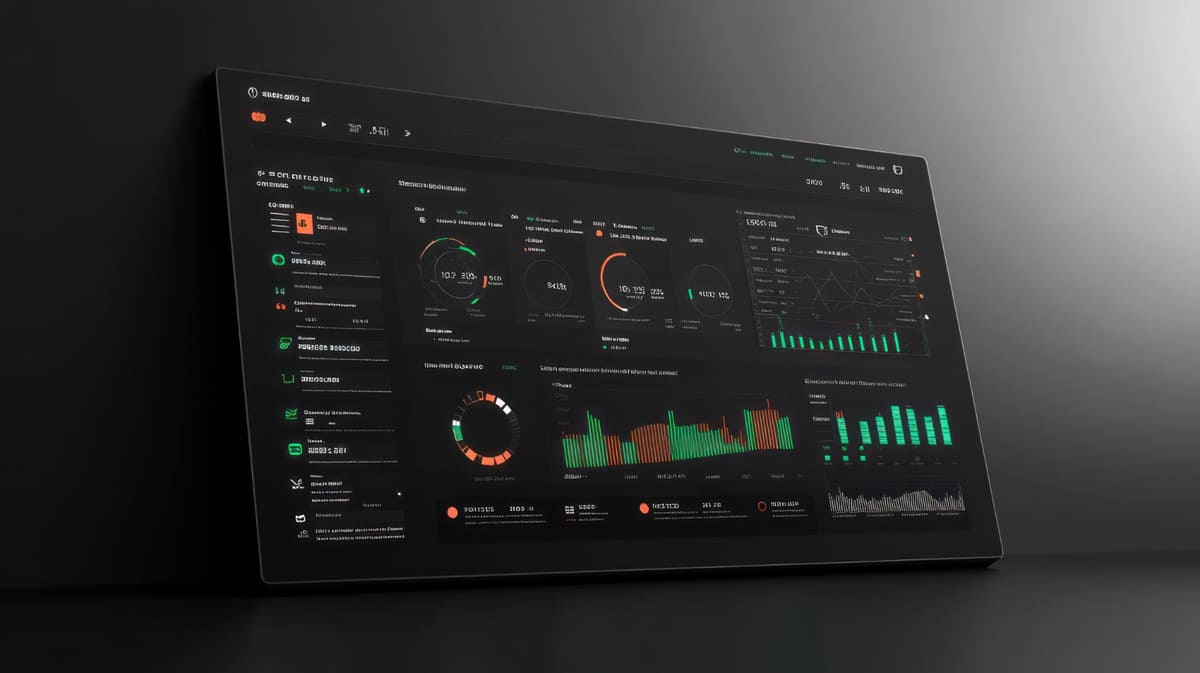
While maturity provides an index and estimate, the in-situ compressive strength is the metric everyone ultimately cares about. This metric represents the actual or estimated compressive strength of the concrete in the structure at the current time (usually in MPa or psi). On a dashboard, this is typically derived from the maturity curve or other sensor data, but it is displayed as an equivalent strength value that is easier for teams to use in decision-making.
Why it matters: Structural elements have specific strength requirements at various stages – for example, a concrete column might need to reach 75% of its design strength before formwork removal, or a post-tensioned slab might require a certain strength before tendon stressing. Traditionally, these milestones are verified by casting companion test cylinders and breaking them in a lab at set intervals (e.g., 7 days, 28 days). However, those tests are infrequent and may not reflect the exact in-place conditions.
An in-situ strength metric gives a continuous, real-time assurance of how strong the concrete actually is on site. This improves both safety and efficiency: you won’t remove supports too early (which would be dangerous), but you also won’t keep them longer than necessary (which can slow down the project). Real-time strength data can also reveal if the concrete is gaining strength slower or faster than expected, prompting investigation (e.g., if significantly slower, perhaps the mix was different or curing was inadequate, requiring corrective measures).
Practical use: On the dashboard, once the maturity method is calibrated for a project, it will show a running estimate of strength for each sensor location. For instance, it might say “Column 5A: 22.5 MPa (target 25 MPa for stripping)”. When that number hits the target, the team knows they can proceed. Some systems send automatic alerts when strength targets are reached. Example: A highway construction project uses wireless maturity sensors in the pavement. The specification allows opening to traffic once the concrete reaches 3,000 psi. By watching the in-situ strength metric, the contractors see that the pavement hit 3,000 psi in just 36 hours (thanks to warm weather accelerating cure), rather than the 72 hours they initially expected.
As a result, they opened the road a day earlier, reducing traffic disruptions. In another case, a building crew saw that a critical shear wall was gaining strength slower than predicted; the in-place strength was still below the safety threshold at the planned formwork removal time. They decided to leave forms in place an extra half day, avoiding a potential structural issue. These examples show how in-situ strength monitoring takes the guesswork out of construction decisions. It is a direct metric of performance, ensuring quality compliance (meeting the design criteria) and time optimization (moving forward as soon as it’s safe to do so).
7. Maximum Temperature Reached
The maximum temperature metric records the highest temperature that the concrete has experienced during curing. Many dashboards will log and display the peak temperature for each sensor since placement. This is slightly different from the current internal temperature; it is a historical record of the worst-case heat the concrete endured.
Why it matters: Peak temperature is a concern particularly in mass concrete or high cement content mixes. As mentioned earlier, if concrete’s internal temperature goes beyond roughly 70°C (160°F), it can suffer from long-term durability problems. One of the main risks is delayed ettringite formation (DEF) – a chemical reaction that can occur months later when concrete that was cured at excessive temperature subsequently absorbs moisture, leading to expansion and cracking.
High temperatures can also contribute to thermal cracking when the concrete eventually cools down, and they may reduce the ultimate strength of the concrete (concrete cured too hot can be slightly weaker at 28 days than one cured more moderately). Because of these issues, most engineers impose a maximum temperature limit in the construction specifications for mass pours. Monitoring ensures this limit is not exceeded, or if it is imminent, actions can be taken.
Practical use: The dashboard might show something like “Max Temperature so far: 68°C at 18 hours after pour.” Project managers keep an eye on that number especially in the first 48 hours when the heat of hydration peak occurs. Example: For a large raft foundation, the project had a requirement that the concrete must not exceed 70°C. The mix design, placement temperature, and use of fly ash (to reduce heat) were all planned to meet this.
During the pour, sensors indicated the core temperature climbing steadily. The maximum recorded was 66°C around the second day, then it began to decline, staying under the limit. This confirmed that the thermal control measures worked, and the structure was safe from DEF risk.
If the temperature had been seen approaching the threshold, the team was ready with contingency plans—like adding external cooling or adjusting insulation—to dissipate heat. In some cases, if the peak temperature goes too high unexpectedly, the engineers might decide to extend curing or testing to ensure the concrete’s quality isn’t compromised. Logging the maximum temperature also provides documentation for compliance. After the project, they can prove that the concrete never overheated. Thus, the maximum temperature metric is essential for quality assurance and durability of massive or critical elements.
8. Curing Progress and Time-to-Target
The final key metric is an overview of curing progress, often presented as the estimated time remaining to reach a certain milestone or the percentage of required strength achieved so far. This isn’t a single sensor reading but a useful calculation derived from the maturity and strength data. Essentially, it answers the question: “How far along is the concrete curing process, and when can we proceed to the next step?”
Why it matters: Concrete construction is highly schedule-driven. Knowing when you can move to the next construction activity (like removing formwork, post-tensioning, or loading the structure) is crucial for planning labor and resources. By having a live projection of time-to-target-strength, teams can coordinate more efficiently. It prevents both kinds of errors: waiting too long (which wastes time) or acting too early (which could be structurally unsafe). It also helps in communicating with stakeholders — for instance, telling a project manager that “the slab will likely reach 75% strength by tomorrow morning, so we plan to start form removal at 10 AM” is far better than uncertainty or relying on predetermined curing durations that may be overly conservative.

Practical use: A concrete dashboard may display a countdown or an expected achievement time once you input a target strength or maturity value. For example, it might say “Estimated time to 3,000 psi: 5 hours 30 minutes” based on the current rate of strength gain. This estimation updates continuously as conditions change. If the curing slows down (perhaps due to a cold spell), the system will adjust the forecast, perhaps now showing 8 hours remaining. Project teams use this information to adapt: maybe they’ll add heating to speed it up if time is critical, or they’ll reschedule crews to coincide with the ready time.
Example: A precast concrete plant uses maturity sensors to know when elements can be removed from molds. Instead of assuming it always takes 16 hours, they monitor and often find elements reach the required strength in say 12–14 hours depending on ambient conditions. They can then strip and reuse molds sooner on days where concrete gains strength quickly, increasing productivity. Conversely, if one batch is gaining slower, they wait the full time, ensuring safety.
On a jobsite, consider a bridge deck pour where opening to traffic is the goal. The dashboard might show the deck is at 50% of target strength at 24 hours and project, based on current maturity trend, that it will hit 100% in another 24 hours. If an unexpected cold night slows curing, the projection might extend to 30 hours. The team can react by keeping curing blankets on or using heaters, then see the projection improve.
This dynamic adjustment ensures they open the bridge exactly when it’s ready – not too soon and not later than needed. Ultimately, the curing progress metric ties everything together: it uses data from temperature, maturity, and strength to give a clear timeline, making on-site decision-making more data-driven and efficient.
FAQs
How does the concrete maturity method work in practice?
Answer: The concrete maturity method works by logging the temperature of concrete over time and calculating a maturity index. This index reflects how far the curing reaction has progressed. Using a pre-established calibration curve (from lab tests of the same mix), the maturity index is converted to an estimated in-place strength. In practice, you embed temperature sensors in the concrete and let the system compute maturity. As the job progresses, the dashboard will show the current maturity value and corresponding strength. When the required strength is reached (according to the maturity curve), you can confidently proceed with activities like formwork removal or loading, without waiting for lab break results.
What is an acceptable temperature differential in concrete curing?
Answer: Most standards and experts suggest that the temperature differential between a concrete’s core and surface should not exceed about 19°C to 20°C (roughly 35°F) during early curing. This limit is set to prevent thermal cracking. If the differential stays below that threshold, the thermal stresses are generally lower than the developing tensile strength of the concrete, meaning cracks are unlikely.
In mass concrete placements (like large foundations or thick walls), contractors implement thermal control measures to stay within this range – for instance, using insulation or cooling to ensure the core and surface temperatures don’t diverge too much. Some projects may allow a slightly higher differential depending on the concrete mix and design, but 20°C is a common conservative target for safety.
Which concrete dashboard metric is most critical for preventing cracks?
Answer: Thermal differential is arguably the most critical metric for preventing early-age thermal cracks. It directly indicates the temperature gap that can cause surface cracking if it becomes too large. By keeping an eye on the thermal differential, engineers can take action (like insulating or cooling the concrete) before cracks form. However, crack prevention isn’t about one metric alone.
Crack risk indicators combine thermal differential with concrete strength development, providing a more comprehensive warning. So, monitoring both the thermal differential and the concrete’s maturity/strength is the best strategy. Thermal differential tells you the cause of potential cracking, and maturity tells you how vulnerable the concrete is at that moment. Together, these metrics let you maintain conditions such that the concrete’s tensile strength always stays ahead of the thermal stress, thereby preventing cracks.
Is it true that sensors can replace traditional concrete break tests?
Answer: In many cases, yes, modern sensors can reduce or replace the need for some traditional cylinder break tests. Wireless maturity sensors and other embedded devices provide real-time strength estimates that correlate well with actual in-place concrete strength. These sensors adhere to ASTM standards (like ASTM C1074 for maturity), and when properly calibrated, they can be relied upon to decide when to remove forms or open structures to service. This means you don’t have to wait for laboratory-cured cylinders to be tested at 7 or 28 days to know your concrete’s strength.
That said, most projects still cast a few cylinders for quality assurance or to validate the sensor data, especially at the beginning. But overall, the use of sensors greatly minimizes the number of break tests needed. It’s a faster and often more accurate reflection of the concrete in the field, since it measures the actual curing conditions. Many contractors have found that using maturity sensors saved days on their schedule and gave them confidence to make decisions without solely relying on lab results.
Conclusion
Concrete may seem like a rigid material once hardened, but during its early life it is quite sensitive. The eight metrics discussed above form the core of a concrete dashboard that gives life to this hidden process. By monitoring temperature (internal, ambient, and differential), engineers ensure the concrete’s environment stays within safe limits to prevent thermal shock and cracking. By tracking maturity and strength, they know exactly how the concrete is gaining strength and can make informed decisions on when to proceed with construction steps.
And by analyzing crack risk and curing progress, they can proactively address potential problems and optimize the schedule. In practice, these metrics work together: for example, controlling thermal differential reduces crack risk, and achieving a certain maturity correlates with hitting the strength target. A concrete dashboard takes all this complex information and presents it in an actionable way. The result is a more reliable, efficient, and safe construction process.
Teams catch issues early—like a risk of cracking or an abnormal delay in strength gain—and can respond before there’s a failure. At the same time, they gain opportunities to save time and resources by not being overly conservative. In summary, understanding and utilizing these eight concrete dashboard metrics leads to higher-quality concrete construction and fewer surprises in the field. It turns concrete from a “pour it and hope for the best” operation into a managed, transparent curing process. With data on maturity, temperature, and strength at their fingertips, project teams can build faster while confidently maintaining safety and durability.
Resources:
-
American Concrete Institute. (2020). Temperature limits for mass concrete (ACI 301 FAQ).
-
National Ready Mixed Concrete Association. (2020). CIP 42 – Thermal Cracking of Concrete.
-
Giatec Scientific Inc. (2021). The Impact of Thermal Cracking on Concrete Strength Development.
-
Converge. (2024). How to Measure Thermal Differentials in Concrete: A Comprehensive Guide.
-
Kryton International Inc. (2019). Case Study: Using Maturix Smart Concrete Sensor Technology to Estimate Concrete Maturity On-Site.
-
Federal Highway Administration. (2006). Maturity Testing for Concrete Pavement Applications (TechBrief FHWA-IF-06-004).
For all the pictures: Freepik
Suggested article for reading:
10 Reason Indoor Air Quality Monitoring for Commercial Buildings is Important
Urban Air Quality Monitoring for Smart Cities 2025
Top 5 Challenges of Air Quality Monitoring for Warehouses 2025