

Air Quality Monitoring for Warehouse operations faces unique challenges in 2025. As warehouses become larger and more complex, ensuring healthy air inside these spaces requires careful planning. In this article, we cover the top five hurdles facility managers and engineers encounter when implementing comprehensive air quality monitoring in warehouse environments. Each section explains the issue with practical examples and insights, aimed at helping an operations team understand what to watch for.
Table of Contents
Top 5 Challenges of Air Quality Monitoring for Warehouses 2025
Challenge 1: Large Volume and Sensor Placement
Warehouses typically have massive open volumes, high ceilings, and complex layouts. This scale creates a primary challenge: how to achieve comprehensive coverage with monitoring equipment. In a 500,000 sq.ft distribution center, for example, one sensor can cover only a portion of the floor. Industry guidelines suggest roughly one monitor per 3,500 ft² (325 m²) to capture conditions across different zones. Failing to cover enough area can leave “blind spots” where pollutants accumulate undetected if left unmonitored.
Key Issues
-
Spatial Coverage: Large open spaces need many sensors. Forklifts idling at one end of a warehouse may not affect readings at another end if sensors are too sparse.
-
Sensor Height: Pollutants may stratify with height. Sensors placed only high up (e.g. near HVAC ducts) may miss lower-level dust or fumes and vice versa.
-
HVAC Zones: Different sections (e.g. storage vs loading docks) often have separate air handling systems. Monitors must represent each HVAC zone to be effective.
-
Obstacles and Airflow: Racks, partitions, and machinery create uneven airflow. Localized eddies or stagnant pockets can trap contaminants if not measured.
For example, a logistics company installed dozens of sensors but discovered some areas were consistently under-monitored. They adjusted placement after mapping airflow, ensuring sensors were installed 3–6 feet above the floor near frequent worker paths and loading doors, covering each ventilation zone. This approach ensured no area was overlooked in their monitoring plan.

Challenge 2: Diverse and Transient Pollutants
Warehouses can contain many pollutant sources. Diesel or propane forklifts emit carbon monoxide (CO) and particulate matter. Stored materials may release VOCs or dust during handling. Even outside air infiltration (pollen, truck exhaust, or nearby factory emissions) can affect indoor levels. The mix and fluctuation of pollutants make monitoring design complex.
Common Pollutants
-
Particulate Matter (PM₂.₅/PM₁₀): Generated by dust from loading, packaging, or vehicle exhaust. Fine PM can be especially high near engine bays.
-
Carbon Monoxide (CO) and Nitrogen Dioxide (NO₂): Produced by fuel-burning engines running inside or at open doors. CO is odorless and hazardous, often requiring monitoring for worker safety.
-
Volatile Organic Compounds (VOCs): Emitted from cleaning agents, building materials, adhesives, or stored chemicals. High VOC levels can cause headaches or long-term health issues.
-
Ammonia, Sulfur Dioxide, and Others: Certain stored products (like fertilizers or chemicals) can off-gas ammonia or SO₂, so these may need sensing in specialized cases.
-
Carbon Dioxide (CO₂): While not harmful at typical levels, CO₂ indicates ventilation adequacy. Tracking CO₂ helps ensure sufficient fresh air for comfort and productivity.
Because pollutant sources can spike intermittently, continuous real-time monitoring is important. For instance, one facility found that during night shifts when loading bay doors opened, CO₂ and NO₂ spiked briefly. Without high-frequency data, those peaks would have been missed. Detecting such patterns allowed staff to adjust ventilation timing and restrict engine idling in those hours, cutting exposure events.
Managing this variety also means choosing appropriate sensors. A single device may not accurately measure gases and particles at once, so warehouses often deploy sensor suites or multiple units. In one distribution center, they placed separate PM detectors and gas sensors. This let them identify that rising PM levels came from internal conveyor dust, while CO spikes coincided with trucks exiting the property. Without this insight, these issues would have gone uncorrelated and unresolved.
Suggested article to read: Smart Warehouse in Construction; Guide to 2024
Challenge 3: Harsh Environmental Conditions
Warehouse conditions can be tough on monitoring hardware. Dusty air, wide temperature swings, and vibration can degrade sensors or cause errors. A sensor designed for an office may fail quickly under forklift traffic or extreme heat. Key environmental challenges include:
Key Environmental Challenges
-
Dust Accumulation: Airborne particles can clog sensor inlets or optical chambers, reducing accuracy and requiring frequent cleaning.
-
Temperature Extremes: Many warehouses have little climate control. In winter or summer, sensor components may operate outside their optimal ranges, causing reading drift.
-
Vibration and Physical Stress: Heavy machinery movement or forklifts bumping into walls can jar instruments. Robust mounting and shock-absorbent cases are necessary.
-
Humidity and Corrosion: Moist or condensing conditions near docks can corrode electronics or skew measurements, especially for low-cost sensors.
-
Power and Connectivity: Distributing power and network across a huge, metal-rich building is non-trivial. Wireless signals may drop out among shelving and forklifts.
To cope, warehouse teams select industrial-grade monitors. These have weather-resistant casings, heated inlets, and filter protection. Even so, a routine maintenance plan is critical. For example, one shipping facility scheduled monthly maintenance rounds: technicians wiped sensor housings and checked air filters. This cut data drift rates significantly. They also kept several portable backup units (with built-in batteries) to swap in during power failures, ensuring continuous monitoring.
Challenge 4: Data Quality and Integration
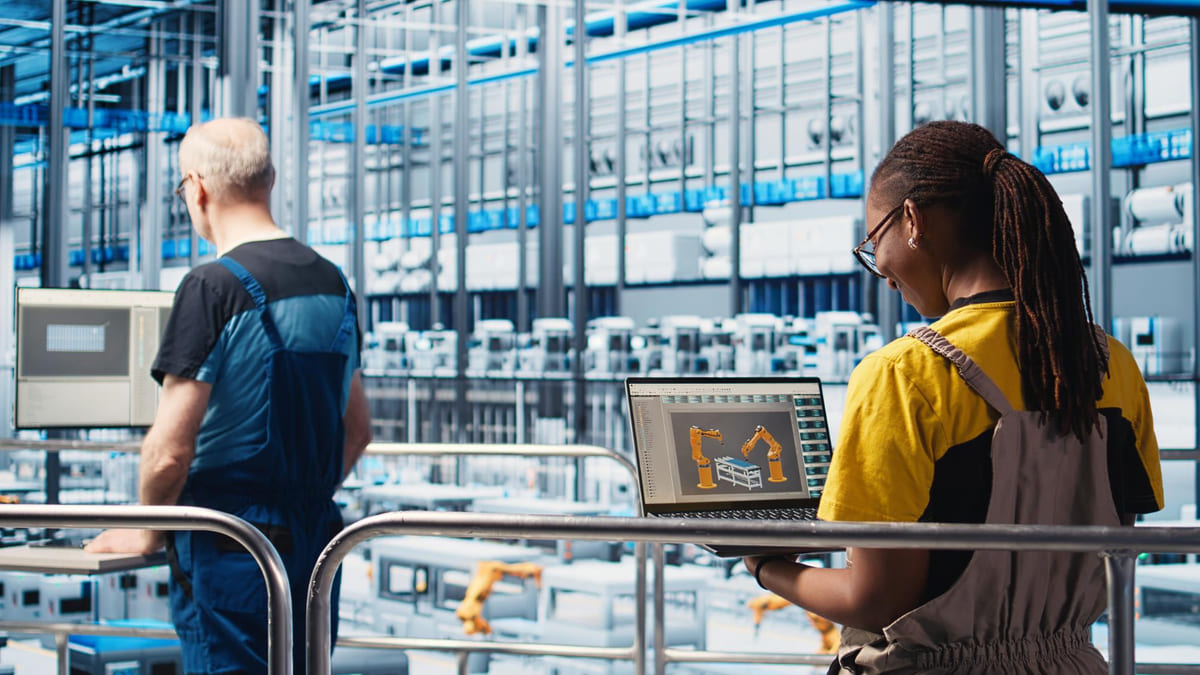
Installing sensors is only the first step. Warehouses generate a flood of time-series data that must be validated and acted on. Challenges in this area include ensuring sensor accuracy, avoiding false alerts, and integrating data with building systems.
Data Quality and Management
-
Calibration and Accuracy: Sensors can drift with age or environment. Regular calibration against reference instruments is needed. For instance, calibrating CO sensors monthly helped one facility avoid false high-CO alarms.
-
Data Overload: Hundreds of sensors logging per-minute data create huge datasets. Effective software tools (dashboards, alerts) are needed so managers aren’t overwhelmed. Alert thresholds must be tuned to minimize nuisance alarms.
-
Integration with Building Controls: Raw readings should feed into the warehouse’s Building Management System (BMS) or IoT platform. However, integrating diverse sensor types can be tricky. A well-integrated system might automatically boost ventilation if CO₂ creeps up during a busy shift, but this requires matching sensor outputs with HVAC control logic.
-
Actionable Insights: Collected data must translate into real actions. In one example, analytics revealed that one dock door was the source of most dust spikes. By training staff to use that door differently (and adding a localized exhaust hood), managers saw pollutant peaks fall.
-
Data Security and Ownership: With networked sensors, cybersecurity is a factor. Warehouses often have different departments (IT, operations, facilities). Clear policies on who owns the air-quality data and how it is shared can prevent conflicts or losses.
A best practice is to use a managed analytics platform. These systems aggregate data and highlight problems. For instance, one warehouse found a misprogrammed damper was recirculating contaminated air. They only noticed this when reports showed persistent VOC odors in the office wing. The fix—changing the damper schedule—was only found by correlating sensor data, illustrating why good data integration is essential.
Challenge 5: Regulatory and Compliance Requirements
Air quality monitoring is not just a technical issue—it’s increasingly a compliance issue. Regulations are catching up with the logistics boom. In California, the South Coast AQMD mandates that all large warehouses (100,000+ sq.ft) must meet air quality action plans under its WAIRE rule. Other regions are moving similarly. Keeping up with these evolving rules is a significant challenge.
Compliance Considerations
-
New Warehouse Rules: Regulators are starting to treat warehouse emissions like other pollution sources. The WAIRE program, for example, requires daily logging of vehicle activity and emissions control measures at large warehouses, plus plans to cut NOₓ and PM.
-
Indoor Air vs. Community Air: Warehouse managers must balance worker safety with community rules. OSHA’s General Duty Clause expects safe air for employees (but without specific numeric limits), while environmental agencies set limits on outdoor emissions. Monitoring helps meet both: tracking indoor CO levels protects workers, while tracking diesel exhaust helps satisfy environmental regulators.
-
Reporting Requirements: Compliance often means paperwork. Automated monitoring can ease this—for example, logging systems can generate weekly or monthly reports of CO₂ or PM trends for audits.
-
Evolving Standards: Even if no law currently mandates indoor monitors, warehouse owners may still need to justify their indoor air management. For example, some clients now demand IAQ data for insurance or certification (LEED/WELL). Being proactive on monitoring can give a warehouse a competitive edge.
-
Cost-Benefit: Installing monitors and handling compliance adds cost, but it can also reveal operational savings. For example, a major retailer found that by using IAQ sensor feedback, they reduced overnight heating/cooling of empty sections, cutting energy use by half. This shows that focusing on pollution control can align with efficiency goals—just as Lawrence Berkeley Lab found when using building data to cut gas usage 50%
FAQs
How do I determine the number of sensors needed?
Estimate based on area and zones. A guideline is one monitor per ~325 m² (3,500 ft²) in open space. Cover each separate HVAC or usage zone, and install sensors in breathing zones (3–6 ft above floor) to reflect worker exposure.
What maintenance do air quality sensors require?
Regular cleaning and calibration are needed. In dusty warehouses, wipe or blow out sensor inlets monthly. Check sensor calibration annually or per manufacturer advice. Replace or co-locate sensors if readings drift, ensuring ongoing accuracy.
Which pollutants should be monitored in warehouses?
Common targets are particulate matter (PM₂.₅, PM₁₀), carbon monoxide (CO), carbon dioxide (CO₂), volatile organic compounds (VOCs), and humidity/temperature. Focus on pollutants tied to your operations (e.g. CO from forklifts, dust from materials). Monitoring these key parameters provides actionable data.
Is it true that monitoring alone ensures good air quality?
No. Monitors provide data—they don’t fix problems. Air Quality Monitoring for Warehouse management must be paired with effective controls (good ventilation, equipment maintenance, and operational policies). Data guides action; only those actions improve air quality.
Conclusion
Warehouse managers in 2025 face multiple hurdles with Air Quality Monitoring for Warehouse environments, from covering vast spaces to handling dusty, dynamic conditions. By carefully planning sensor placement, maintaining rugged equipment, and turning data into smart actions, facilities can overcome these challenges. Robust monitoring ultimately safeguards worker health and often uncovers energy and cost savings. As one operations director noted, “Clean air is as essential as forklifts and lighting in our facility.” By meeting the challenges above, warehouses can protect worker health while also improving efficiency and compliance.
Resources:
-
Oizom (2023). Air quality monitoring for warehouses.
-
Environmental Defense Fund (2023). Air Pollution from Warehouse Trucks Places Unequal Burden on Communities of Color and Areas of Low Wealth.
-
Nature Communications (2024). Air pollution impacts from warehousing in the United States uncovered with satellite data.
-
Chemical & Engineering News (2024). Warehouses worsen local air pollution.
-
United States Environmental Protection Agency (2022). The Enhanced Air Sensor Guidebook.
For all the pictures: Freepik
Suggested article for reading:
Top 6 Sustainable Material Handling Practices Driving Green Construction
8 Biggest Material Handling Challenges in Construction and How to Overcome Them
12 Jobsite Material-Handling KPIs to Track Before They Blow Your Schedule
7 Material Handling Breakthroughs in Construction for 2025 (Electric Telehandlers, Smart Cranes, AMRs)
6 Exoskeleton Wins That Reduce Material-Handling Injuries on Site