
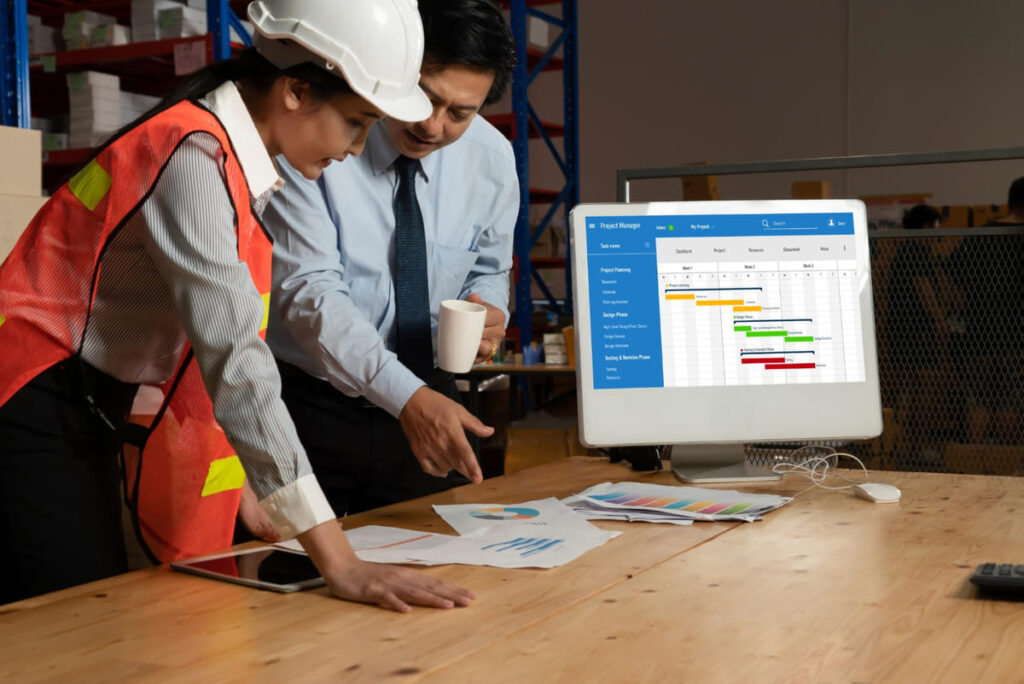
In large-scale construction projects around the world, keeping track of tools across sprawling, active job sites is a significant logistical challenge. Without effective tracking, workers can lose valuable time searching for misplaced equipment – studies show an average of 38 hours per worker per year is spent just looking for tools. To address this, the industry is increasingly turning to Sensor‑Enabled Solutions that provide real-time visibility into tool locations and status. By attaching hardware devices such as RFID tags or Bluetooth Low Energy (BLE) beacons to tools and linking them to cloud-based dashboards and mobile apps, teams can monitor their entire inventory in real time, ensuring each tool is accounted for and available when needed.
Real-time tool tracking is more than a convenience – it directly improves productivity, prevents losses, and enhances safety on site. With up-to-the-minute data on tool whereabouts, crews can avoid delays and downtime by having the right tools in the right place, streamlining workflows and boosting efficiency (even modest gains in tool visibility have been shown to save time and prevent delays on projects).
These systems also curb losses from theft or misplacement; indeed, some estimates indicate that the construction industry loses billions of dollars annually due to stolen or lost equipment. Equally important, sensor-based tracking contributes to a safer work environment by ensuring tools are properly maintained and accounted for, reducing the risk of accidents or unauthorized use. The following sections explore eight sensor-enabled hardware and software solutions that demonstrate how combining these technologies can significantly improve tool management—boosting productivity, reducing losses, and improving safety on large job sites.
Table of Contents
8 Sensor‑Enabled Solution for Real-Time Tool Tracking on Job Sites
On busy job sites, tools can easily be misplaced or stolen—losses that cost the industry $1 billion annually. Sensor-enabled solutions allow real-time monitoring of tool locations using wireless tags and sensors. By deploying technologies like RFID tags, Bluetooth beacons, and GPS trackers, companies can ensure critical tools are in the right place, reduce theft, and streamline inventory.
1. RFID Tool Tracking Systems
Radio Frequency Identification (RFID) uses small tags attached to tools and radio scanners to automatically identify and track items. Passive RFID tags (which require no battery) can be placed on each tool, and fixed or handheld readers at key points (like tool cribs or site entrances) will detect those tags when they come into range. This allows for quick check-in/check-out of tools and real-time alerts if a tagged tool moves where it shouldn’t.
For example, an RFID gate at a site exit can instantly alert managers if a tagged tool is removed without authorization. Likewise, a supervisor with a handheld RFID scanner can sweep over a gang box and verify all tools inside within seconds. This real-time tool tracking approach significantly reduces the chance of tools being left behind or lost.
-
Fast scanning & logging: RFID readers can scan many tools in seconds and automatically log each tool’s presence in a digital record.
-
Improved accountability: By tying tool tags to employee IDs at check-out, it’s clear who is responsible for each item, deterring loss and theft.
Suggested article to read: Environmental Sensors; Comprehensive Guide 2024
2. Bluetooth Low Energy Beacons
Bluetooth Low Energy (BLE) beacons are battery-powered tags that broadcast a short-range wireless signal. When attached to a tool, these beacons let the tool announce its presence to nearby smartphones or gateway devices on site. The system uses a mobile app or receivers to pick up those signals and update the tool’s last known location. In essence, a network of phones or dedicated scanners around the site forms a mesh that “hears” where each Bluetooth-tagged tool is.
For instance, if a drill with a BLE beacon is misplaced on a large job site, any worker with the tracking app who walks within about 30 meters of it will automatically log the drill’s presence. The system then shows that location to managers and users. Some BLE tags even have built-in buzzers or LED lights that can be activated remotely – a useful feature to help physically locate a tool by sound or sight.
-
Continuous updates: As long as a tagged tool is within range of a connected device, its location updates in the software regularly.
-
Long battery life: BLE tags are low-power and can last many months or even years on a coin cell battery, requiring minimal maintenance.
3. GPS Tracking Devices for Equipment
GPS tracking devices use satellite positioning and cellular data to provide real-time locations for tools and equipment across wide areas. These are especially useful for high-value assets that move between job sites or could be targets for theft (e.g. generators, skid loaders, company vehicles). A GPS tracker unit installed on a piece of equipment will periodically transmit its current coordinates to an online dashboard.
This solution shines for theft prevention and asset logistics. If a machine or tool leaves the designated area, a geofence alert can notify managers immediately. For example, if a portable compressor with a GPS tracker is taken off-site after hours, the system will send an alert and allow the owner to track its movement live, aiding quick recovery. Day to day, the data from GPS trackers also helps optimize equipment use – managers can see if one site has idle machines while another site needs one, and then reallocate resources accordingly.
-
Wide coverage & theft alerts: GPS trackers can report from virtually anywhere, and geofences can trigger instant alarms if a tagged asset leaves the allowed area.
-
Fleet visibility: Companies get an overview of where all major equipment is located, reducing time spent searching or calling around to find a specific item.
4. Ultra-Wideband Real-Time Location Systems (UWB RTLS)
Ultra-Wideband (UWB) is a sensor technology capable of extremely precise indoor positioning. A UWB system uses active tags on tools and fixed anchor sensors around the site to track items in real time, often with accuracy to within a few inches. This creates a live digital map of where all tagged tools are. On a large, complex project, a worker can instantly locate a specific tool by checking the UWB system’s display instead of searching floor by floor. This high precision prevents long delays looking for critical gear and ensures important tools are always quickly accessible when needed.
-
High precision: UWB can locate tools to within a few inches, far more accurately than Bluetooth or GPS in dense indoor environments.
-
Live tracking: Movement of tagged tools can be tracked live on a floor plan, which is useful for monitoring equipment in motion (for example, tools being moved on carts or lifts).

5. IoT Asset Trackers (LoRaWAN and LPWAN)
Long-range IoT asset trackers combine sensors with Low-Power Wide-Area Network (LPWAN) technology to cover huge areas with minimal power use. These trackers often use alternatives to standard cellular, such as LoRaWAN or Sigfox networks, to send data. They can be attached to tools or equipment and set to transmit location or status a few times a day (or only when movement is detected).
One big advantage is that a single LoRaWAN gateway on a site crane or rooftop can cover the entire site for all tagged assets. For instance, a contractor building a highway could place LoRa trackers on equipment and tool crates along the route. Even if spread over many kilometers, each tracker’s signal reaches the central gateway and updates the inventory system. The trackers’ batteries can last for years since they transmit infrequently and use very efficient radio signals.
-
Long range, no cell needed: LPWAN trackers can communicate across several kilometers via a private gateway, so even remote sites without cellular coverage stay connected.
-
Multi-year battery: These trackers are so power-efficient that they often run for 2–5 years on a single battery, minimizing maintenance.
6. Smart Tool Cabinets and Lockers
Smart tool cabinets or lockers are secure storage units with built-in sensors (like RFID readers or weight sensors) that automatically track tool usage. Workers unlock the cabinet with an ID or PIN, and when a tool is removed or returned, the system logs which item it was and who took it, in real time. This means every tool withdrawal is recorded without any paperwork, and if something isn’t returned, managers know exactly who had it last. These cabinets allow 24/7 self-service access to tools while still maintaining full accountability and control.
-
Automated inventory with accountability: Every tool taken or returned is tracked and linked to a user, keeping counts accurate and assigning responsibility.
-
24/7 convenience: Authorized workers can access needed tools anytime without waiting for a tool crib attendant, boosting productivity especially during off-hours.
7. Connected Power Tools and Manufacturer Platforms
Many leading tool manufacturers now build tracking technology directly into their products. These connected tools (or smart batteries) often use Bluetooth and come with a companion app or cloud platform. This lets contractors monitor tool locations and usage without installing separate tags. A manager can open the app to see all registered tools and their last known positions. If a tool goes missing, it can be marked as lost in the app, which then leverages other users in the area to help locate it (similar to a crowd GPS). These platforms also enable advanced features like remote tool locking or automatic maintenance alerts based on usage hours.
-
Integrated solution: No retrofitting is needed if you buy tools with tracking built-in; they work out-of-the-box with the brand’s app or platform.
-
Extra features: These platforms often include capabilities like remote lockout for lost tools, performance customization, and usage analytics in addition to basic tracking.

8. Barcode and QR Code Tracking
Finally, a straightforward approach many smaller companies use is to label each tool with a unique barcode or QR code and track it with a smartphone app. It’s not an automated real-time locator, but it enforces a disciplined process. Whenever a tool is issued or returned, a quick scan of its code updates a central log with who has it, where it should be, and when.
For example, a foreman can scan all tools handed out in the morning and again at day’s end. If anything is missing, the system shows who last had it, enabling immediate follow-up. This method relies on workers remembering to scan, but it’s easy to do and dramatically improves accountability, often cutting down on misplaced equipment.
-
Low cost: Aside from printing labels and maybe subscribing to an app service, there’s little expense. No special hardware is required beyond the phones you already have.
-
Ease of use: Scanning a QR or barcode is simple and fast, so adoption is easy with minimal training compared to more complex systems.
FAQs
How do sensor-enabled tool tracking systems work in construction?
They work by attaching electronic tags or sensors to tools, which then communicate wirelessly to a central database or app. Technologies like RFID, Bluetooth, and GPS allow the system to automatically identify where a tool is or who last used it, giving managers real-time information without manual counting.
What types of sensors are used for real-time tool tracking?
Common sensors and tags include RFID chips, Bluetooth Low Energy beacons, GPS receivers, and even QR/NFC codes for scanning. Each type serves different ranges and purposes: RFID and BLE are great on-site, GPS covers large distances, and UWB offers very high precision indoors.
Which tools or equipment can be tracked with these solutions?
Almost any tool or piece of equipment can be tracked with the right tag or device attached. This ranges from small hand tools with RFID or Bluetooth tags to heavy machinery outfitted with GPS or other telematics units.
Is it true that using sensor-enabled tracking can significantly reduce tool theft?
Yes. Companies that adopt real-time tracking systems often see a sharp drop in theft and loss. The visibility and alerts provided (for example, knowing immediately if a tool leaves the site) act as a deterrent. In case a theft does occur, these systems help recover stolen items more frequently – some users report theft rates dropping by 30% or more after implementation.
Conclusion
Tool tracking has become a vital part of managing construction projects. Using sensor-enabled solutions like RFID, BLE beacons, GPS units, and other IoT trackers, companies gain real-time visibility over their equipment. The eight solutions described above each offer unique advantages, and often a combination of technologies yields the best results. For example, a firm might use RFID or barcodes on smaller tools, Bluetooth tags on mid-sized equipment, and GPS on large assets and vehicles.
The impact of these tracking methods is significant: firms report fewer missing tools, faster retrieval when something is misplaced, and better data for planning tool utilization and maintenance. In practice, investing in a suitable tracking system means crews spend less time searching for gear and more time working with it. It also means costly theft is deterred or quickly discovered. Ultimately, sensor-enabled tool tracking boosts efficiency, safety, and savings by ensuring the right tools are in the right place at the right time.
Resources:
European Agency for Safety and Health at Work. (2022). Improving compliance with occupational safety and health regulations.
HID Global. (2020). RFID Used in Construction – Use Cases.
Hilti. (2021). ON!Track Tool Tracking and Asset Management Overview.
Milwaukee Tool. (2023). Bluetooth vs GPS for Tool Tracking – One-Key Platform.
Dalos. (2024). Case Study: Effective Asset Tracking for a Large Construction Project.
Deep Sentinel. (2025). Construction Theft Statistics: How Much Is Stolen from Sites Each Year?.
For all the pictures: Freepik
Suggested article for reading:
5 Use Cases of Telematics and IoT in Construction Tool Tracking
Top 7 Construction Tool Tracking Systems Transforming Site Efficiency in 2025
Top 7 Sensor Solutions Transforming Construction Site Safety in 2025
Top 6 IoT Use Cases in Construction Backed by Top Companies in 2025