
Digital twin technology is transforming how we design, build, and operate products and facilities. By creating virtual replicas of physical assets or processes, teams can simulate, monitor, and optimize fabrication workflows in ways that were impossible before.
There are numerous approaches (in fact, at least ten key methods) to integrate digital twins into fabrication processes. In this article, we highlight six real-world examples that demonstrate how integrating digital twin technology with fabrication workflows improves efficiency, quality, and innovation. These examples cover industries from construction to manufacturing, illustrating practical uses of digital twins in design, production, maintenance, and training.
Table of Contents
Example 1: Digital Twin for Modular Construction – Real-Time Design and Fabrication Coordination
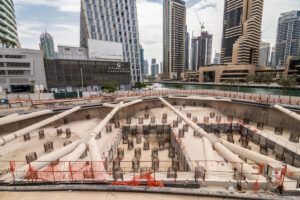
Modular construction firms are using digital twins to tightly connect the design phase with the fabrication of building components in the factory. In traditional construction, last-minute changes on-site often don’t make it back into design plans, leading to inconsistencies. By contrast, in modular projects all modules are built in a controlled facility, and a digital twin of the building (often starting as a detailed BIM model) is kept in sync with fabrication.
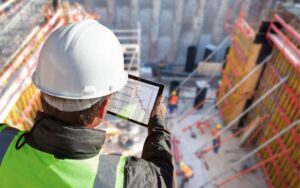
For example, if assembly workers discover an alignment issue or needed adjustment during manufacturing, they can immediately inform the engineering team and update the virtual model. This real-time feedback loop ensures that the digital twin reflects the as-built condition. As a result, errors are caught early and not repeated across modules. Project teams can simulate assembly sequences and test fit-ups in the virtual environment before actual fabrication, preventing costly rework.
Integrating the digital design with production data has improved efficiency and safety in modular construction — workers follow up-to-date plans, and any design change propagates instantly to the shop floor. This approach leads to faster build times and higher quality: modular builders report fewer on-site fixes and more predictable outcomes, since the fabrication workflow is guided by a constantly updated digital blueprint. Overall, the digital twin serves as a single source of truth, weaving together design and fabrication so that what gets built in the factory is exactly what was envisioned, with minimal surprises.
Example 2: Smart Building Operations – Energy Efficiency through a Building Digital Twin
After a building is fabricated and assembled, digital twin technology can continue to add value in the operations phase. A powerful example comes from a large research campus that created a digital twin of its building systems to optimize energy use. The Lawrence Berkeley National Laboratory (LBNL) linked data from 26 buildings and five different systems (HVAC, lighting, etc.) into a unified platform – essentially a living digital model of its facilities.
By analyzing real-time sensor and meter data at 15-minute intervals, the facilities team uncovered inefficiencies that manual checks had missed. In one instance, the digital twin’s analytics revealed that some buildings were being heated and cooled at night despite being unoccupied, due to misconfigured controls. Armed with this insight, engineers quickly adjusted the automation settings. In just the first two months of using this integrated system, the laboratory saw a 50% reduction in natural gas consumption for those buildings.
This dramatic improvement was achieved simply by optimizing existing equipment via the digital twin’s feedback, without any major capital upgrades. Importantly, occupant comfort was maintained since the system now intelligently balances efficiency with real-time usage. This smart building example illustrates how integrating a digital twin into facility management workflows can drive significant energy savings and better performance.
Operators can monitor conditions across all sites from a central dashboard, run simulations of changes (like new schedules or system setpoints) before applying them, and proactively address issues. The result is a more sustainable and cost-effective operation, demonstrating that digital twins aren’t just for manufacturing products – they can also integrate with fabrication workflows in building management by fine-tuning how a built asset performs over its lifecycle.
Suggested article to read: 13 Inspiring Digital Twin Examples
Example 3: Manufacturing Supply Chain Optimization – Global Factory Operations at Mars
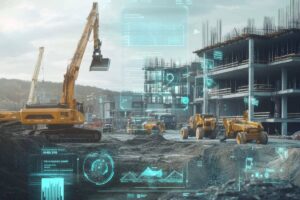
In the manufacturing sector, companies are adopting digital twins to orchestrate complex fabrication and supply chain workflows across multiple facilities. A great example is Mars, the global producer of food and confectionery, which built a digital twin of its manufacturing operations spanning over 160 factories. By leveraging cloud platforms and IoT data from production machines, Mars created virtual models of its assembly lines and equipment. This integration has empowered them to optimize performance in several ways:
-
Preventative maintenance: Live sensor data from machines feeds into the digital twin, allowing engineers to predict when equipment might fail or require service. Maintenance can be scheduled proactively, reducing unplanned downtime and boosting overall uptime of production lines.
-
Process improvements: The twin lets process engineers experiment with adjustments in a virtual setting. They can simulate changes to line speeds, equipment settings, or ingredient mixes without disrupting the actual production. These simulations help identify bottlenecks and ideal settings for maximum throughput and quality.
-
Waste reduction: By analyzing data across facilities, the digital twin spotted patterns like certain packaging machines occasionally overfilling or underfilling products. Mars used these insights to calibrate those machines more precisely, reducing waste from inconsistent package weights and ensuring products meet specifications.
-
Knowledge sharing: Successful optimizations or fixes developed for one plant’s twin can be packaged as a reusable “app” or playbook and deployed at other factories company-wide. This means improvements scale across their supply chain quickly.
By integrating digital twin technology with fabrication workflows in this way, Mars has made its global operations more agile and data-driven. Early results have shown better production efficiency and fewer quality issues. Going forward, the company plans to extend the twin to factor in external variables (like climate or raw material supply changes) for even more resilient supply chain planning. This example demonstrates how a digital twin at the enterprise scale can synchronize design, production, and logistics information, enabling smarter decision-making across the entire manufacturing network.
Example 4: Virtual Factory Simulation – Bayer’s Digital Twin of Seed Processing Plants
Digital twin technology is not only helping day-to-day operations but also revolutionizing how companies plan and improve their fabrication processes. Bayer Crop Science offers a compelling case: they developed dynamic “virtual factory” models for each of their nine seed processing and packaging facilities in North America. Each digital twin encapsulates the intricate details of a site’s operations – from equipment configurations and process flows to production rules and material handling.
This rich virtual mirror of the physical plants allows Bayer to perform sophisticated what-if simulations rapidly. For instance, when the commercial team considers introducing a new seed treatment or a different packaging size, the digital twin can simulate how the change would impact each factory’s throughput and resource needs. In the past, evaluating a new strategy across all nine plants might require months of trial and data collection. Now, Bayer can compress what would be 10 months of real operations into a 2-minute simulation run in the twin.
This speedup enables the company to answer complex questions about capacity, equipment utilization, and process scheduling almost on demand. The virtual factories also support long-term planning: before committing to a capital purchase like a new processing line, engineers use the twin to test how the added equipment would integrate and where it yields the best ROI. By integrating these digital twins into their workflow, Bayer’s teams have uncovered optimal ways to configure their production network and even identified opportunities for innovation in processing techniques.
The key to this success was aligning the digital models closely with real-world data – the data science team spent extensive time on the factory floors to ensure the twin behaves like the actual system. This example highlights how a digital twin can serve as a decision-support tool in fabrication workflows, enabling companies to experiment virtually, refine their strategies, and implement changes with confidence, backed by data.

Example 5: Predictive Maintenance in Aerospace – Rolls-Royce’s Engine Digital Twin
In aerospace manufacturing and maintenance, digital twins play a critical role in ensuring reliability and performance of complex products. A notable example is Rolls-Royce, which uses digital twin technology to monitor and maintain the jet engines it produces. Each engine in service is mirrored by a virtual model that continuously receives data on how that engine is operating: its temperature, pressure, vibration, fuel usage, and more, under various flight conditions.
By integrating this digital twin into the maintenance workflow, Rolls-Royce shifted from schedule-based upkeep to condition-based, predictive maintenance. The twin helps engineers tailor maintenance plans to the actual usage and health of each specific engine, rather than relying on generic intervals. This approach has yielded impressive results – in some cases Rolls-Royce found they could safely extend the time between overhauls by up to 50% for certain engines because the twin indicated those units were running in gentler conditions than assumed by standard schedules.
Such extensions have big benefits: airlines experience less downtime, and Rolls-Royce can optimize spare parts inventory since parts are replaced closer to when needed rather than “just in case.” Moreover, analyzing fleets of engine twins has led to design tweaks that improve efficiency. The company reports that insights from its digital twin program have contributed to engine efficiency gains that translated into 22 million tons of carbon emissions saved by airlines (through reduced fuel burn and optimized operations).
This example underscores how integrating digital twins into the fabrication and service lifecycle of a product can drive continuous improvement. The twin accompanies the product from the factory through its operational life, providing feedback that influences both immediate maintenance actions and next-generation designs. In summary, Rolls-Royce’s experience shows that digital twins can significantly enhance reliability and performance in fabrication-intensive industries by predicting issues before they occur and validating that products are meeting their design goals in real-world conditions.
Example 6: Immersive Training and Skill Development – Pfizer’s Virtual Reality Factory Twin
Digital twin integration isn’t limited to machines and products; it also extends to the human element of fabrication workflows. Pharmaceutical giant Pfizer demonstrated this by using a form of digital twin (combined with virtual reality) to rapidly train new workers in their manufacturing facilities. During the COVID-19 pandemic, Pfizer needed to onboard thousands of new production staff in a short time to scale up vaccine manufacturing. Traditional training methods, which involve lengthy classroom sessions and supervised on-the-job practice, would have been too slow and sometimes impossible due to safety and distancing needs.
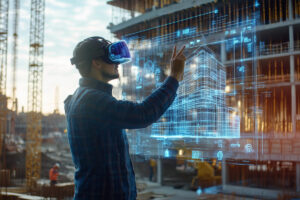
Pfizer’s solution was to create virtual replicas of their equipment and cleanroom environments – essentially digital twin models of the production lines – and deploy these in VR training programs. New hires could wear VR headsets and be immersed in an interactive simulation of real manufacturing tasks, from operating specialized machinery to practicing safety procedures, all without being on the physical factory floor. This innovative training workflow meant that learners could get unlimited, risk-free practice on realistic digital equipment. They didn’t have to wait for a specific machine to be free or for a perfect real-world scenario to occur; everything could be simulated on demand.

The results were remarkable: the company reported that using the VR/digital twin training system reduced overall training time by about 40% compared to traditional methods. Tasks that once required months of shadowing could be mastered in a few weeks through repeated virtual practice. In addition, supervisors observed improved quality in work output — trainees made fewer mistakes once they moved to the live production line, having already virtually experienced the procedures multiple times.
By integrating a digital twin into the training workflow, Pfizer not only accelerated knowledge transfer but also preserved consistency across a global workforce. This example illustrates how digital twin technology can be woven into the fabrication workforce development process, ensuring that people are as prepared and optimized as the machines they will be operating. It’s a powerful reminder that technology and human training must go hand-in-hand to fully realize the benefits of Industry 4.0.
FAQs
How does integrating digital twin technology with fabrication improve efficiency?
Integrating digital twins into fabrication workflows improves efficiency by allowing teams to simulate and optimize processes before making physical changes. For example, engineers can test production line adjustments in a virtual model to find the most efficient setup, and maintenance teams can predict equipment failures in advance. This proactive approach minimizes downtime, reduces trial-and-error on the factory floor, and streamlines operations for faster project delivery.
What industries benefit most from digital twin technology in fabrication?
Many industries benefit from digital twin integration in fabrication, especially those with complex or large-scale production processes. Manufacturing (automotive, aerospace, electronics) sees gains in process optimization and predictive maintenance. Construction and modular building benefit through improved design coordination and project management. Additionally, industries like energy, oil and gas, and pharmaceuticals use digital twins to enhance plant operations, safety, and training.
Which fabrication workflows are ideal for a digital twin approach?
Fabrication workflows that involve high complexity, costly prototypes, or critical timing are ideal for a digital twin approach. Examples include assembly lines with many moving parts, prefabrication of building components, and any process where testing changes in real life is expensive or risky. In these cases, a digital twin can mirror the workflow and allow virtual experimentation, training, or monitoring, leading to insights that directly improve the physical process.
Is it true that digital twin technology can reduce errors and rework in construction?
Yes, it’s true. In construction, digital twin technology (often building on BIM models) helps catch errors early and reduce rework. By simulating construction sequences and integrating real-time feedback from the site or factory, the digital twin highlights clashes, misalignments, or design issues before they become problems on the ground. Teams can resolve these issues in the virtual model, ensuring that when actual fabrication or assembly occurs, it goes more smoothly. This leads to fewer mistakes, less material waste, and a more efficient construction process overall.
Conclusion
Integrating digital twin technology with fabrication workflows is proving to be a game-changer across industries. In each of the six examples above, we saw tangible benefits: faster design iterations, fewer errors, optimized processes, predictive maintenance, and more effective training. These cases represent just six examples out of many possible applications (indeed, at least “10 ways” and beyond) for merging virtual and physical worlds in production environments. The common thread is that a digital twin provides visibility and insight – whether it’s a factory line, a building system, a jet engine, or a training simulation – enabling teams to make data-driven decisions quickly and confidently.
By adopting digital twins, organizations can bridge knowledge gaps, respond rapidly to changes, and continuously improve their fabrication processes. In conclusion, digital twin integration is not a futuristic concept but a practical strategy being applied today to achieve higher efficiency, quality, and innovation in fabrication workflows. As technology evolves, we can expect even more creative ways to leverage digital replicas for smarter construction and manufacturing.
Resources:
Harvard Business Review. (2016). Smart Cities Start with Smart Buildings.
CIO. Olavsrud, T. (2022). Digital twins: 5 success stories.
Innowise. (2023). Digital Twin in Construction Industry: Benefits, Challenges & Use Cases.
ArborXR. (2023). Customer Story: Transforming Training with Pfizer.
For all the pictures: Freepik
Suggested article for reading:
5 Ways AI is Revolutionizing Asset Tracking and Management
6 Lightweight Rooftop Solar Panel Innovations for Commercial Buildings
4 Advanced PV Materials – Bifacial, Perovskite & More for Building Use
3 Solar Storage & Thermal Hybrid Strategies for Net‑Zero Buildings
5 Real‑World Applications of BIPV: From Facades to Canopies
6 Must-know AI Tools for Construction Managers