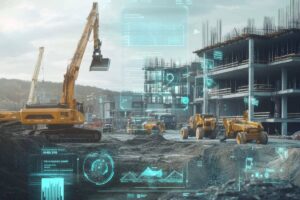

Artificial Intelligence (AI) is fundamentally changing how organizations track and manage their physical assets. Traditional asset tracking relied on manual logs or periodic scans, which often led to lost items, reactive maintenance, and inefficiencies. Today, AI-driven systems combine sensors, data analytics, and machine learning to provide continuous visibility and intelligent insights. This article explores five key ways AI is revolutionizing asset tracking and management, illustrating each with practical examples and clear explanations. The focus is on an objective, technical understanding of these innovations – as if training internal teams on the next generation of asset management tools.
Table of Contents
AI-Driven Real-Time Asset Tracking and Visibility
Modern asset management begins with real-time visibility. By equipping assets with IoT sensors (like RFID tags, GPS units, or Bluetooth beacons) and feeding the data into AI systems, organizations can monitor asset location and status continuously. AI algorithms filter and interpret the stream of telemetry data, so managers see useful insights rather than raw numbers. For example, a large warehouse might use AI-integrated RFID tracking to instantly locate any piece of equipment or inventory. Instead of manual barcode scans or searching through spreadsheets, staff can pull up a live dashboard showing where each asset is and its condition.
AI not only shows where an asset is, but also flags when something is amiss. If a high-value asset leaves a designated area unexpectedly or an equipment sensor reports abnormal readings, AI systems can trigger immediate alerts. This level of awareness was previously impossible with periodic human checks. Now, a construction company can know in real time if a generator is moved off-site without authorization, or a data center can be notified the moment a server’s temperature spikes beyond normal.
Key capabilities of AI-powered real-time tracking:
-
Continuous Location Monitoring: AI continuously aggregates data from GPS and sensor networks, providing a live map of assets across facilities or in transit. This eliminates blind spots – assets can’t “go missing” without notice.
-
Instant Anomaly Alerts: Intelligent tracking systems learn normal movement patterns. If equipment travels an unusual route or a tagged item stops transmitting (indicating potential theft or malfunction), the system immediately alerts managers.
-
Unified Asset Dashboard: AI integrates data from many sources into one interface. Users see an at-a-glance status of all assets – location, usage, temperature, and more – instead of juggling multiple siloed systems.
By delivering real-time visibility, AI-driven tracking reduces the time spent searching for assets and prevents losses. Employees can focus on productive work rather than inventory hunts. In essence, AI acts like an always-on, automated asset supervisor, keeping watch over the fleet of tools, vehicles, or inventory items and ensuring nothing slips through the cracks.

Predictive Maintenance and Reduced Downtime
Maintaining assets is just as important as tracking their location. Predictive maintenance is one of the most transformative ways AI is changing asset management. In the past, organizations either fixed equipment only after it broke (causing unplanned downtime), or serviced it on fixed schedules (which could waste effort or miss issues). AI offers a smarter alternative: continuously analyze the condition of assets and predict failures before they happen.
By using machine learning models on sensor data, AI systems can detect subtle warning signs of wear and tear. For instance, in a manufacturing plant, machines are outfitted with vibration and temperature sensors. AI software monitors these readings in real time and recognizes patterns – maybe a subtle increase in vibration frequency or a motor running a few degrees hotter than usual.
These patterns might be invisible to humans, but the AI learns what signals precede a component failure. The system then alerts maintenance teams ahead of time that a particular motor bearing is likely to fail in the next two weeks. Technicians can schedule a convenient repair during planned downtime, instead of dealing with a sudden breakdown on the production line.
The benefits are dramatic: unplanned outages are minimized, and asset lifespan is extended due to timely care. Studies show that AI-driven predictive maintenance can reduce equipment downtime by as much as 50% and extend the service life of machines by 20–40%. In practice, this means a factory might avoid losing thousands of dollars per hour from halted production, or a fleet operator keeps vehicles on the road longer with fewer breakdowns. For example, a mining company using AI predictions was able to cut unexpected downtime by about 30%, keeping their critical trucks and drills running and improving safety by fixing issues before they escalated.
Advantages of AI-powered predictive maintenance:
-
Early Problem Detection: AI monitors asset health metrics (noise, heat, pressure, etc.) continuously and catches anomalies that indicate impending failure. Maintenance can be performed before a minor issue becomes a major breakdown.
-
Reduced Downtime: By preventing sudden failures, organizations avoid costly production stoppages. Equipment spends more time operational and less time awaiting repairs. This increases overall productivity and throughput.
-
Optimized Maintenance Schedules: Rather than servicing machines on a rigid timetable, AI helps schedule maintenance when it’s actually needed. This prevents both over-maintenance (unnecessary part replacements) and under-maintenance (missed issues), saving costs on spare parts and labor.
-
Longer Asset Lifespan: Taking care of equipment at the right moments – such as replacing a worn component before it damages the whole machine – means assets stay in good condition longer. Companies get more years of use from every truck, generator, or HVAC unit, squeezing more value out of their investments.
In summary, AI turns maintenance from a reactive fire-fighting exercise into a proactive strategy. Technicians move from crisis response to strategic upkeep, guided by data. This not only lowers maintenance costs and downtime but also creates a safer environment (since equipment is far less likely to fail catastrophically). Predictive maintenance showcases how AI is revolutionizing asset management by keeping the machinery of business humming smoothly.
Suggested article to read: HVAC in Building; Comprehensive Guide 2024
Optimized Asset Utilization and Efficiency
Having assets and keeping them running is not enough – organizations also need to use those assets efficiently. AI helps answer critical questions: Are our assets underutilized, overworked, or misallocated? Could we use fewer assets more effectively? By analyzing usage data, AI uncovers patterns and inefficiencies that humans might overlook, leading to much better asset utilization.
Consider a large hospital as an example. Hospitals have thousands of pieces of equipment (IV pumps, wheelchairs, diagnostic machines) spread across departments. Often, staff in one department might be requesting new equipment because theirs is in constant use, while a similar device sits idle in another department’s storage closet.
AI-based asset tracking systems collect data on how often each device is used and where it is at all times. The AI might reveal that out of 50 infusion pumps, only 30 are heavily used and the rest are idle most of the day. With this insight, management can redistribute or reduce excess inventory, ensuring each device is either put to work or removed from the roster. This avoids unnecessary purchases and ensures capital isn’t tied up in unused equipment.
Another real-world example comes from facility management. Lawrence Berkeley National Laboratory (LBNL) used an AI-driven building management platform to analyze how their building systems operated. By centralizing data across dozens of buildings at 15-minute intervals, the AI uncovered that heating and cooling systems were running at night in empty buildings due to a misconfigured schedule.
This was a huge waste of energy. Once alerted to this pattern, the facilities team corrected the settings. In just two months, they reduced the buildings’ natural gas usage by 50% by not heating vacant spaces at night. This example shows AI identifying an inefficiency that humans hadn’t noticed, and the result was dramatic cost and energy savings without installing new equipment – simply using existing systems more wisely.
AI can similarly optimize fleet usage. In a delivery company, if two trucks cover largely overlapping routes, AI might suggest route adjustments or consolidating loads to use one truck fully and let the other be reassigned. Or in manufacturing, if one machine is running 24/7 while a similar machine sits idle, AI can flag this imbalance. The company might then balance the production load or eliminate the redundant machine, saving maintenance and energy costs.
How AI improves asset utilization:
-
Identifying Underuse vs. Overuse: AI dashboards highlight assets that are rarely used as well as those nearing overcapacity. Managers get a data-driven look at which equipment could be shared, leased out, or retired, and which assets might need backups or load balancing.
-
Dynamic Resource Allocation: Because AI tracking knows asset locations and availability in real time, it can suggest reallocating resources on the fly. For example, if one construction site has idle trucks and another site needs extra, the system recommends transferring assets to where they’re needed most.
-
Eliminating Waste: Inefficiencies like equipment running when not needed, lights left on, or vehicles taking long detours are spotted by AI. By correcting these, organizations cut wasteful usage of fuel, energy, and time. In the LBNL case, simply turning systems off when buildings are unoccupied translated into huge savings.
-
Data-Driven Justification: Utilization data provides concrete evidence for decisions. If a team requests a new high-value asset, management can review AI usage reports to see if existing assets could cover the need. Decisions on asset purchases, rentals, or disposals become fact-based, not guesswork or politics.

It’s important to note that while optimizing for efficiency, one must maintain a balance. Of course, optimizations should not be done in isolation of other factors. For instance, maximizing energy savings is good, but not at the expense of employee comfort or safety. The beauty of AI is that it can consider multiple parameters – it can recommend efficiency improvements while also respecting constraints like comfort thresholds or maintenance standards. Overall, AI-driven utilization improvements mean organizations achieve the same (or greater) output with fewer resources, lowering costs and environmental impact while ensuring that critical assets are always available when and where they’re needed.
Smart Inventory Management and Supply Forecasting
Many organizations manage not only equipment but also consumable assets and stock inventories. AI is revolutionizing asset tracking in warehouses, retail stockrooms, and supply chains by making inventory management smarter and more automated. Instead of relying on periodic counts or intuition to decide stock levels, companies are using AI to maintain optimal inventory and even forecast future needs with high accuracy.
An AI-enhanced inventory system connects sales data, supplier lead times, and even external factors (like seasonal trends or weather forecasts) to predict demand. For example, a large retail chain might use machine learning to analyze years of sales history along with social media trends. The AI might predict that demand for a certain product will spike next month due to an upcoming holiday and a viral trend, and it automatically suggests ordering additional stock now.
Conversely, it can spot slow-moving inventory and advise reducing orders to avoid overstock. According to industry studies, such AI forecasting tools can reduce demand forecasting errors by up to 50%. This means far fewer situations where a store runs out of a popular item (lost sales) or ends up with a surplus that has to be discounted or thrown away. In fact, some companies have seen inventory shortages drop by over 60% thanks to AI-driven forecasting ensuring the right products are in the right place at the right time.
AI also shines in real-time inventory tracking. In modern “smart warehouses,” every product might have an RFID tag or barcode that automated scanners and robots continuously monitor. AI systems reconcile this data to give an up-to-the-minute picture of stock levels across locations. If a certain component is running low in a factory’s storage, the system can automatically trigger a reorder from the supplier or transfer from another warehouse, without waiting for a human to notice the shortage. This kind of responsiveness keeps operations running smoothly – production lines don’t halt for missing parts, and customers find shelves stocked with what they need.
Another practical example is in maintenance operations: imagine an airline that uses AI for its spare parts inventory. The AI knows how often certain aircraft components fail or require replacement (using predictive maintenance data) and forecasts the needed spare parts accordingly. It ensures the parts are in inventory at the maintenance depot before the planes even need them, drastically reducing aircraft downtime waiting for parts.
Benefits of AI in inventory and supply management:
-
Accurate Demand Forecasting: AI analyzes complex variables that influence demand (sales trends, market conditions, even local events), producing more accurate forecasts than manual methods. This prevents both overstocking and stockouts. Companies carry just the right amount of inventory, cutting storage costs and waste.
-
Automated Replenishment: Smart systems automatically track stock levels and can initiate orders or transfers when levels hit predefined thresholds. Managers no longer have to manually count or guess when to reorder – the process becomes hands-free and reliable.
-
Optimized Distribution: For businesses with multiple warehouses or stores, AI recommends how to allocate inventory across locations. It might redistribute products to where demand is higher, ensuring fast delivery and reducing excess stock in slower regions.
-
Inventory Visibility and Audit Trails: Every movement of stock is logged by AI, creating a clear record. This not only helps in daily operations but also simplifies audits and compliance (knowing exactly how much of each item was used or sold, and when).
Through AI-driven inventory management, organizations have reported higher fill rates (meeting customer demand more often) and lower holding costs. For employees, it means less time spent on tedious stock counts and fire-fighting shortages, and more time on strategic tasks like improving supplier relationships or merchandising. It’s a prime example of AI making a traditionally cumbersome aspect of asset management much more efficient and responsive.
Automated Compliance and Security Monitoring
Asset tracking isn’t just about efficiency – it’s also about accountability and security. Many industries face strict regulations on how assets are used and maintained (think of healthcare equipment needing regular calibration, or safety checks on construction gear). Additionally, all organizations want to prevent loss or unauthorized use of their assets. AI is revolutionizing these aspects by automatically enforcing compliance requirements and detecting security issues in ways that manual tracking never could.
Automated compliance means AI keeps a continuous record of asset usage, maintenance, and inspections. Instead of relying on people to fill out logs or update spreadsheets (which might be forgotten or error-prone), an AI system automatically logs who used an asset, at what time, for how long, and under what conditions. For example, in aviation maintenance, every time a tool is checked out and used on an aircraft, an AI-driven system can record that usage along with the tool’s calibration status.
If a required inspection or certification date is approaching, the system will flag it and even schedule it. This ensures that assets like medical devices or pressure vessels are always compliant with safety standards – no more missed inspections simply because someone overlooked a date. When auditors come knocking, the AI can generate compliance reports in minutes, showing a complete history of maintenance and usage for each asset. This level of detailed record-keeping not only saves enormous administrative time but also greatly reduces the risk of non-compliance penalties.
On the security front, AI enhances asset protection by learning normal behavior patterns and spotting anomalies. Earlier, we discussed anomaly alerts for real-time tracking; this is crucial for security. For instance, on a construction site, AI-based asset tracking learns the typical work hours and movement patterns of equipment. If a piece of equipment, say an expensive excavator, is powered on at 2 AM when the site is closed, the system will immediately flag this unusual activity and alert security – potentially stopping a theft in progress. Similarly, in a corporate IT environment, if a normally stationary asset (like a server or lab equipment) starts moving or goes offline unexpectedly, AI can signal a possible unauthorized tampering.
Another example is access control. Imagine a hospital where certain medicines or devices should only be accessed by authorized personnel. AI can integrate badge access systems with asset tracking. If an asset storage is opened, the system logs who opened it and ensures it matches an authorized user. AI algorithms might even analyze usage times – if a normally busy piece of equipment hasn’t been used in an unusually long time, it could indicate it’s missing or inoperative, prompting a check.

AI contributions to compliance and security:
-
Comprehensive Audit Trails: Every asset transaction (check-outs, returns, maintenance actions) is automatically recorded with timestamp and user information. AI consolidates this into easy reports for compliance audits, proving that procedures were followed and assets were properly maintained.
-
Maintenance and Calibration Alerts: AI systems track when each asset is due for maintenance or calibration according to regulatory standards. They issue reminders or work orders automatically, so nothing slips through the cracks. This is especially vital in healthcare, manufacturing, and aviation where safety is paramount.
-
Theft and Loss Detection: By knowing expected usage patterns, AI can detect anomalies that suggest theft or loss. Unusual movements, after-hours usage, or missing sensor signals trigger immediate alerts. This deters internal misuse and external theft, as the window for malicious activity is drastically narrowed.
-
Policy Enforcement: AI can enforce rules like only use this machine under certain conditions or do not exceed this operating limit. If a user tries to operate equipment outside allowed parameters, the system can automatically intervene or notify supervisors. This ensures assets are used safely and according to company policy or legal regulations.
By automating these aspects, AI reduces the burden on employees to manually track compliance or watch over assets constantly. Instead, the system becomes a tireless guardian of asset integrity and security. For industries with heavy compliance demands (such as healthcare, where regulations require proof that every instrument is sterilized and maintained, or finance and government where asset usage must be tightly controlled), AI-driven tracking provides peace of mind. It ensures nothing is left to chance or memory – the data is always collected and checked in real time. This results in safer operations, fewer losses, and strong governance over assets without adding mountains of paperwork.
FAQs
How does AI improve asset tracking and management?
Answer: AI improves asset tracking by providing real-time visibility and predictive analytics for physical assets. Instead of manual logs, AI systems automatically monitor where assets are and how they’re used. They can predict maintenance needs (so equipment gets serviced before breaking down) and optimize asset utilization by analyzing usage patterns. In short, AI makes asset management more accurate, proactive, and efficient, reducing human error and saving time and costs.
What industries benefit from AI-driven asset tracking?
Answer: Many industries benefit from AI in asset tracking. Manufacturing and utilities use AI to predict machine maintenance and avoid downtime. Logistics and transportation companies rely on AI for fleet tracking and route optimization. Healthcare providers use AI to track medical equipment and supplies across hospitals. Construction firms monitor machinery and vehicles with AI. Essentially, any industry with valuable physical assets – from retail inventory to corporate IT hardware – can see improvements in efficiency and cost savings through AI-based asset management.
Which technologies are needed to implement AI in asset tracking?
Answer: AI-driven asset tracking typically combines several technologies. First, you need IoT sensors or tags (like GPS units, RFID tags, or smart sensors) attached to assets to collect data (location, condition, usage). Next is connectivity and data platforms to gather that sensor data in real time (using wireless networks, cloud storage, etc.). On top of this, AI software and machine learning algorithms analyze the data for patterns, anomalies, and predictions. Finally, user interfaces like dashboards or mobile apps allow humans to interact with the system. Together, these technologies enable automatic data collection and intelligent analysis that form the backbone of AI asset tracking.
Is it true that AI can predict equipment failures before they happen?
Answer: Yes, one of the major advantages of AI in asset management is predictive maintenance. AI algorithms analyze data from equipment sensors (for example, vibration, temperature, or pressure readings) and learn what patterns precede a failure or malfunction. By recognizing these early warning signs, the AI can alert maintenance teams to fix an issue before it leads to a breakdown. This means organizations can address problems proactively – it’s like having a virtual engineer continuously inspecting every machine. As a result, unexpected equipment failures are greatly reduced, which improves safety and minimizes downtime.
Conclusion
AI technologies are rapidly reshaping how organizations approach asset tracking and management. By providing real-time visibility, predictive insights, and smart automation, AI ensures that physical assets – whether vehicles, machines, tools, or inventory – are utilized to their fullest, maintained before problems occur, and kept secure and compliant with minimal manual effort. In this article we saw five key ways AI is revolutionizing asset tracking: from continuous monitoring and instant alerts, to foresight in maintenance, to optimizing usage patterns, smarter inventory control, and automated record-keeping for security and compliance. Each of these innovations brings practical, measurable benefits: reduced downtime and costs, improved efficiency and asset longevity, and greater confidence that nothing will fall through the cracks.
It’s worth noting that implementing AI in asset management is not an overnight switch. It requires the right infrastructure (sensors, connectivity, data platforms) and a commitment to train staff to work alongside these new tools. Challenges like data quality and integration need attention. However, the examples and results discussed – such as halving energy waste in smart buildings or preventing equipment failures before they happen – demonstrate that the payoff can be enormous. Organizations that embrace AI for asset tracking are finding that they can make better decisions based on data, respond faster to changes, and ultimately do more with the assets they have.
In conclusion, AI doesn’t replace asset managers – it empowers them. Routine tracking and analysis are handled by intelligent systems, while human experts can focus on strategic improvements and oversight. As AI continues to advance, we can expect even more innovative ways to manage assets proactively. The key is to start with clear objectives and reliable data, and to use AI as a tool to augment human judgment. By doing so, businesses large and small can transform their asset management practices, driving efficiency, safety, and reliability to new heights in the years to come.
Resources:
-
Harvard Business Review. (2016). Smart Cities Start with Smart Buildings.
-
Nucleus Research. (2023). Quantifying the value of predictive maintenance.
-
McKinsey & Company. (2022). AI-driven operations forecasting in data-light environments.
-
BizTech Magazine. (2025). To Reduce Equipment Downtime, Manufacturers Turn to AI Predictive Maintenance Tools.
For all the pictures: Freepik
Suggested article for reading:
6 Lightweight Rooftop Solar Panel Innovations for Commercial Buildings
4 Advanced PV Materials – Bifacial, Perovskite & More for Building Use
3 Solar Storage & Thermal Hybrid Strategies for Net‑Zero Buildings
5 Real‑World Applications of BIPV: From Facades to Canopies
6 Must-know AI Tools for Construction Managers